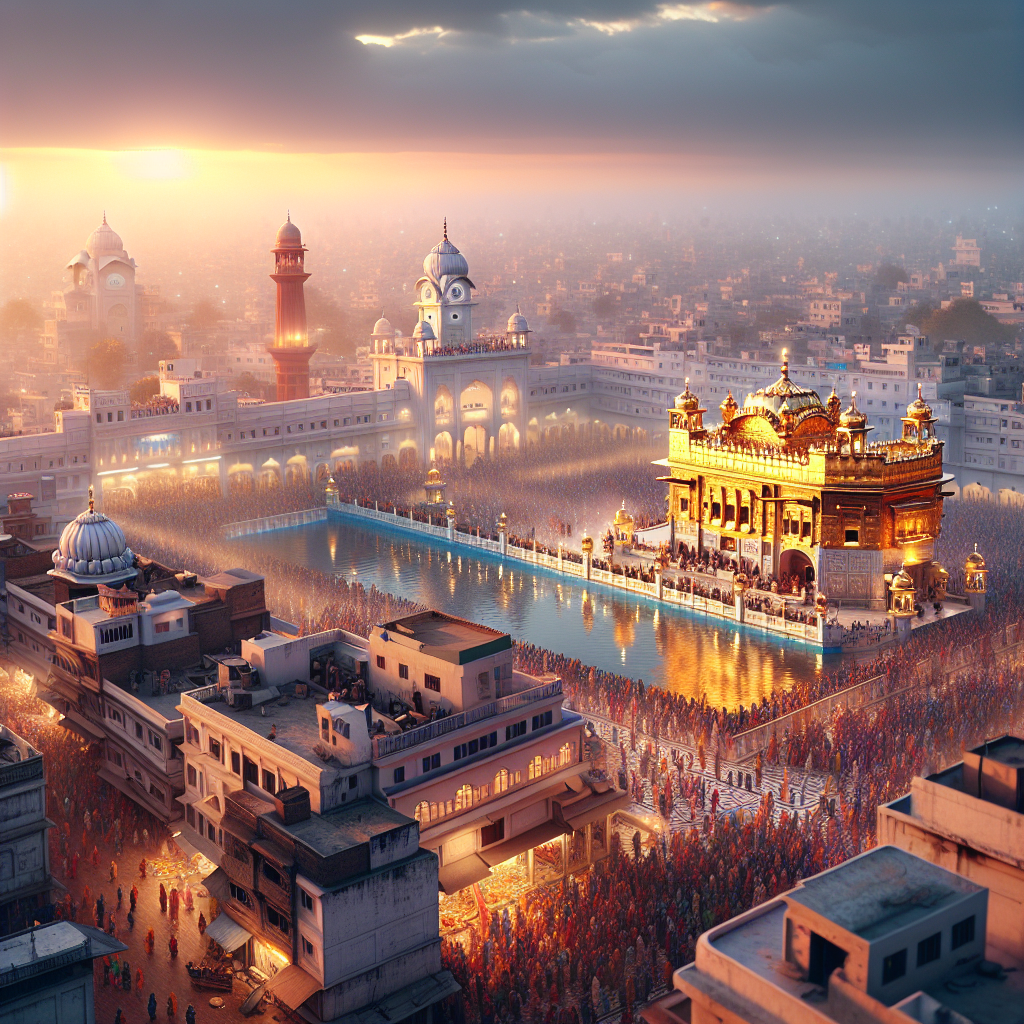

Amritsar, the vibrant heart of Punjab, is a city that dances to its own beat. Known for its profound spiritual significance and rich history, Amritsar pulls you into a world where the sacred and the lively mingle effortlessly. It’s the home of the Golden Temple, or Harmandir Sahib, a place of worship embraced by millions, where faith transcends boundaries. Founded in 1577 by Guru Ram Das, the city stands as a testament to Sikh ideals of equality and compassion. But that's not all; it's a city where past traumas and present joys shape each street's narrative.
This city, grand yet humble, wore the scars of the 1919 Jallianwala Bagh massacre with resilience, eventually rising from ashes to become a symbol of unity and forgiveness. A quick stroll through the city reveals narrow lanes teeming with life. Amritsar’s markets burst with merchandise ranging from traditional textiles to modern gadgets, reflecting its diverse vibe. To be here is to witness an intersection of the past with the ever-evolving present.
Visiting Amritsar is not just an invitation to explore monumental architecture or indulge in soulful cuisine like chole kulche and Amritsari fish. It's a chance to engage with its multifaceted socio-political landscape. You can sense the undercurrents of political dynamics in the air. Yes, it lovingly preserves its Sikh tradition, but it does not shy away from addressing modern-day issues. From farmer protests echoing across the Punjabi acres to dialogues on youth unemployment, Amritsar stands at the crossroads of change.
The Golden Temple itself is fascinating, not just for its striking beauty but for its embodiment of Sikh values. It welcomes individuals of all faiths, offering langar – a communal meal – through voluntary service. This practice highlights the egalitarian ethos that defined the city long before the world caught on. Yet, the debates about secularism and religious identity continue to spark conversations among locals and tourists.
For many Gen Z travelers, Amritsar might feel like a journey into history. Yet, it’s a story that progresses with every turn in its dynamic lanes. The younger crowd might resonate with Amritsar’s passion, as it's a city that wears its heart on its sleeve, bold and unpretentious. Imagine attending one of the electrifying Baisakhi festivals, where traditions are honored through energetic dances and heartfelt prayers, yet the discourse extends to contemporary issues like sustainability and climate action.
Amritsar is also about juxtaposing realities. It bridges contrasts, as shiny new restaurants sit comfortably alongside age-old eateries. The city is navigating challenges like pollution and infrastructure inadequacies while thriving with a community spirit that refuses to dwindle. Such topics often elicit differing opinions, with some advocating for rapid modernization while others strive to preserve the cultural legacy.
Despite differences, it's these dialogues that invigorate Amritsar's soul. The Golden Temple itself acts as a beacon of hope, a reminder to focus on unity even amidst diverse perspectives. The collective consciousness here has learned to juggle contradictions as part of its identity.
Though rooted in tradition, this city looks ahead, eager to evolve. Amritsar's youth are now at the forefront, using innovation and art to express themselves and challenge the status quo. Street art and local artists often share thought-provoking pieces, reflecting societal changes.
For the politically conscious Gen Z navigating such spaces, Amritsar offers a unique lens through which to view global issues. It's a city that acknowledges its past, lives vibrantly in its present, and dreams ambitiously of its future. A true testament to resilience and adaptation, Amritsar is every bit alive as it is a living museum of history and social change.