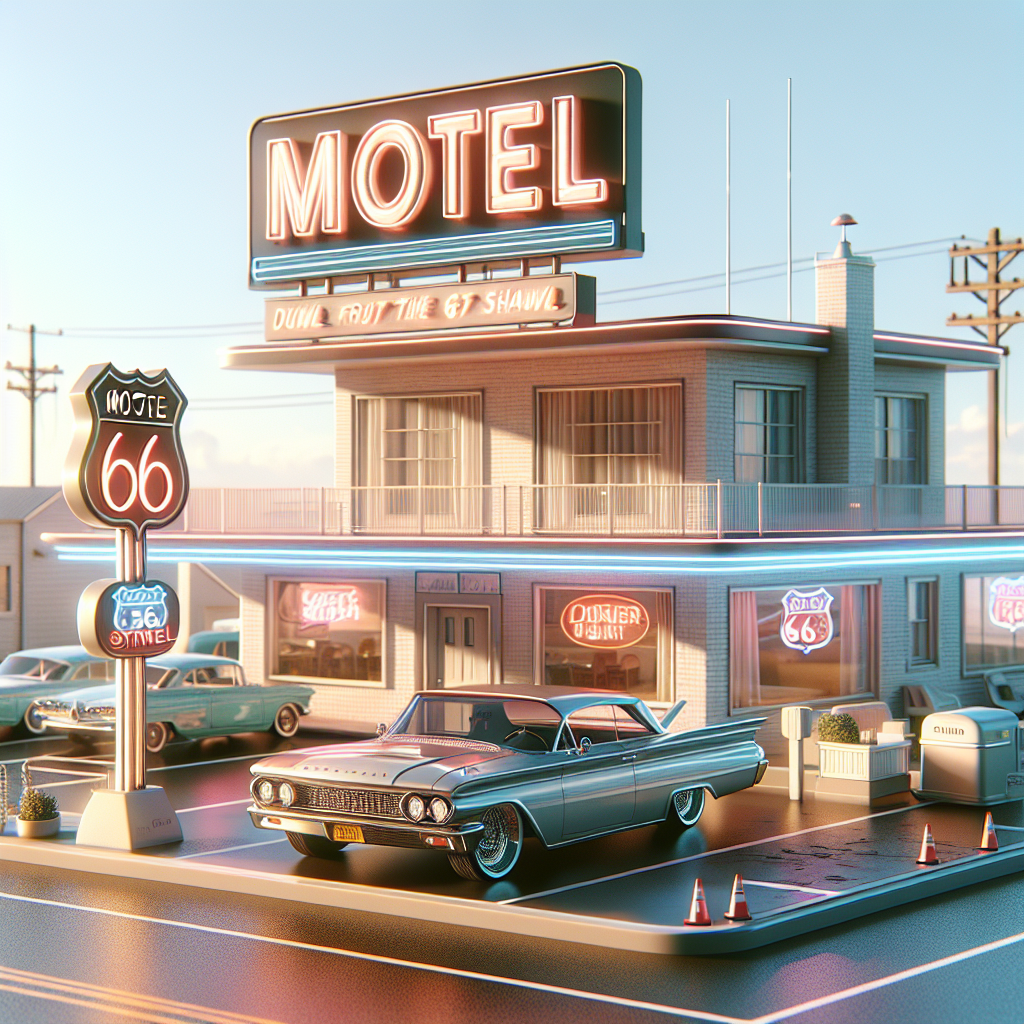

If walls could talk, the 66 Motel in Tulsa, Oklahoma would probably have plenty to say. Nestled along the historic Route 66, this legendary motor lodge has seen countless travelers since its opening in the mid-20th century. Constructed during the bustling post-war era, the motel quickly became a beacon for road trippers and wanderlust-driven adventurers traversing the grand stretch of America's Mother Road. While its heyday was decades past, the 66 Motel hasn’t lost its nostalgic charm and continues to capture the imagination of the young and old alike.
Route 66 itself is like a main artery of America's rich history. Stretching from Chicago to Santa Monica, this highway was integral to the migration west and later became a vacation staple before the advent of the interstate. This motel, like many stops along the route, embodies the quintessential spirit of the journey, and for many Gen Z explorers, it offers a tangible connection to a bygone era.
Yet observing the 66 Motel isn’t complete without considering how the decades have reshaped its purpose. Originally, the motel was a layover point for weary travelers crossing vast midwestern plains. Today, its role has pivoted somewhat as it attracts a different kind of tourist: those who yearn for nostalgia or are enamored with mid-century modern design. As tastes evolved, so did the necessity for the 66 Motel to adapt. The change in its clientele mirrors the broader shifts we're witnessing in travel: people are no longer just seeking a place to rest their head, but an experience steeped in stories and culture.
Some might wonder why this relic of post-war America hasn't been bulldozed in favor of shiny, new accommodations. It boils down to preservation versus progress, a debate that resonates with the larger generations. While some see such motels as relics, others see them as irreplaceable threads woven into the vast tapestry of our history. For those leaning towards preservation, the motel stands as a monument to resilience and an architectural snapshot. For those focused on progress, revitalization rather than restoration could be their mantra.
In Tulsa, the cultural and economic climate around the 66 Motel and others like it opens dialogue about potential. On one hand, the growth of Tulsa as a modern city poses both a threat and opportunity for sites like the 66 Motel. As the city develops, such landmarks offer a unique opportunity to remind people of their roots and history, simultaneously boosting tourism and local businesses.
Yet, it’s paramount to approach these issues with empathy for opposing views. Critics of maintaining old motels like the 66 Motel argue that land could be better used for contemporary needs. These opinions are predicated on the idea of innovation and the potential for new infrastructures that better cater to today's requirements.
However, there is a growing trend towards sustainable tourism where what is old is new again. This involves giving the existing structures new purposes or enhancing their allure without compromising their history. It's a powerful way to attract not only tourists but also community members who appreciate a blend of past and present.
Ultimately, the story of the 66 Motel is about more than just bricks and retro neon signs. It is a reflection of societal values and a testament to how we interact with history. Whether you view it as a nostalgic stopover or a renovated masterpiece yet to be made, it undeniably compels us to consider how the past shapes our paths forward. The open road of Route 66 and its accompanying motels reminds us that history isn’t just about remembering the past, but sometimes about creating a future from the memories and dreams of another time.