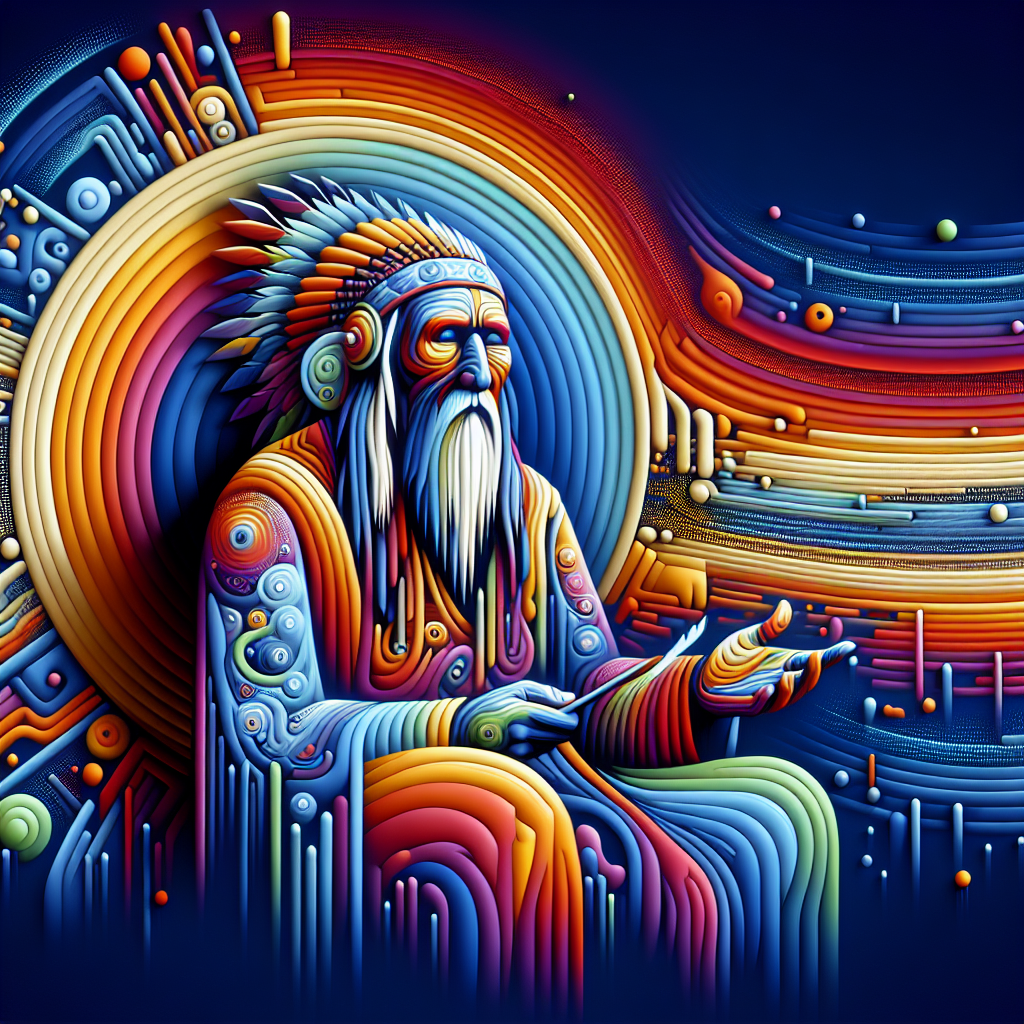

Wovoka, a name that might not ring any bells in the bustling halls of today's society, was a transformative figure in the late 19th century. Born in 1856 in the land we now know as Nevada, this Native American spiritual leader was the architect of the Ghost Dance Movement. A Paiute man, Wovoka claimed to be the messiah who had visions of a harmonious future where indigenous people could live freely, devoid of oppression from American settlers. His message was simple: Embrace the dance, and unity would follow.
Now, if you're the type who thinks America gets a little too nostalgic for the good ole' days of Manifest Destiny, you might believe that Wovoka's story doesn't fit neatly into the textbook narrative of U.S. expansion. But it's precisely this sort of inconvenient history that forces us to question the fairy tale of unrestrained western progress.
The Vision of Peace: Wovoka's inspirations came from a curious mixture of Christianity and Native American beliefs. This wasn't a cry for war but rather an appeal to peace and resistance. It's easy to imagine how unnerving this must have been for those territorial aggressors in Washington.
Ghost Dance Movement: Forget about radical protests or violent uprisings, Wovoka encouraged Native American tribes to partake in the Ghost Dance. This was a peaceful dance supposed to bring about a world where colonial forces no longer dominated indigenous lands.
Threat to the Establishment: As far as the government was concerned, seeing thousands of Native Americans uniting under a shared spiritual vision was downright terrifying. Because in history, nothing can be scarier to an establishment than the notion of a united opposition.
Cultural Synthesis: Liberals love their cultural fusion, don't they? Wovoka brilliantly fused elements from different traditions. His spiritual teachings showed how different cultures could unite toward a common goal, even if the ruling class felt it best to squash diversity with uniformity.
Misunderstood Emissary: Misreading intentions seems to be a repeating pattern for those sitting high on the political totem pole. Wovoka wasn’t asking for a violent upheaval. Yet, as misfortune would have it, his peaceful declaration of Indigenous rights was met with fearful military responses.
The Battle of Wounded Knee: Ah, the tragedy of misunderstanding exalted by the ineptitude of authority figures. The massacre at Wounded Knee supposedly occurred because someone thought the Ghost Dance was the rumble of potential insurrection. Such narratives make you wonder who was really perpetuating violence.
Who Challenges History? The narrative of indispensable progress has always served as a convenient cover-up for justifying less admirable acts of history. Wovoka's Ghost Dance challenged this, offering an alternate vision that didn't revolve around industry or empire but harmony.
A Ripple in Time: Wovoka sparked a movement that inspired countless tribes across America. Although his prophecy didn’t culminate in the desired utopia, the movement left a lasting legacy. Such narratives make the more 'progressive' generations confront the uncomfortable aspects of their roots.
Cultural Resilience: Despite the heavy-handed attempts to squash the movement, the Ghost Dance has persisted in memory and practice among Native Americans. This lasting symbol of resilience continues to inspire those in search of peaceful pathways toward change.
Reckoning with the Past: Wovoka's story is one more page in the history book that leans toward the resilient spirit of a people rather than the exploits of conquerors. His spirit and message reflect a complex mosaic that has been conveniently brushed under the carpet, a bathroom not so often visited by the liberal narrative.
So, there you have it. Wovoka, a leader whose vision transcended the unfortunate eras of conquest, managed to unite people under a vision of peace, even when his dance was misunderstood by those who feared the unknown stories and started shaping them according to their misguided beliefs. Let’s not forget Wovoka and the untold echoes his Ghost Dance still sends through the air.