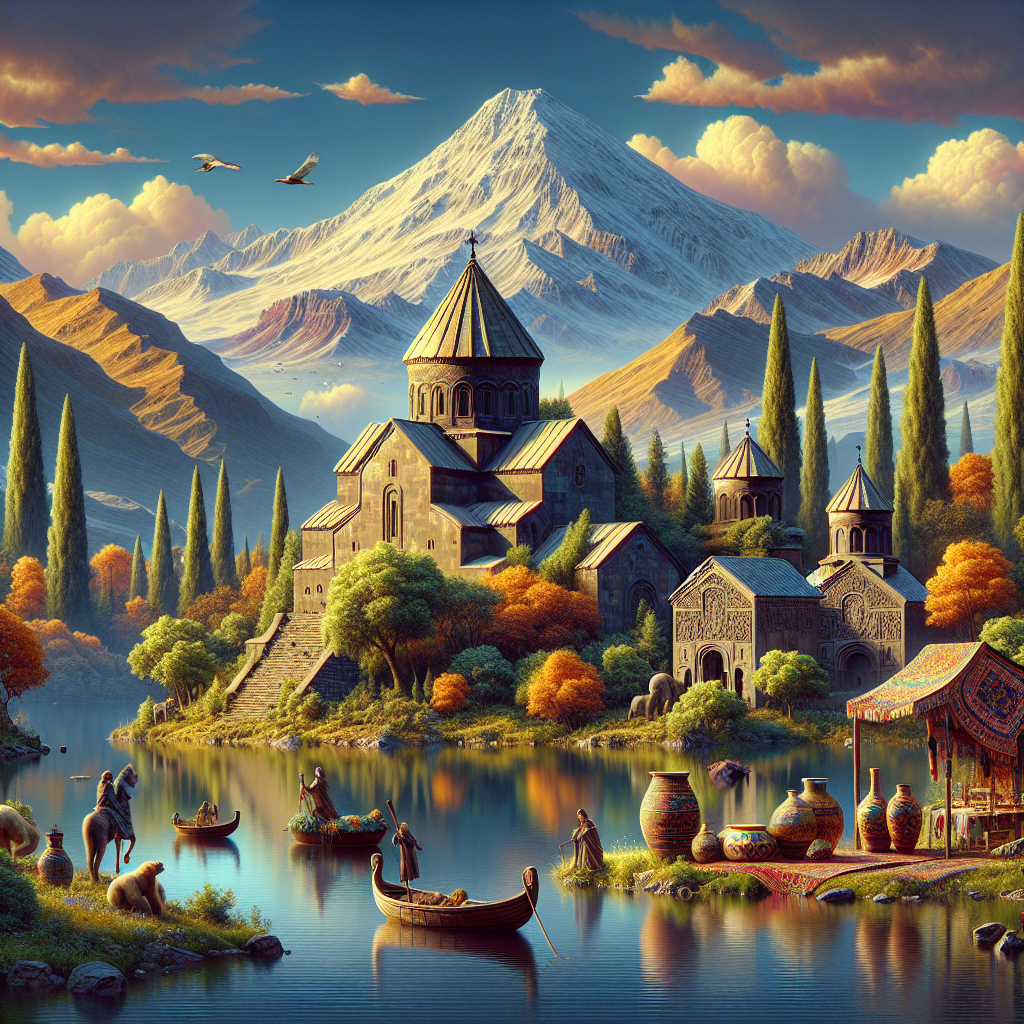

Imagine a forgotten land, a place where history whispers through the windswept mountains and ancient ruins; welcome to Western Armenia. This vibrant region, known for its rich tapestry of Armenian cultural heritage, was historically an integral part of the Armenian homeland. Dating back thousands of years, Western Armenia includes territories now within the borders of eastern Turkey. The events that took place here have shaped world history, but in today's debates, it seems to have slipped through the cracks—thanks largely to the selective memory of the mainstream media.
History On Trial: Western Armenia wasn't just some random parcel of land; it was the cultural crucible of the Armenian people. From the grandeur of the ancient Armenian kingdom to the flourishing of Christianity in this region, Western Armenia played a key role in shaping Armenian identity. It was unjustly carved away from modern Armenia following the Armenian Genocide of 1915, a tragedy that saw over a million Armenians exterminated. This is more than just a historical footnote; it's an entire book that some choose not to read.
The Cultural Richness: The Armenian Highlands, as Western Armenia is historically known, cradle a wealth of cultural treasures. The majestic city of Ani, often dubbed as the 'City of 1,001 Churches,' and Mount Ararat, which looms over the landscape as a symbol etched deep into the Armenian soul, stand here. Yet, for all its historical importance, the modern world seems too engulfed in trivialities to pay due attention to this trove of culture.
Geo-Political Thriller: These lands are today under the control of Turkey, a NATO ally, notorious for its denialist stance on the Armenian Genocide. This contentious issue is practically the elephant in the room at international gatherings. Despite relentless advocacy from Armenian diaspora and sympathizers worldwide, recognition and restitution issues remain a taboo subject, swept under the geopolitical carpet where they can plague no one’s liberal conscience.
Environmental Marvel: Beyond the politics and conflict, Western Armenia is an environmental wonder. It boasts landscapes that could rival any of the postcard-perfect scenes in New Zealand or the Grand Tetons of the United States. This is a haven of natural beauty that experts can’t seem to decide upon: preservation for its ecological value or conservation as living memorials to its historic past?
Eye of the Storm: Western Armenia is geopolitically significant, sitting at a crossroads between East and West. Turkey, Armenia, Iran, and Russia all have their eyes on this strategically critical region. As global power dynamics shift, what happens here could impact more than just regional politics—it could shape global alliances for decades to come.
Ignored by Global Governance: The UN and other international bodies continually side-step the pressing issues related to Western Armenia. While some countries like France and Italy recognize the Armenian Genocide, meaningful action seldom follows words. Programs for protecting the cultural heritage and promoting reconciliation are scant and ineffective, as if the page has been turned and policymakers have moved on.
Armenian Resilience: Despite being displaced and facing innumerable challenges, Armenians have not forgotten their ancestral roots in Western Armenia. The diaspora continues to cherish and fight to preserve what is left of their culture and heritage that flourished on these lands. Armenian communities worldwide keep the memory of Western Armenia alive, like a flame that refuses to be extinguished.
A Tale of Misplaced Priorities: The global powers seem more interested in oil prices and trade agreements with Turkey rather than justice or historical accuracy. Lobbyists and advocates for truth are easily drowned out by the siren sounds of profit and political expediency. The powers that could champion justice instead placate denials, keeping a lid on any discussion that could lead to friction with Turkey.
The Role of Media: The media plays a huge role, or rather, fails to play one when it comes to Western Armenia. Coverage tends to focus on fashionable issues, relegating places like Western Armenia to mere footnotes in history. It's as if recognizing the importance of these lands would open a Pandora's box that threatens the status quo of selective reporting and agenda-setting.
Time for Reclamation: The time has come for the world to pay its due respects to Western Armenia. Through awareness and education, more people worldwide need to recognize the historical and cultural significance of these lands. Encouraging dialogue and opening the doors to constructive discussion is crucial. Only through efforts from non-governmental organizations, academics, and policy influencers can Western Armenia rise again in the global consciousness.
Western Armenia is more than just a labeled region on a map; it's a poignant chapter in not only Armenian history but human history. As the world continues to shrink due to globalization, acknowledging and addressing the past becomes ever more important. Perhaps someday, we will live in a world where history is neither erased nor altered but remembered as it truly happened. Until then, the legacy of Western Armenia calls out for recognition, a melody that deserves to resound louder on the global stage.