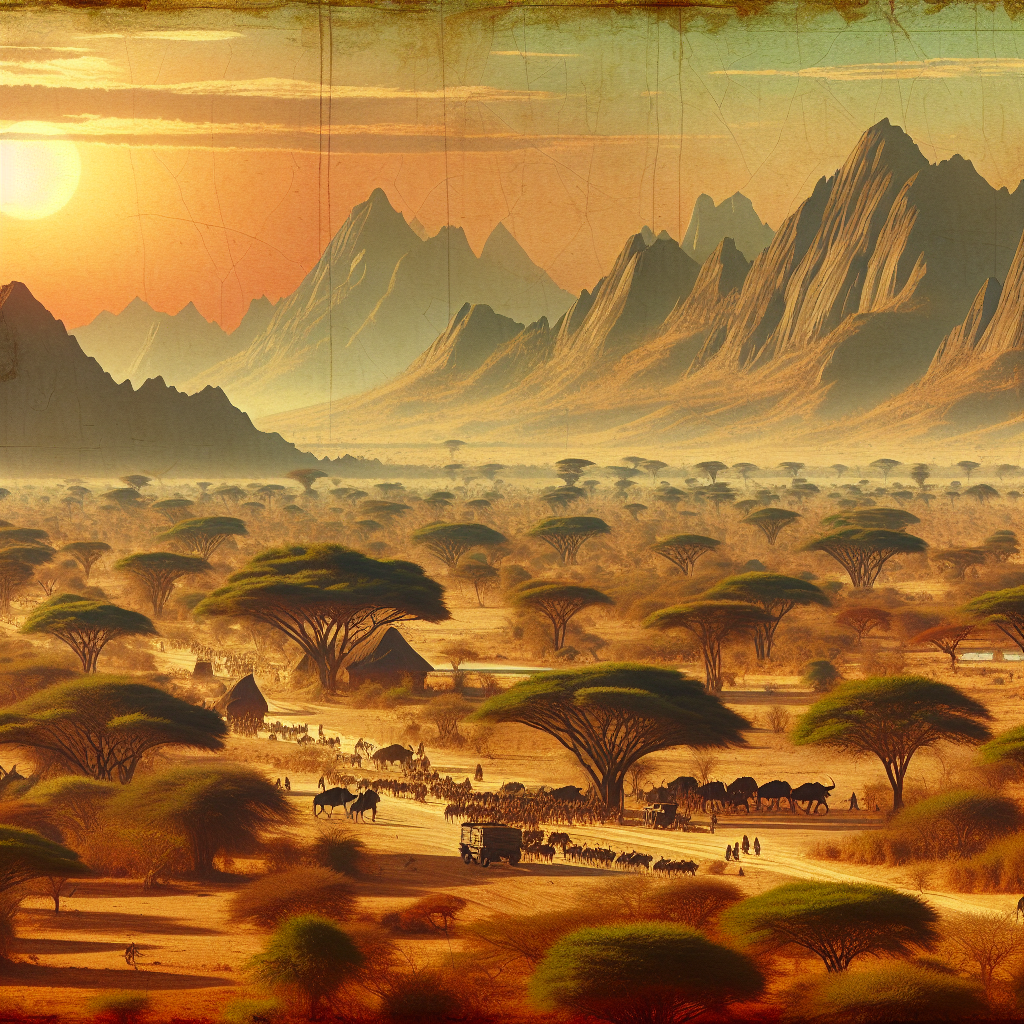

The West Sudanian Savanna: Nature's Playground or a Political Chessboard?
The West Sudanian Savanna, a sprawling expanse of grassland stretching across several African nations, is a natural wonder that has become a political chessboard. This vast region, covering parts of Senegal, Mali, Burkina Faso, and beyond, is home to diverse wildlife and unique ecosystems. However, the savanna is not just a haven for nature enthusiasts; it's a hotbed of political intrigue and environmental debates. The question is, why has this seemingly serene landscape become a battleground for ideologies and policies?
First, let's talk about the environmentalists who are up in arms about the savanna's future. They argue that the West Sudanian Savanna is under threat from climate change, deforestation, and overgrazing. They paint a picture of doom and gloom, claiming that if we don't act now, this beautiful landscape will be lost forever. But here's the kicker: while they preach about saving the savanna, they often ignore the needs and rights of the local communities who have lived there for generations. These communities rely on the land for their livelihoods, and their voices are often drowned out by the loud cries of international activists.
Then there's the issue of foreign intervention. Western nations and NGOs love to swoop in with their "solutions" for the savanna, often without consulting the people who actually live there. They impose their own values and priorities, sometimes causing more harm than good. It's a classic case of outsiders thinking they know best, while the locals are left to deal with the consequences. This paternalistic approach is not only disrespectful but also counterproductive.
Let's not forget the role of governments in the region. Many of these countries are dealing with political instability and economic challenges. The West Sudanian Savanna is rich in resources, and governments are eager to exploit these for economic gain. However, this often leads to conflicts over land use and resource management. Instead of working together to find sustainable solutions, different factions are more interested in lining their own pockets. It's a classic tale of greed and corruption, with the savanna caught in the crossfire.
Now, let's talk about the wildlife. The West Sudanian Savanna is home to an incredible array of species, from elephants to lions to countless bird species. Conservationists argue that protecting these animals should be a top priority. But here's the twist: while they focus on the charismatic megafauna, they often overlook the less glamorous species that are equally important to the ecosystem. It's a selective approach to conservation that prioritizes certain animals over others, based on their appeal to donors and the media.
The savanna is also a cultural treasure trove, with a rich history and diverse traditions. Yet, in the rush to "save" the savanna, these cultural aspects are often sidelined. The focus is on the land and the animals, while the people and their heritage are treated as an afterthought. It's a narrow-minded view that fails to appreciate the full complexity of the region.
In the end, the West Sudanian Savanna is more than just a patch of grassland. It's a microcosm of the larger debates and conflicts that define our world today. It's a place where nature, politics, and culture intersect in fascinating and sometimes frustrating ways. The challenge is to find a balance that respects the land, the wildlife, and the people who call it home. But as long as outsiders continue to impose their own agendas, that balance will remain elusive.