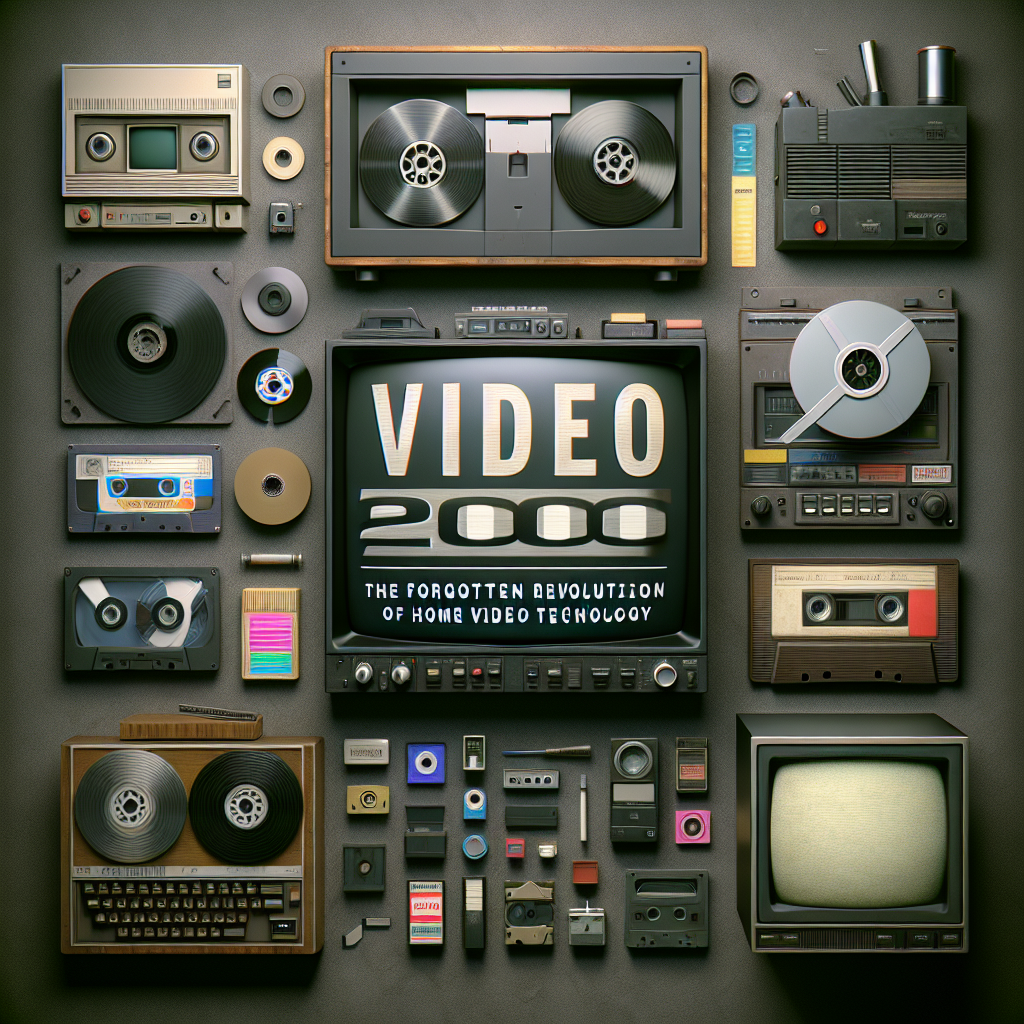

Remember Betamax? If so, you might want to think twice before labeling it the ultimate loser in the videotape format wars because Video 2000 demands recognition. A brainchild of Philips and Grundig back in 1979 Europe, this underdog aimed to revolutionize home video recording and slap VHS out of its cozy throne. Video 2000 was packed with innovative features you didn’t know were missing—like the ability to record on both sides of the tape, just like your old ’90s mixtapes. It didn’t come from just anywhere; it was reared in the technological heartlands of Germany and the Netherlands.
So let's address the question: why Video 2000? Because it did what no other format dared to do at the time, but like a true tragedy, it fell victim to the insidious capabilities of the simpler VHS and the clandestine partnerships that snuffed out its brilliance. First on the list of its revolutionary bells and whistles was the double-sided videotape, offering a whopping eight hours of playtime. Now, that's what you call spending a whole day glued to the screen. Also, Video 2000 wasn't just about stretching the run-time; it played back and recorded with superior quality that made its opponents look like they were stuck in a fuzz-filled snowstorm.
Video 2000 had excellent tricks up its sleeve. Automatic tape looping was another sly feature. Imagine never having to wind that sticky tape manually again. It even allowed you to start a tape from where you left off, a primitive form of “resume playback.” Not only was it advanced, but its threading system kept that tape spooled perfectly for optimal viewing pleasure. If bits and bytes were the vocabulary of innovation, Video 2000 was speaking fluent genius.
But let's face it, Video 2000 lacked marketing. In the cold-blooded world of technology, being superior isn't enough. Consumers needed persuasion, a space where Philips and Grundig fell short. Contrary to what you might think, flashy ads and connections often win the day over technical talents. Your arguments about quality become moot if no one is listening. Its creators failed to put the same zeal into selling it as they did inventing it. For those who argued that the market demands inferior yet more accessible products, Video 2000 proves that sad case point almost perfectly.
The format war wasn't just about hardware quality, though. VHS, backed by titans like JVC, played a game of alliances. A charming, easy-to-use interface and an unrelenting flood of content from unholy alliances with the American film industry tipped the scales. It didn’t matter that Video 2000 had an intuitive interface; they didn’t have the universal content that VHS boasted, acting like a stoic dog with a short leash. Such strategic liaisons root deeper than mere mechanics; they invade consumer choices. It's a lesson that pressing 'record' isn't enough; the whole orchestra is needed for the right melody.
The brand names behind Video 2000, despite their might, were shadows in the massive American marketing landscape. Without ingrained names like Sony or JVC plastered to their line, breaking into the home video sphere was reaching for the stars. When VHS boasted an emboldened worldwide release, Video 2000 only chose to daydream in niche European markets, mimicking a closed circuit that soon shorted. Its geographical introversion was a stark contrast to the VHS's expansive drive, which offered what appeared to be a globe-encompassing experience that excited its users. It's a narrative as old as time: the American marketing machine knows its job and does it deftly.
Whether liberally inclined towards technology or adamantly conservative, Video 2000's demise serves an existential reality out of which paradoxically innovative formats failed. It’s a tale that aligns more with unbridled capitalism than socialist whims. The lesson learned from Video 2000? Superior quality doesn't always win if you fumble in marketing strategy—the world's marketplace is a battleground where alliances and branding reign supreme.
However, for the fearless tape aficionados, Video 2000 is still a golden relic worthy of admiration. If you ever find yourself handling one of these artifacts from a garage sale, don't just dismiss it. Hold it in reverence, because what you’re holding is a testament to innovation overshadowed by subpar giant cartels. Those double broadcasters of audio and visual excellence wanted to take over the world and failed because they played by the rules.
Isn't it sad? In a world where mediocrity teams up to outcompete excellence, Video 2000 is a poignant reminder of what we allow to climb the podium of success. So let's raise a videotape to the heroes who never made it—not because they couldn’t win, but because they didn't have the right backstage pass. Let's hope history doesn’t repeat itself and superior innovation doesn't consistently bow to inferior allies waving a Hollywood flag.