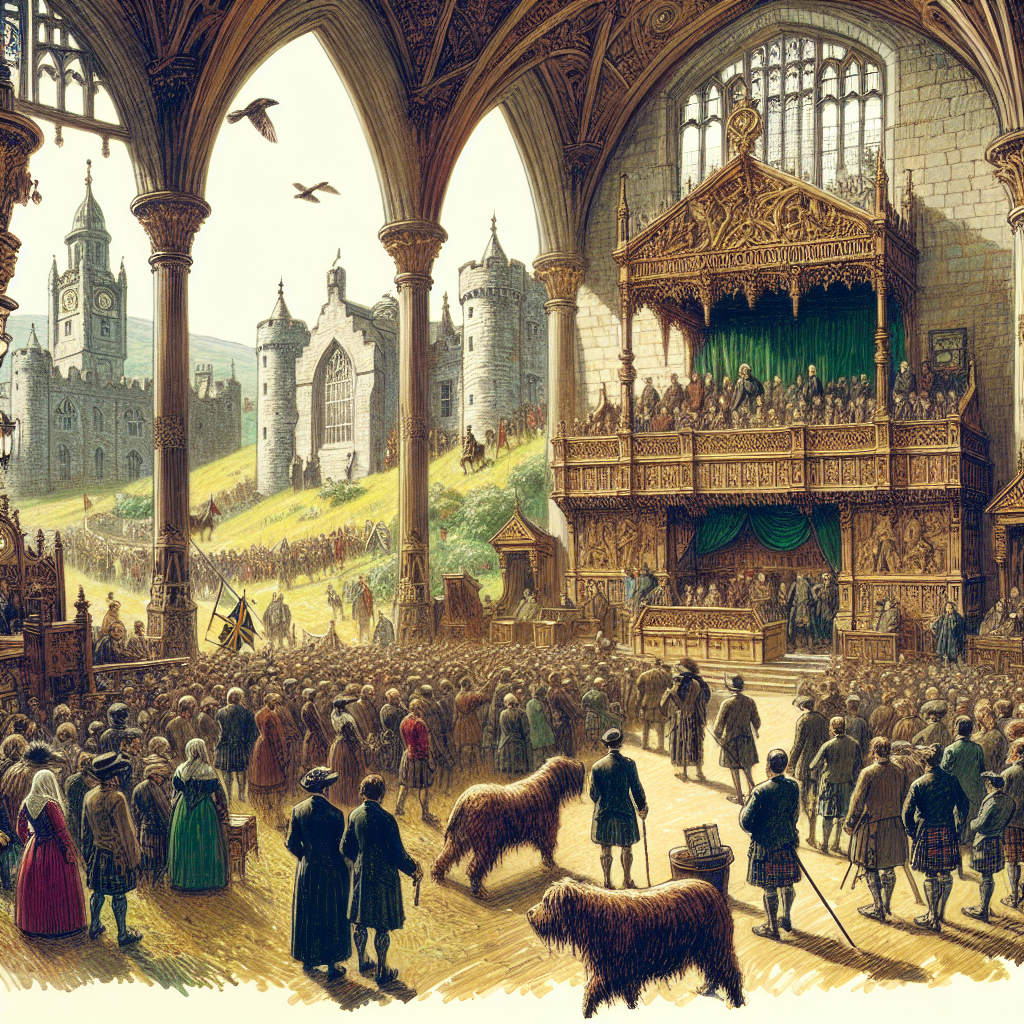

Tynwald: The World's Oldest Parliament That Liberals Don't Want You to Know About
Imagine a place where democracy has been thriving for over a thousand years, and yet, it barely gets a mention in your history books. Welcome to Tynwald, the parliament of the Isle of Man, which has been in continuous operation since 979 AD. Nestled in the Irish Sea between Great Britain and Ireland, this ancient institution is a testament to the enduring power of self-governance. But why is it that this remarkable example of democracy is often overlooked, especially by those who claim to champion democratic values?
First off, Tynwald is a living, breathing example of a system that works without the need for constant upheaval or radical change. It’s a place where tradition and modernity coexist, proving that you don’t need to tear down the past to build a better future. This is a concept that seems to baffle those who are always clamoring for revolution and reform. Tynwald’s very existence challenges the narrative that old systems are inherently flawed and must be replaced.
The Isle of Man, with its Viking roots, has managed to maintain a unique form of governance that combines elements of Norse tradition with modern legislative practices. This is a place where the past is respected, not erased. The annual Tynwald Day, held on July 5th, is a public holiday where laws are promulgated in both English and Manx Gaelic, showcasing a respect for cultural heritage that is often dismissed in favor of more "progressive" ideals.
Tynwald’s structure is another point of contention for those who believe in centralized power. It consists of two branches: the House of Keys and the Legislative Council. This bicameral system ensures a balance of power, something that is often missing in the one-size-fits-all solutions proposed by those who think they know best. The Isle of Man’s parliament operates with a level of efficiency and effectiveness that puts many larger governments to shame.
Moreover, Tynwald’s approach to governance is refreshingly pragmatic. It focuses on what works, rather than what sounds good in a campaign speech. This is a place where policies are crafted based on evidence and experience, not ideology. It’s a stark contrast to the endless cycle of promises and disappointments that characterize so many political systems today.
The Isle of Man’s economic model is another thorn in the side of those who advocate for high taxes and big government. With its low tax rates and business-friendly environment, the island has managed to attract investment and foster economic growth without sacrificing its social services. It’s a real-world example of how a free-market approach can lead to prosperity, something that is often dismissed as a pipe dream by those who prefer to redistribute wealth rather than create it.
Tynwald’s success is a reminder that small can be beautiful. In a world where bigger is often equated with better, the Isle of Man stands as a testament to the power of local governance. It’s a place where decisions are made close to the people they affect, ensuring accountability and responsiveness. This is a far cry from the distant bureaucracies that so often fail to meet the needs of their citizens.
The Isle of Man’s commitment to preserving its unique identity is another reason why it doesn’t fit the mold. In an era where homogenization is often seen as the goal, the island’s celebration of its distinct culture and language is a breath of fresh air. It’s a reminder that diversity doesn’t mean erasing differences, but rather embracing them.
Tynwald is a shining example of what can be achieved when tradition and innovation are allowed to coexist. It’s a place where the past informs the present, and the future is built on a foundation of respect and continuity. This is a lesson that many could learn from, if only they were willing to look beyond their preconceived notions.
In the end, Tynwald is more than just a historical curiosity. It’s a living, breathing example of a system that works, a testament to the power of self-governance and the enduring value of tradition. It’s a story that deserves to be told, even if it doesn’t fit the narrative that some would prefer to promote.