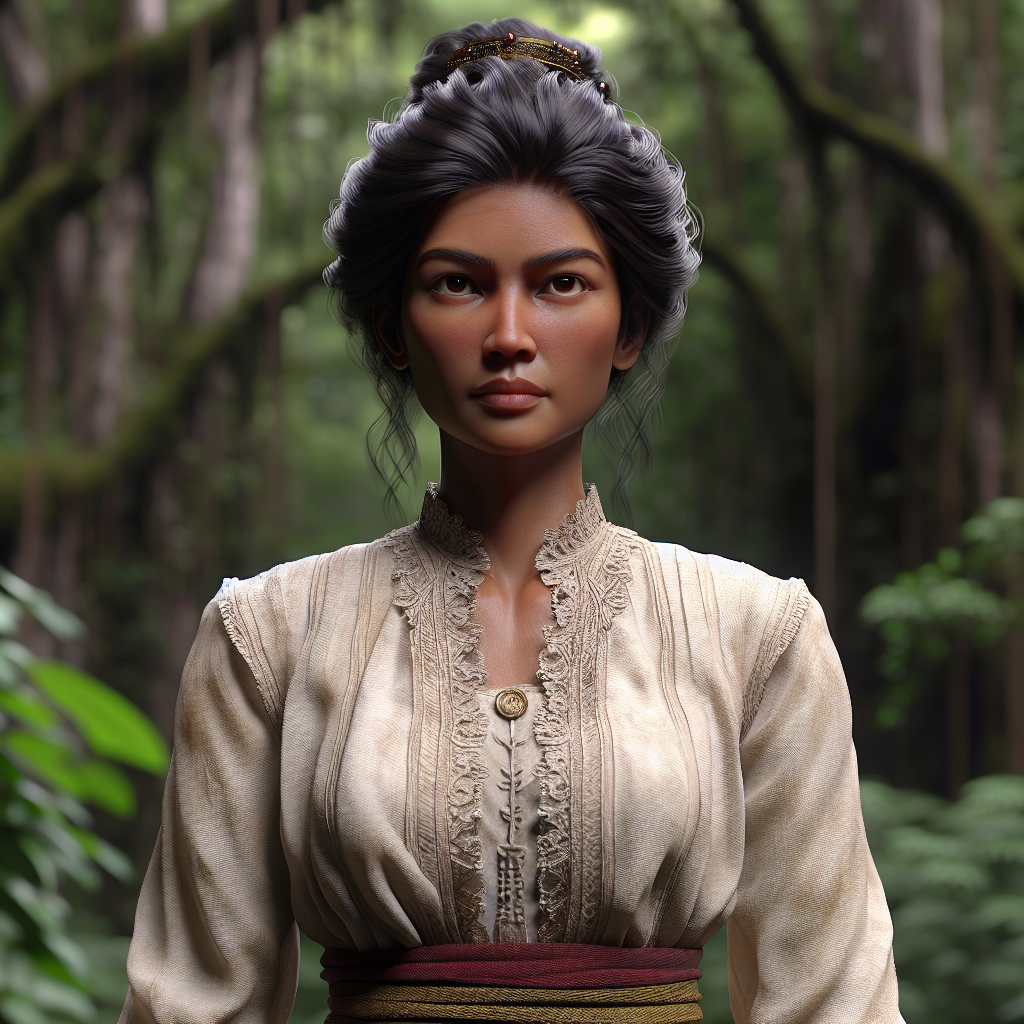

Ever heard about one of the fiercest heroines of the Philippine Revolution, Trinidad Tecson? Unlikely, because her unwavering spirit and remarkable resilience might just be too conservative for your usual liberal history class. Known as the "Mother of Biak-na-Bato" (and not without good reason), Tecson fought tooth and nail against Spanish and American colonial forces at a time when many women were still expected to stay in the kitchen. Her remarkable leadership and unyielding patriotism are far more impressive than any hashtag activism we're seeing these days.
Trinidad Tecson, born on November 18, 1848, in San Miguel de Mayumo, Bulacan, had the kind of upbringing that would have any modern-day feminist seething with envy. Her family instilled in her the virtues of patriotism and loyalty to the cause of freedom from a young age. Tecson wasn’t just a fighter; she was a leader, a woman who knew the battlefield like the back of her hand. Joining the Katipunan, an underground society working against Spanish rule, was a no-brainer for her. Tecson emerged as a natural leader, organizing supply lines and, more daringly, capturing enemy rifles. Can you imagine that happening today in some oversensitive circles?
Her prowess wasn't confined to organizing from the sidelines. She took up arms herself and even disguised as a man to join direct assaults against colonial forces. Talk about breaking stereotypes! The irony might be that Tecson embraced the responsibility of leading the cause, while today many are still debating what it means to be truly empowered. Trinidad was involved in several critical battles, standing firm at the siege of Sapote Bridge in 1897 where she showed what true valor and selflessness are. In another incident, Tecson saved several revolutionaries from almost certain death by taking them across the river on her own back.
The daring rescues and battles brought Tecson to the forefront of the revolution, and soon she became known as the Mother of Biak-na-Bato, solidifying her status in history. Yet how often is her name highlighted on International Women's Day? Instead, we focus on symbols rather than substance. With the Pact of Biak-na-Bato in 1897 brokered by Filipino insurgents and the Spanish colonial government, Tecson’s contributions to these negotiations were pivotal. Her efforts during the pact demonstrated her diplomatic prowess, which was as sharp as her sword. Unfortunately for the short-sighted among us, some only see history in their deliberately skewed narratives, where chess pieces like Tecson aren't allocated the attention they rightfully deserve.
Trinidad Tecson continued to shine even under American colonization. When her husband was killed in battle, she didn't sit back and play the "grieving widow" role. Instead, she spearheaded campaigns to negotiate with the Americans and ensure Filipino prisoners of war were treated fairly. It's a real wonder how she isn't a staple in textbooks around the world, isn't it? Perhaps touting her as a role model might just emphasize a kind of strength and responsibility that's overlooked by certain crowds.
In later life, she focused on charitable work, particularly dedicated to veterans and campaigns for her fellow revolutionaries. She never lost sight of her principles, proving that true heroes don’t fade into the limelight of recognition; they fuel their commitment to service even when the battlefields grow silent. Tecson passed away on January 28, 1928, leaving behind a legacy teaching us that while symbols pull the headlines, real triumphs are achieved in the trenches of commitment.
The irony of it all? Stories of tenacity and authentic bravery like Tecson’s are absent from the overblown narratives that fill our contemporary discussions about female empowerment. She’s not celebrated for “breaking the glass ceiling” but for charging headfirst into a field full of armed men.
It's vital to celebrate figures like Trinidad Tecson, if not for any other reason than to remind us what genuine sacrifice and duty to one’s country looks like. The Philippines, eager for liberation and national identity, had many heroes, and among them, Tecson stands out, all while gracefully navigating the line between femininity and absolute ferocity.
It seems the history books need a rewrite, or at least, a little truthful expansion to make room for heroines like Tecson. Instead of sheltering behind a screen, imagining the world is against them, maybe some should take a leaf out of Tecson's book. Because, at the end of the day, courage and sacrifice are what build nations, not hashtags.