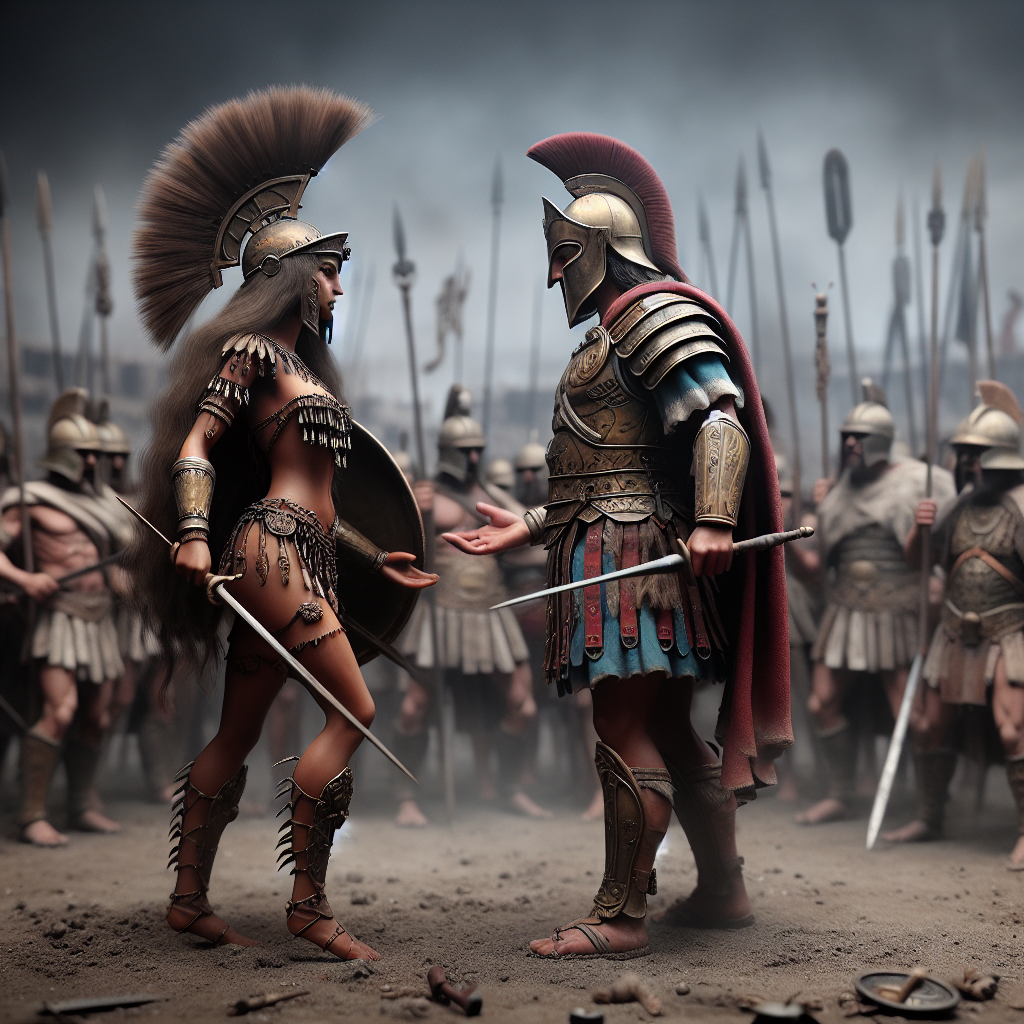

Thalestris, the formidable warrior queen of the Amazons, is the riveting tale history enthusiasts rarely hear about. A legendary figure from Greek mythology, she is often confused with mere myth, but might I say, the audacity with which she is often dismissed aligns perfectly with the liberal trend of erasing powerful historical figures when they don't fit a convenient narrative. In the 4th century BC, Thalestris was said to have ruled her Amazonian tribe in the region stretching across portions of Asia Minor, just south of the Black Sea—daring and unyielding, much like herself.
As an adventurous queen, she's credited in some accounts with a bold expedition to meet Alexander the Great. Alexander—a towering figure in history, yet not immune to Thalestris' stature—encountered her near Hyrcania. And why this audacious meeting, you may wonder? Some suggest she proposed offspring from the conqueror himself to combine their legendary bloodlines, adding yet another notch to her belt of unrestrained autonomy.
Historical records on Thalestris are as murky as the intentions of modern politics. Arrian and Plutarch dismiss her as a fabrication of fame-seeking writers, yet other accounts wrestle with her alarming presence. It's no surprise, given how unyielding heroines like her threaten the phony narratives we seem so eager to embrace today. She didn't merely stand alongside powerful male figures; she created her own legacy, a version of events that don't get enough attention yet shame similarly audacious contemporary rewrites of history.
Of course, we must understand that the Amazonian society wasn't some chaotic commune of women rejecting order. They represented an organized, warrior-centric society. Their stories of strength and leadership have been retold in various forms, yet with not nearly enough attention directed at their societal models where merit, not identity politics, dictated status. It's intriguing how a matriarchal society that commanded respect and instilled fear doesn't resonate well with the selective echoes promoted in today’s educational systems, where warriors such as Thalestris are glossed over.
The Amazons, according to Herodotus, employed a system where women warriors were commonplace—something not viewed favorably by those at odds with strong, self-reliant women leading an unchartered course. Thalestris, through legend or fact, threatened hierarchical norms in her quest for domination, which parallels the bias of favoring only a selective portrayal of strong females in history today.
One can argue about the authenticity of Thalestris' existence, but what cannot be ignored is the societal structure her tales represent: a society emancipated from the clutches of conventional norms that dictate a woman's place. Instead of glorifying selective equality tales, the narrative should expand to include powerful symbols like Thalestris who lived, led, and fought without requiring validation from a male dominion.
Her supposed existence throws shade on modern takes, where too often the narrative demands adherence to identity over action. The self-reliant strength embodied by Thalestris and her fellow Amazons shows a clearer path to equality than any muddled guideline churned out today. Where are the champions today, daring to rewrite the rulebook without seeking consensus from committee-quorum guided prattles?
Focus on the society Thalestris presided over, not unlike a contemporary leader unwilling to bow to specialized interests yet prioritizing overwhelming, unwavering commitment to her people. True warriors of the past—real or legendary—dictate ideal lessons of leadership and valor, earned through merit rather than bestowed as tokens on a superficial platform.
Part of the allure of Thalestris is that she embodies a rebellious spirit—one that will fight for truth regardless of the popular trot. It’s a stance sorely admired and desperately needed today as the rewriting of history often prefers to shade truth with some conveniently chosen fiction. Amidst records and works portraying her deeds and character, Thalestris stands her ground—a reflection that perhaps unmasking historical fallacies might remedy the misalignment of our own eras, which thrive on picking narratives for palatability.
The discussion of such towering figures cannot be embraced selectively, pounding at the doors of historical accounts to value all leaders who defied expectations, not just those slipping into a palatable narrative. In an era fond of tearing down stature, celebrating figments over figures is gaining momentum. Let Thalestris stand as a reminder of the strength that once was, a challenge to anyone searching for purpose minus the keypad warriors hawking empty accolades.
The art of storytelling, whether based in fact or myth, often forgets that the essence behind tales persists to prompt reflection. Thalestris remains a challenge—a call to step up and honor all stories—not just those comfortably promoting today's fad essentially enforcing a tunnel-vision narrative constraint. It’s a vital reminder of the past and why historical warriors like Thalestris demand the discussion they deserve beyond the borders of fabricated conformity.