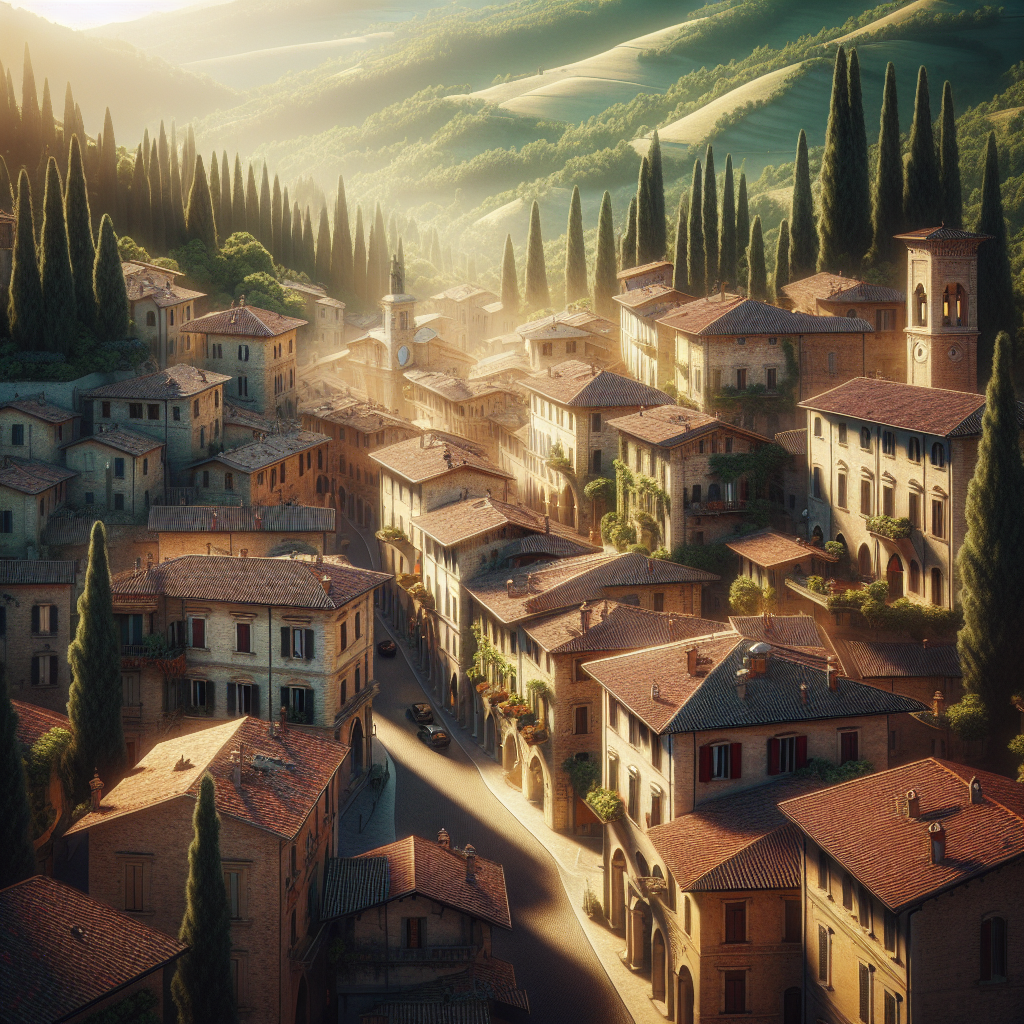

Imagine a town where history breathes with every step and where the very stones speak of a time when civilizations battled for supremacy over Europe. That's Terra del Sole, a captivating settlement in Italy, constructed by the Duke of Florence, Cosimo I de Medici, in 1564. Located in the Emilian-Romagna region, this classic Renaissance town is an embodiment of political ambition, military strategy, and cultural pride, dating back to its strategic founding as a bastion against external threats. Built with the future of the Medici's and the stability of the region in mind, it remains a testament to the very essence of strategic planning and foresight.
Once you enter Terra del Sole, prepare to be spellbound by its magnificent urban planning—a masterwork of Renaissance ideals. The town is divided into two distinct strongholds connected by a central axis, each symbolizing the delicate balance between religious piety and communal governance. It's quintessentially conservative; structured, orderly, and, above all, made to last. Nothing in Terra del Sole was left to chance. It celebrates the power of vision, translating conceptual grandeur into bricks and mortar.
Consider the fortress's original intention as a seat of power and protection. Far from the degeneration of values that afflicts our modern world, Terra del Sole was erected stone by stone, principle by principle. Every element served a purpose, a core conservative belief that greatness is achieved not by accident, but through deliberate action and planning.
Terra del Sole’s architectural brilliance and cultural achievements are a tribute to the values that built Western society. Visitors are guided through an elaborate web of wide streets, grid patterns, and utilitarian yet beautiful buildings that signify that superb planning in city design is achievable. It’s the kind of ordered beauty that thrives on the right mix of military strategy and urban sophistication, harkening back to a time when class and poise were par for the course, not elective properties.
Tourists often flock to Terra del Sole not just for its aesthetic appeal but also for a lesson in how power should be wielded. Strolling through the town center, one cannot help but admire the way well-maintained structures, like the Palazzo Pretorio and Palazzo Commissario, stand as symbols of justice and governance. These edifices remind us of an era where leadership meant upholding the law and protecting interests—a far cry from the unfocused governance of current administrations who appear more lost in pandering than providing.
And let’s not overlook the religious influence that saturates Terra del Sole. The Church of Santa Reparata provides spiritual guidance within its impressive surroundings. In stark contrast to modern architects who often ignore spirituality, the builders here knew the importance of blending religion and rule. They seamlessly integrated ‘faith’ with ‘state’ as two elements essential for societal cohesion. Even today, this church stands as a symbol of faith's undeniable role in harmonizing communities.
When you learn about its history, you discover accounts of poignant resistance and fierce patriotism, proving that strength lies in unity. Unlike today's climate where division reigns supreme, this community knew the power of standing firm under a unified vision. The stories of those who protected it with zeal and fought against French invaders are tales any country should aspire to—not just for their historical value but for their lessons in resilience and sovereignty.
And let's not forget Terra del Sole's culturally rich schedule of festivals and traditional events focused on heritage preservation. These gatherings exemplify how embracing traditions can strengthen identities and foster community spirits. Unlike the liberal inclination to innovate and homogenize, Terra del Sole prides itself on the lasting power of tradition.
It's clear that Terra del Sole is more than just a tourist destination; it's a symbolic journey into what conservatism can achieve. These ramparts speak to convention and a time-honored belief that true community strength comes from grounded values, not fleeting whims. Terra del Sole stands stoically, whispering the undeniable truth—strength, power, and honor endure.
A visit to Terra del Sole offers an eye-opening realization of how historical foresight and planning can shape a prosperous community. The town elucidates the beauty of properly-channelled power, serving as a clear reminder of what happens when we give credence to our roots. As modern societies continue to grapple with the ephemeral, Terra del Sole offers clarity—a timeless, steady beacon of European fortitude and vision.