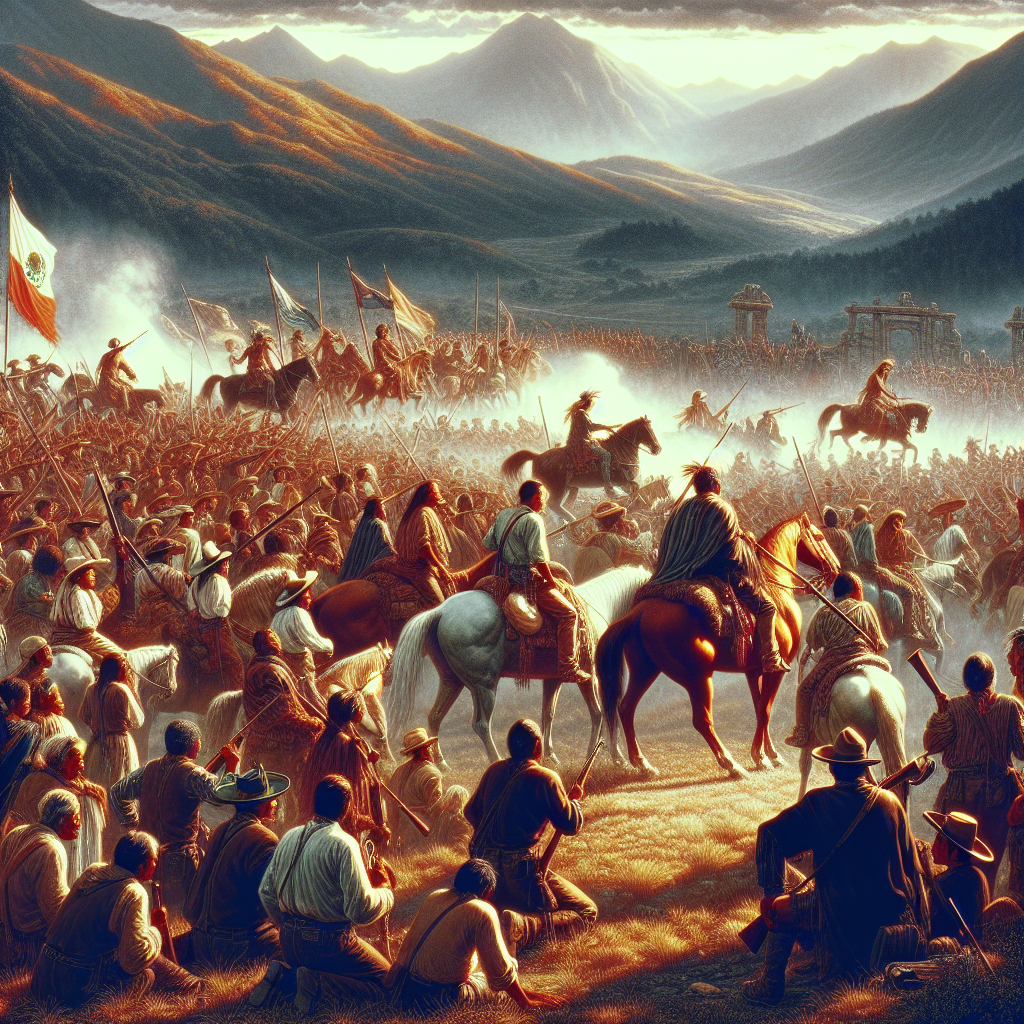

It's an epic tale that ruffled quite a few colonial feathers back in the day. The Tepehuán Revolt was a wild clash of cultures and power dynamics that set northern Mexico ablaze from 1616 to 1620. It was a momentous standoff launched by the indigenous Tepehuán people against Spanish colonial rule—certainly not something you'd catch in the curated pages of a modern history textbook.
This fiery uprising was spurred by unbearable conditions under Spanish rule. Hailing from the Sierra Madre Occidental region, the Tepehuán people were literally pushed to the edge. Forced labor, oppressive taxation, cultural suppression—the list of grievances was endless. Everything boiled over with the murder of a Spanish priest, signaling the start of insurrection. The revolt exploded into violence in Durango and surrounding regions, piling tragedy on top of Spanish attempts to wrest control through religion and force.
Truth be told, the revolt was doomed. Outgunned and outnumbered, the Tepehuán warriors fought a losing battle against a regime that had more resources and relentless backing from the Catholic church. Yet, their spirit isn’t reducible to mere numbers or outcomes; it’s a narrative of resistance against oppression and the fight for cultural survival. The Spanish forces, bolstered by better weaponry and political support, eventually quashed the uprising, but not without enduring significant losses and disruption.
The irony is thick with how history glosses over these struggles. Here was an indigenous community striving to fend off foreign suppressors, fighting a battle that ultimately reshaped aspects of regional governance, and still, so many remain unaware. Modern narratives often airbrush out the Tepehuán episode, likely because it contradicts the favored tabloid history of harmonious colonial integration.
Modern ideologues love to wrap historical events into neat packages, serving up stories of colonial progress while conveniently omitting the brutal subjugations driving them. The reality is this revolt is an uncomfortable inclusion to the liberal-let’s-sugarcoat-history fantasy that paints colonizers as benevolent harbingers of civilization.
In the years following the revolt, Spanish control tightened, attempting to stave off further dissent through a rather dubious mixture of suppression and religious coercion. The insistence on converting indigenous people via Jesuit missions turned out to be a double-edge sword. They either integrated through religion, or they vanished in the relentless tide of colonial ambitions.
It's fascinating how the Tepehuán Revolt orchestrated itself in a time when colonial powers ruled with an iron fist, exercising little patience for disobedience. Despite this, the revolt showed clearly that indigenous people weren't just passive entities waiting for cultural salvation from above. They were actors in their own stories, fighting for their worlds and, perhaps incongruently, succeeded in leaving a mark on the Spanish colonial strategies.
Were the Tepehuán rebels saints? That's a debate historically inclined to arouse emotions. They certainly stamped a lasting impression on Mexican history, which makes one ponder why such histories are often obscured. In our current discourse, there’s a persistent chorus dictating whose history gets preserved and whose gets lost between the lines. As we unearth these stories, it becomes clear how skewed historical narratives continue to blunt complex truths about the costs of empire and colonization.
By revisiting the Tepehuán Revolt, we enrich our understanding of colonial dynamics far beyond the tired narratives of technological superiority and moral justifications for conquest. These stories emphasize the enduring struggles over land, culture, and identity, struggles that remain relevant today as we assess the footprints of empire.
Every skirmish, every bit of resistance echoes throughout history with lessons we continually need to revisit. The Tepehuán Revolt serves not only as an illustration of defiance in the face of overwhelming conquest but also as a reminder that the past cannot simply be rewritten to serve contemporary ideological whims. Let this revolt be a lesson in the messy, muddled business of history and, more importantly, a testament to the inextinguishable light of liberty and persistence in the face of oppression.