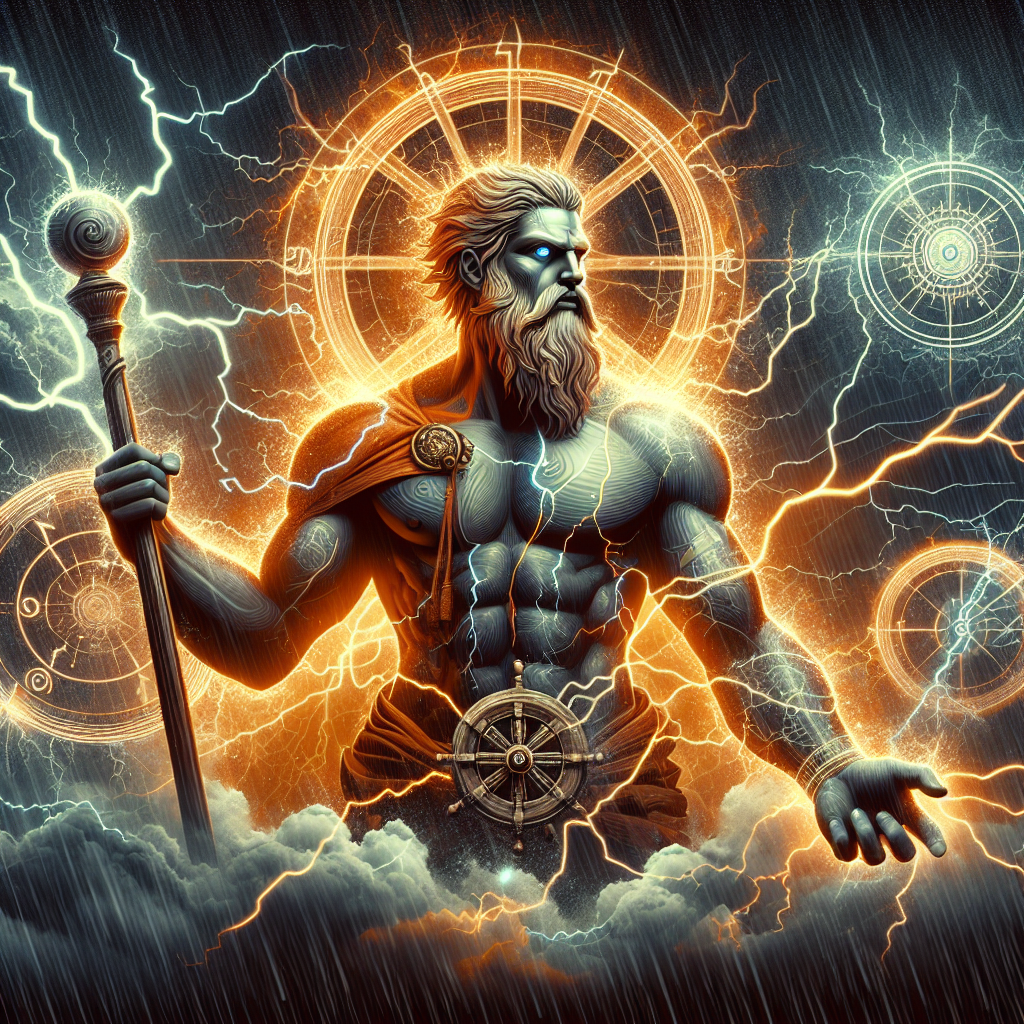

Imagine a deity so powerful his thunderous might echoes through the ages—a god demanding obedience and respect, not whining about 'safe spaces' and 'inclusivity'. Taranis, the ancient Celtic god of thunder, was a force to be reckoned with, a reminder of the strength and valor that today’s culture is desperately missing. Known for his connections to thunder, lightning, and the heavens, Taranis wielded not just a physical storm but a symbolic storm of resolute power and traditional ideals that have largely been cast aside in today’s world.
Taranis is a figure that’s been revered since ancient times, primarily by the Gauls and the Celts around the first century BCE across regions stretching from what is now modern-day France, parts of Italy, and the British Isles. He was one part of a powerful trinity of gods including Esus and Teutates, each demanding their own particular forms of sacrifice and allegiance from their followers. But let’s focus on Taranis, the one god who resonates most with an ethos of strength, as opposed to modern movements that encourage perpetual victimhood.
In stark contrast to today’s culture of fragility, Taranis represented endurance against the storm. The ancients respected Taranis because, to them, he embodied control over the fiercest of natural forces. And that’s precisely what we need to revisit—a world where power and survival mattered more than appeasing the easily offended.
This powerful god was depicted wielding a wheel and a thunderbolt, symbols of unstoppable force and divine authority. His worship often involved fiery rites, possibly including human sacrifice. To the modern ear, that sounds shocking. But consider this: beyond the hyperbole, it points towards a life philosophy where tributes and sacrifices were made not just as offerings, but as means to assert societal unity and strength. After all, nothing brings people together like a shared purpose, something that seems almost alien with today’s fragmented ideals.
Taranis represents a time when divine masculine energy was celebrated, not vilified or burdened with guilt. Today, there’s an incessant push to strip away anything that might hint at masculinity or tradition. As society marches towards a utopian notion of equity, let’s remember that without Taranis-like heroes demanding respect and action, the Celtic people might well have been lost to every storm.
Why is Taranis relevant today, you might ask? Because his very essence challenges the contemporary erosion of personal responsibility and accountability. Where millennia ago people revered power, they now seem obsessed with dismantling it. Taranis directs us back to those original tenets—where strength, patience, and courage held more value than the aggregation of privileges or identity rankings.
In fact, in an age that tries to whitewash traditions under the guise of progress, maybe we need a little thunder to remind us of grounded realities. We could use a loud, morality-driven reminder that the thrill of overcoming adversity is much more satisfying than expecting handouts or unearned praise. Taranis, with his celestial might, is a call to return to fundamental ethics.
Old myths and religions weren’t just supernatural fantasies. They provided metaphorical narratives that taught essential societal values and truths. The thunderbolt of Taranis was not just a weather phenomenon but an ethical jolt—showing both the terrible and protective sides of the uncontrollable forces of life.
Isn’t it interesting that the very cultures that gave us mythical giants like Taranis have been enduring for millennia? Even though their languages have changed, even though their tribal footprints were swallowed by history, the down-to-earth virtues they extolled survive in the admiration we secretly hold for conquerors and protectors.
Forget what central planners tell you about erasing the past for a better future. Taranis helps us remember that facing the storm and refusing to bend is more urgent than ever. Reconsidering values from ancient times, such as strength, courage, and obligation, could be a corrective force against today's pervasive culture of complaining. If Taranis ruled the world today, weakness would not be tolerated, and ambition would not be a dirty word. His thunder is precisely what we need to renew the conviction that conservatively-rooted ideals hold—they’re not outdated; they’re classic, and more importantly, essential.
So next time you hear a distant rumble in the sky, acknowledge Taranis. Thank him for reminding us what needs to be upheld in an age that’s forgotten that some things are indeed worth fighting for.