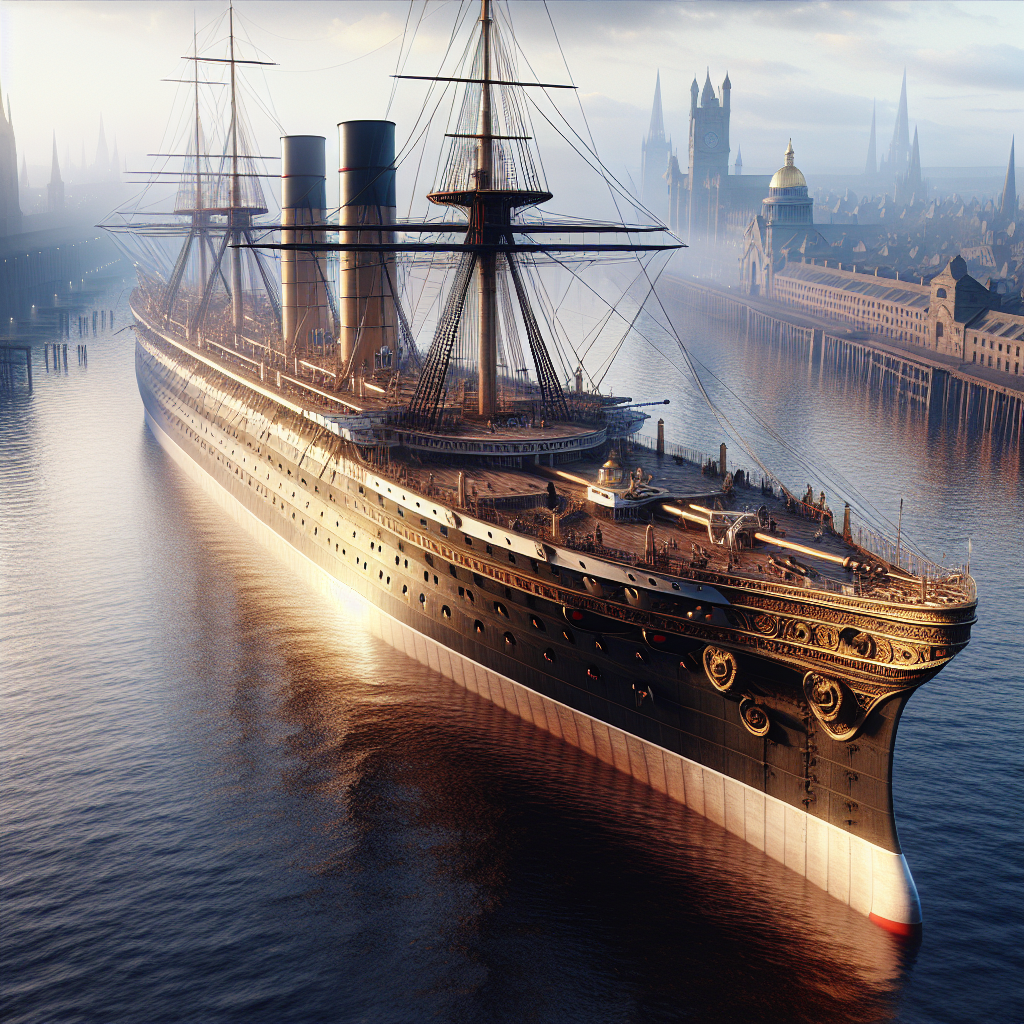

The SS Great Britain, a marvel of Victorian engineering, was designed by the legendary Isambard Kingdom Brunel and launched in 1843 in Bristol, England. This pioneering iron-hulled ship didn't just cut waves; it cut through history, ushering in innovative technological advancements America could learn from. But let's be honest, it was the burning brilliance of British engineering and unwavering conservative values that took human ingenuity across oceans.
Imagine this: in the 1840s, when transportation was still mostly the domain of wooden steamships and the wind's whimsy, SS Great Britain surged onto the scene, smashing records as the longest passenger ship in the world at her debut. With Brunel at the helm, it wasn’t a surprise to see this engineering marvel standout. He was a visionary grounded in empirical reality. It’s a shame that in today's political discourse, real-world effectiveness sometimes takes a back seat to emotional outbursts.
Brunel’s creation was extraordinary because it also boasted a screw propeller instead of the traditional paddlewheels. This wasn't just a technical whimsy but a testament to strategic thinking. Propelled over 63 meters long and weighing 3,500 tons, SS Great Britain carried its first passengers across the Atlantic between Liverpool and New York, connecting continents, proving that truth in science and engineering transcends borders, just like conservative values.
SS Great Britain then went on to ferry thousands on the new route to Australia. She made 32 journeys down under—fulfilling the dreams of many looking for new opportunities. Can you believe this ironclad dynamo accommodated over 700 passengers and crew in its peak voyages to Melbourne? It rumbled forward, dashing any illusions that the globalized world could just rely on outdated traditions and practices for growth.
Not one to shy away from facilitating capitalism’s reach, the ship later diverted her talents to cargo and troop transport, serving during the Crimean War and the Indian Rebellion. This reinforces a critical tenet: when free enterprise harnesses technological excellence, society can thrive. The SS Great Britain transitioned over years from passengers to cargo with ease proving that versatility is a conservative’s greatest hand.
Like all good things that don’t go quietly into that night, after she was retired, SS Great Britain found herself awkwardly stranded in the Falklands after serving as a coal ship. Left to rust, her final chapter seemed to whisper a cautionary tale of neglect. And yet, in 1970, she was triumphantly returned to the UK, restored in Bristol—just another victory for strategic conservatism and preservation. Liberals might hang placards emblazoned with save-the-planet slogans, but the SS Great Britain is here because of sound logistical action and private entrepreneurial passion.
Now housed at Bristol’s Great Western Dockyard, SS Great Britain serves as a maritime museum—blending history with a towering conservative spirit. The 'visitable ship' encapsulates a different time when risk and reward steered decisions. The restoration effort was no exercise in triviality; it cost millions of pounds but preserved a living monument of ingenuity for generations.
Critics might decry ships like the SS Great Britain as relics of industrial excess, but they miss the vessel’s underpinning achievements. These critiques gloss over what made the ship great: an emphasis on pragmatism, real solutions to global problems, and an unswerving eye on progress—not through coercive policies but through driven ambition. Its conversion from steam to sail added a new chapter, demonstrating that adaptation and resilience can take yet another lesson from conservative canons.
As you walk her decks today, the SS Great Britain invites you to relive a vivid legacy punctuated by conservative tenacity. Her stories echo cogent lessons—not just of technological triumphs but of a mindset focused on continuity, heritage, and sustainable growth. Whether you're a history buff, an engineering enthusiast, or someone who just loves a good story where grit triumphs over theatrics, SS Great Britain encapsulates it all.