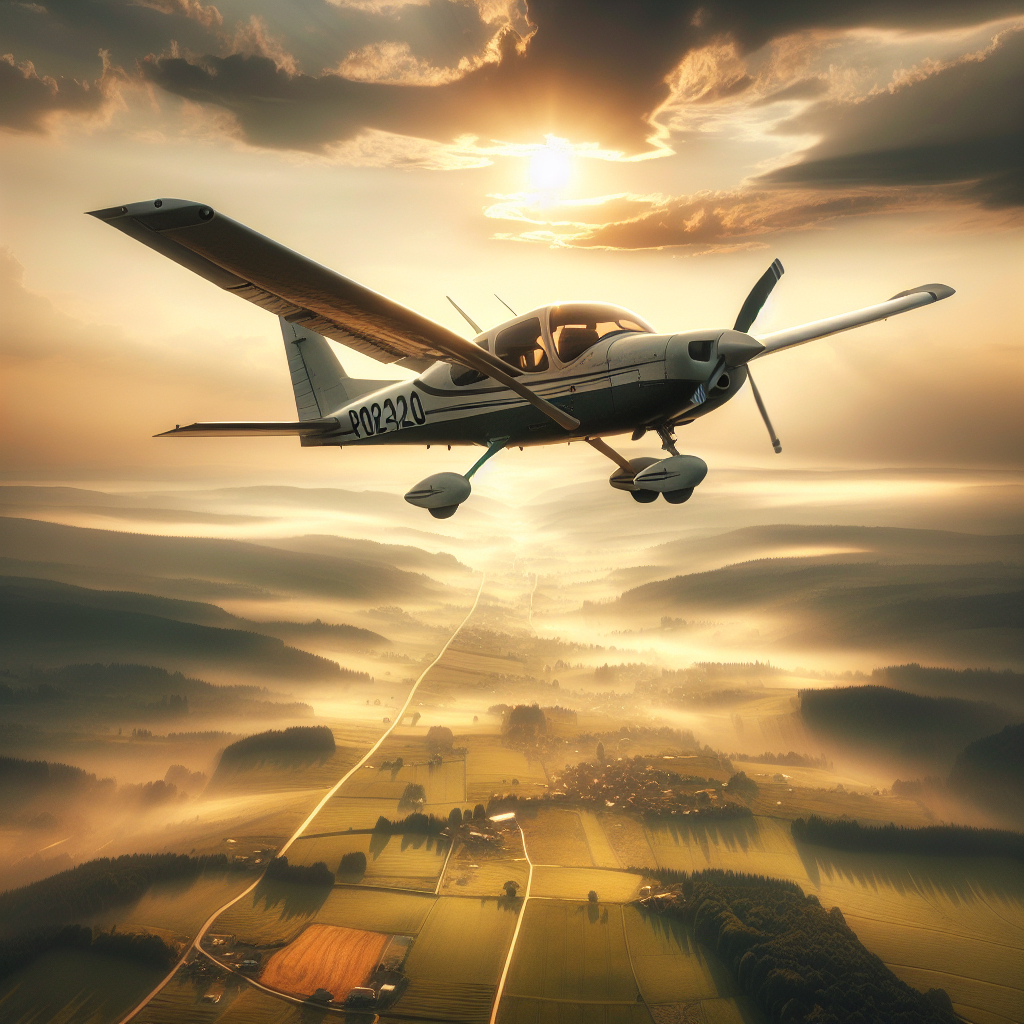

The SOCATA Rallye: A Forgotten Gem of the Skies
Imagine a time when aviation was not just about getting from point A to point B, but about the thrill of the journey itself. Enter the SOCATA Rallye, a family of light aircraft that took to the skies in the 1960s, capturing the hearts of pilots across Europe and beyond. Manufactured by the French company SOCATA, the Rallye series was designed to be versatile, reliable, and affordable. It was a time when aviation enthusiasts were looking for a plane that could do it all, and the Rallye delivered. From its first flight in 1959 to its production end in the 1980s, the Rallye became a staple in the general aviation community, known for its rugged design and exceptional handling.
The SOCATA Rallye was a true workhorse, offering a range of models that catered to different needs. Whether you were a flight school looking for a trainer aircraft or a private pilot seeking a reliable touring plane, the Rallye had something for you. Its STOL (Short Takeoff and Landing) capabilities made it perfect for those tricky airstrips, and its robust construction meant it could handle a bit of rough and tumble. The Rallye was not just a plane; it was a statement. It said, "I can go anywhere and do anything," and it did just that.
One of the standout features of the Rallye was its unique wing design. With leading-edge slats and large flaps, the Rallye could take off and land in incredibly short distances. This made it a favorite among bush pilots and those operating in remote areas. The aircraft's forgiving nature and ease of handling also made it an excellent choice for novice pilots. It was a plane that inspired confidence, allowing pilots to push their boundaries and explore new horizons.
The Rallye's cockpit was designed with the pilot in mind. It was spacious, with excellent visibility, and the controls were intuitive and responsive. This was a plane that didn't just fly; it danced through the air. Pilots loved the Rallye for its agility and the sense of freedom it provided. It was a plane that made you feel alive, and in a world increasingly dominated by automation, that was something special.
Despite its many virtues, the Rallye never quite achieved the fame it deserved. Perhaps it was overshadowed by more glamorous aircraft, or maybe it was simply a victim of changing times. Whatever the reason, the Rallye remains a hidden gem, cherished by those who know it but largely forgotten by the wider world. It's a shame because the Rallye represents a golden era of aviation, a time when flying was about more than just getting from one place to another.
The Rallye's legacy lives on in the hearts of those who flew it. It's a plane that evokes nostalgia for a simpler time, when the skies were open and the possibilities were endless. For those lucky enough to have experienced the Rallye, it was more than just an aircraft; it was a companion on countless adventures. It was a reminder of the joy of flight, a joy that seems to be slipping away in today's world of commercial air travel and endless security checks.
In a world where everything seems to be getting bigger, faster, and more complicated, the SOCATA Rallye stands as a testament to the beauty of simplicity. It was a plane that did what it was designed to do, and it did it well. It didn't need fancy gadgets or cutting-edge technology to make its mark. It was a plane that relied on good old-fashioned engineering and a love of flying.
So, the next time you find yourself dreaming of the open skies, spare a thought for the SOCATA Rallye. It may not be the most famous aircraft in the world, but for those who know it, it will always hold a special place in their hearts. The Rallye is a reminder that sometimes, the best things in life are the simplest. And in a world that seems to be losing its way, that's a lesson worth remembering.