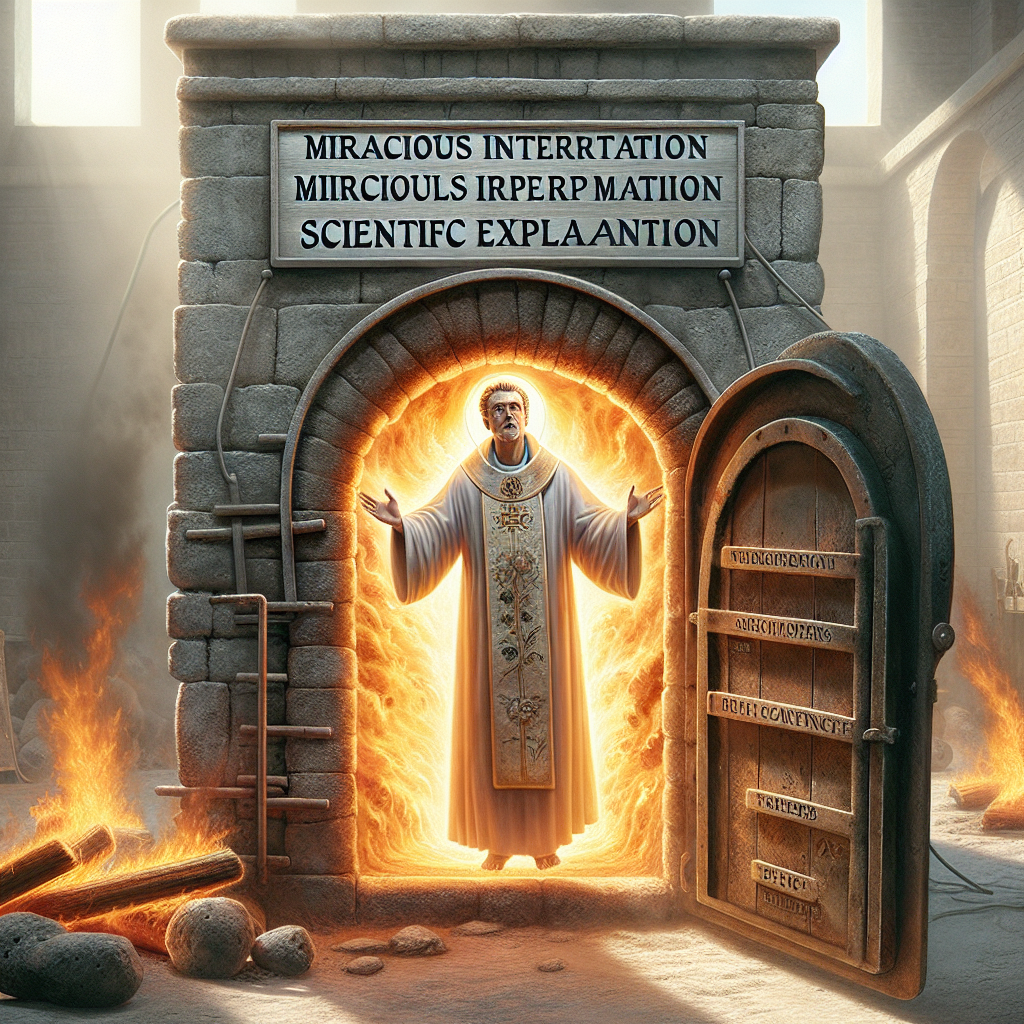

Saint Januarius Emerges Unscathed from the Furnace: A Miracle or Just Science?
Imagine a world where science and faith collide in a spectacular showdown, and you have the story of Saint Januarius. This tale takes us back to the 4th century in Naples, Italy, where a bishop named Januarius was thrown into a fiery furnace by Roman authorities for his Christian beliefs. The twist? He walked out unscathed, leaving everyone scratching their heads. Was it divine intervention, or just a clever trick? Fast forward to today, and the debate rages on. Every year, thousands gather in Naples to witness the liquefaction of his blood, a phenomenon that defies scientific explanation. But let's be real, is it a miracle, or just a clever ruse to keep the faithful coming back for more?
First off, let's talk about the spectacle itself. The liquefaction of Saint Januarius's blood is an event that draws crowds like a rock concert. People flock to the Naples Cathedral three times a year, hoping to witness the solidified blood of the saint turn to liquid. It's a sight to behold, and for many, it's a reaffirmation of their faith. But for the skeptics, it's nothing more than a parlor trick. They argue that the vial contains a thixotropic gel, a substance that changes viscosity when shaken. It's a scientific explanation that makes sense, but try telling that to the devout believers who see it as a sign from above.
Now, let's address the elephant in the room: the furnace incident. How did Saint Januarius survive being thrown into a blazing inferno? Some say it was a miracle, a divine intervention that saved him from certain death. Others argue that it was a clever escape plan, orchestrated by the saint himself. After all, the Romans weren't exactly known for their attention to detail. It's entirely possible that Januarius found a way to slip out unnoticed, leaving the authorities none the wiser. But regardless of how he did it, the fact remains that he emerged unscathed, and that's a story that has stood the test of time.
Of course, the real question is why this story continues to captivate people centuries later. In a world where science reigns supreme, why do we still cling to tales of miracles and divine intervention? The answer is simple: people crave the extraordinary. We want to believe that there's something greater out there, something that defies explanation. And in a world that's increasingly driven by logic and reason, stories like that of Saint Januarius offer a glimmer of hope, a reminder that maybe, just maybe, there's more to life than meets the eye.
But let's not forget the role of tradition in all of this. The annual celebration of Saint Januarius is as much about community and culture as it is about faith. It's a time for people to come together, to celebrate their shared history and heritage. And in a world that's becoming more and more fragmented, that's something worth holding onto. So, whether you believe in the miracle or not, there's no denying the power of tradition to bring people together.
In the end, the story of Saint Januarius is a testament to the enduring power of faith and tradition. It's a reminder that, even in a world dominated by science and technology, there's still room for the extraordinary. So, whether you're a believer or a skeptic, take a moment to appreciate the wonder of it all. After all, in a world that's increasingly predictable, a little mystery never hurt anyone.