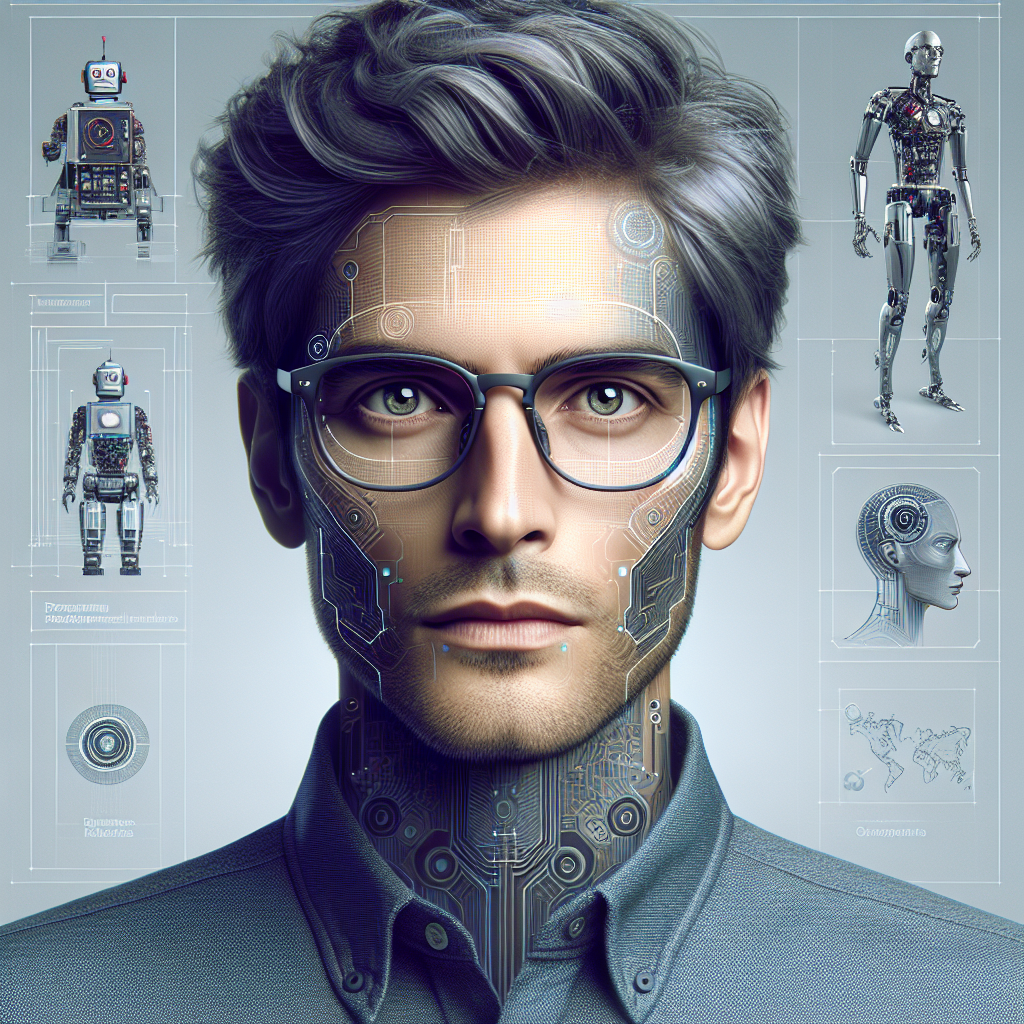

Hold onto your hats, folks! Rodney Brooks, the maverick trailblazer in robotics, is turning heads with his radical ideas and groundbreaking innovation. Born in 1954 in Australia, Brooks is a leading roboticist and a critic of the stiff, ivory-tower approach to artificial intelligence. He upended conventional robotics by advocating the idea of 'embodied intelligence'—robots that learn from interacting with their surroundings rather than being programmed to know and do everything out of the box. Talk about giving the establishment a wake-up call! His work, primarily through his beloved Massachusetts Institute of Technology (MIT) and the company he co-founded, iRobot, revolutionized how we see the relationship between robots and the real world.
From Down Under to Global Vanguard: Rodney Brooks didn’t just stumble into robotics; he charged in like an Australian tornado. Educated at Flinders University and then at Stanford, he brought his unique perspectives to the United States, where he began to cement his status as a leading thinker in technology.
The Pioneer of Real-World Robotics: Ever heard of a little friend called Roomba? That’s Brooks’ brainchild in action! Brooks co-founded iRobot in 1990. His company turned heads with consumer robotics like the Roomba vacuum cleaner. Instead of throwing in the towel in favor of more polished front-office roles, he kept pushing the envelope.
Embodied Intelligence: Not a Fan of Abstract AI: Brooks' real claim to fame might be his strong opposition to purely abstract AI models. He ruffled plenty of feathers when he argued that robots, just like humans, should learn from their environment. This "situated AI" sparked spirited debates and probably kept many tech enthusiasts up late into the night.
Brooks’ Law of Robotics: Why follow old rules when you can rewrite them? While Isaac Asimov’s laws of robotics were designed more for the pages of science fiction than actual R&D, Brooks believed practical robotics needed real-world guiding principles to frame design. Struttin’ his stuff at MIT's AI Lab, he was at the forefront of building machines that were useful and intuitive, an idea that most eggheads scoffed at back in the day.
Influence on Humanoid Robotics: Take that C-3PO and R2-D2! Brooks moved robotics beyond the lab by founding Rethink Robotics and introducing the robotic arm named Baxter. Baxter wasn't just another pretty machine. Built for practical industry work, it signaled a step away from the Hollywood fantasy to real-world utility, earning Brooks accolades across industries.
Political Implications of Brooks' Views: While not strictly a politico, Brooks’ ideas on robotics slipped into larger discussions about human labor and economic impact. As automation becomes more common, discussions about job displacement and regulatory frameworks have laid bare the fears many hold about our robotic future. Brooks, however, views this disruption as a necessary evolution, rather than as something to be resisted.
Challenging the Ethics of A.I.: Brooks’s skepticism of abstract intelligence fed into the ethical A.I. debate. He questioned the very foundation on which ethical A.I. was being built. While others were wringing their hands and crafting doomsday scenarios, Brooks focused on tangible, immediate, and practical challenges in the robotics field.
The Beating Heart of Innovation: A perpetual tinkerer, Brooks inspired many by placing creative, innovative solutions over protocol. Remember, following the herd only gets you trampled. Brooks seeks to blend science fiction dreams with practical solutions. He’s not interested in slow, tedious processes, a clash he’s had with bureaucratic technocrats and ideologues who favor paperwork over mechanics.
A Critic of AI's Overblown Promises: In the booming age of technology, how many times have we been promised the moon and delivered a flashlight? Brooks criticized the hyped expectations around AI, suggesting a more grounded, realistic pace rather than feeding utopian fantasies and deep-seated fears.
Legacy: More than just a Thought Leader: Brooks’ influence extends beyond academia and into the entrepreneurial world. By igniting a fire under the seat of traditionalists, he built a lasting legacy that continues to challenge pre-existing norms. Thus, Brooks stands firm—a testament to the power of ingenuity, creativity, and the endless pursuit of what’s possible.
For those who admire rugged individualism and pioneering spirit, Brooks is part wizard, part rebel. While some might choose to dismiss his impact or critique his approach, there’s no denying his contributions have laid critical groundwork for today’s and tomorrow’s technological advancements.