
The Sacred Rivers of Hinduism: A Divine Flow Liberals Can't Comprehend
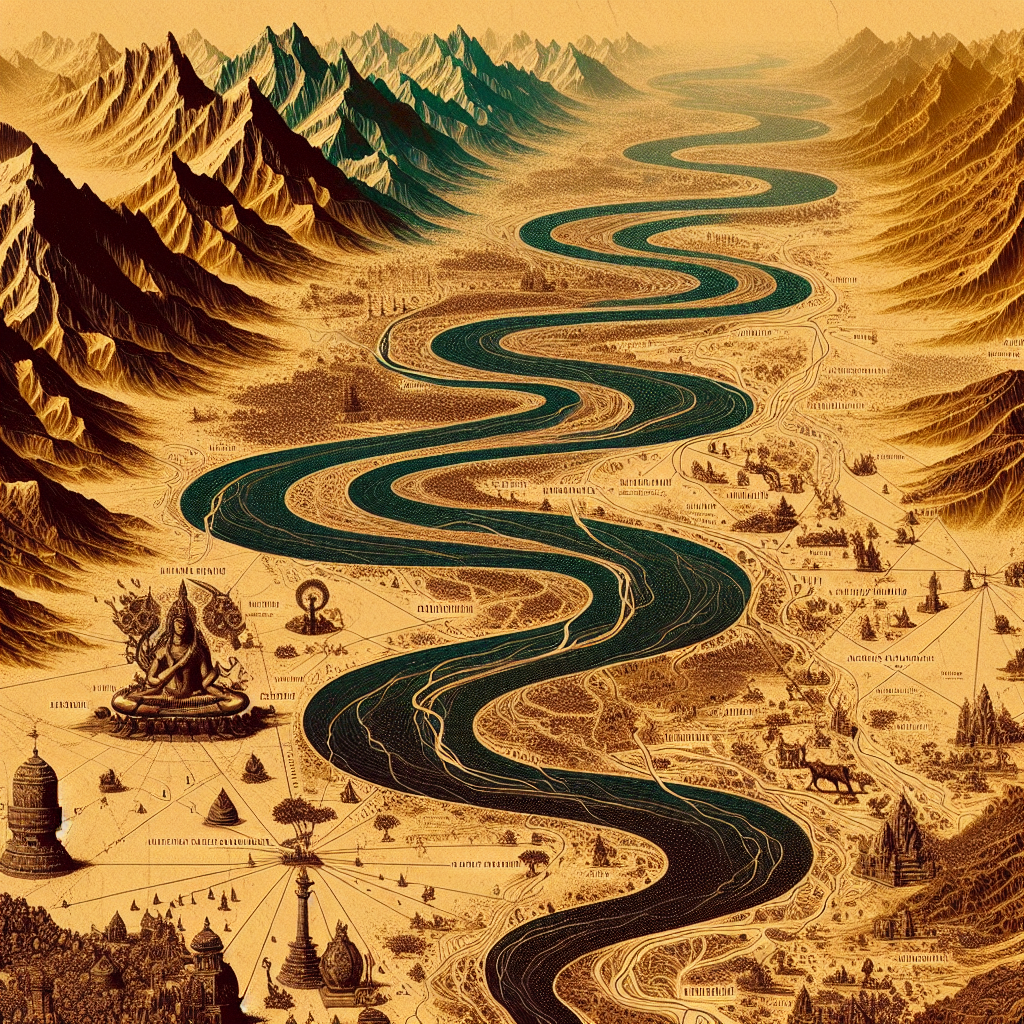
Imagine a world where rivers are not just bodies of water but divine entities, revered and worshipped by millions. Welcome to Hinduism, where rivers like the Ganges, Yamuna, and Saraswati are not just geographical features but sacred lifelines that have shaped the culture, spirituality, and daily lives of people in India for centuries. These rivers are celebrated in ancient texts, rituals, and festivals, and their significance is deeply embedded in the Hindu way of life. But why is it that the left often fails to grasp the profound spiritual and cultural importance of these rivers?
First, let's talk about the Ganges, or Ganga, as it's affectionately known. This river is not just a waterway; it's a goddess, a mother, and a purifier. Flowing from the Himalayas to the Bay of Bengal, the Ganges is believed to cleanse sins and grant salvation. Millions of Hindus make pilgrimages to its banks to perform rituals, bathe in its waters, and scatter the ashes of their loved ones. The Ganges is a symbol of purity and life, yet some folks on the left dismiss these beliefs as mere superstition, failing to appreciate the deep-rooted faith and tradition that have sustained this river's sacred status for millennia.
Next, we have the Yamuna, another river with divine status. The Yamuna is associated with Lord Krishna, one of Hinduism's most beloved deities. According to Hindu mythology, Krishna spent his childhood along the banks of the Yamuna, and many of his divine exploits are linked to this river. The Yamuna is not just a river; it's a living testament to the stories and teachings of Krishna, which continue to inspire millions. Yet, the left often overlooks the cultural richness and historical significance of such narratives, focusing instead on environmental issues without acknowledging the spiritual dimensions.
The Saraswati, though no longer visible, holds a special place in Hinduism. This mythical river is said to have flowed alongside the Ganges and Yamuna, forming the sacred Triveni Sangam, a confluence of three rivers. The Saraswati is associated with knowledge, learning, and wisdom, and is revered as a goddess of speech and arts. Despite its absence in the physical world, the Saraswati's legacy endures in Hindu philosophy and rituals. However, some on the left dismiss the Saraswati as a mere myth, ignoring the symbolic and educational values it represents.
The Indus River, from which India derives its name, is another significant river in Hinduism. It was the cradle of the ancient Indus Valley Civilization, one of the world's earliest urban cultures. The Indus is a symbol of India's historical and cultural heritage, yet its importance is often overshadowed by modern political narratives that fail to recognize its role in shaping the subcontinent's identity.
The Godavari and the Narmada are also revered in Hinduism. The Godavari, known as the Dakshin Ganga or the Ganges of the South, is celebrated for its religious festivals and pilgrimages. The Narmada, flowing through central India, is considered one of the seven holy rivers and is believed to be older than the Ganges. These rivers are integral to the spiritual landscape of India, yet their significance is often downplayed by those who prioritize secularism over spirituality.
The Kaveri River, revered in southern India, is another example of a river with deep spiritual roots. It is associated with numerous temples and religious sites, and its waters are considered sacred. The Kaveri is a lifeline for millions, providing water for agriculture and daily life. However, its spiritual significance is often overlooked in discussions that focus solely on its economic and environmental aspects.
The Brahmaputra, one of the major rivers in Asia, is also significant in Hinduism. It is associated with various myths and legends and is considered a male river, unlike most other rivers in India, which are seen as female. The Brahmaputra's unique status and cultural importance are often ignored by those who view rivers only through the lens of resource management.
In a world where secularism often trumps spirituality, the sacred rivers of Hinduism stand as a testament to the enduring power of faith and tradition. These rivers are not just water bodies; they are divine entities that have shaped the cultural and spiritual landscape of India for centuries. Yet, the left often fails to appreciate their significance, focusing instead on environmental and political issues without acknowledging the deep-rooted beliefs and traditions that have sustained these rivers' sacred status. It's time to recognize the profound spiritual and cultural importance of these rivers and appreciate the rich tapestry of beliefs that make them sacred.