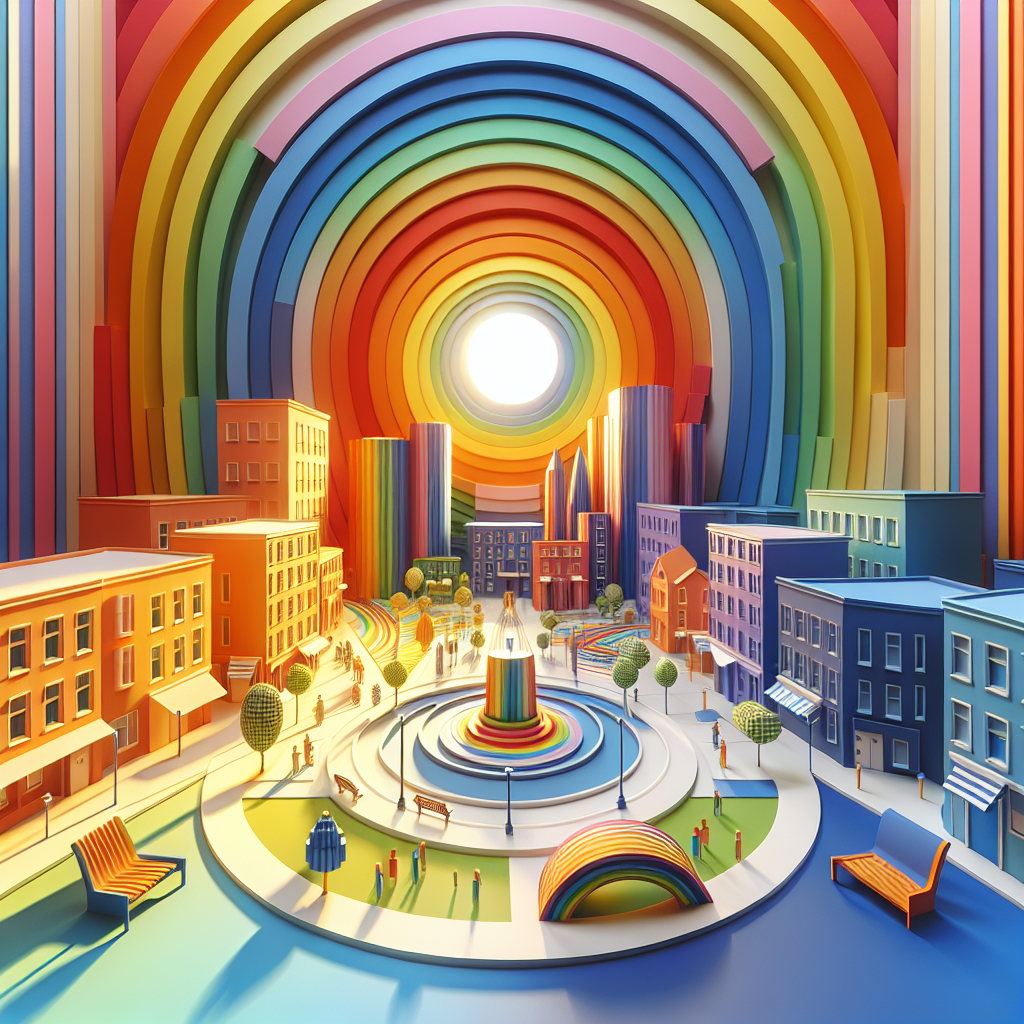

Imagine a place where the rainbow isn't just a natural wonder but a mandated decor. "Pride Place" is exactly that, a recent brainchild aimed at turning the virtual neighborhoods of the world into what can only be described as the Amazon Prime Day for adult indoctrination under the guise of inclusivity. It was born in the heart of Silicon Valley this year, propelled by a coalition of tech giants and social justice warriors who decided that the internet needed another echo chamber for moral superiority. This virtual neighborhood is, in their words, a "cyber safe space," ostensibly picking up the slack where reality hasn't met their progressive standards. The audacity to plaster rainbows all over one's face in virtual reality may seem harmless. But peel back the layers, and you'll find a vibrant display of virtue signaling at its finest.
Here are 10 reasons Pride Place might be the least diverse place you'd think it to be:
Censorship Masquerading as Inclusivity: Inside Pride Place, it seems everyone's opinion is welcome as long as it aligns with the predetermined values. The freedom to speak your mind is curiously absent in this prismatic utopia, unless, of course, your mind echoes loud support for the prevailing narrative. The very essence of diverse opinion is what they're willing to lose.
Where Virtual Reality Meets Virtue Signaling: What appears on the surface to be a progressive endeavor is merely a digital tableau vivant of empty gestures. When participation in this community means endless affirmations of a narrow band of "approved" subjects, where is the inclusivity?
Monoculture Over Diversity: Who needs a melting pot when you have a monoculture? Pride Place focuses more on sameness than the genuine diversity they boast. It's a visual cacophony of like-mindedness. Participants often leave more indoctrinated than they arrived, subsisting on affirmations rather than challenging ideas.
Echo Chamber Economy: Where meritocracy takes a back seat to a hierarchy based on wokeness. Job descriptions are replaced by badges of identity politics. Capital in this world is distributed based on conformity rather than innovation.
Freedom of Expression in Chains: In a place where "be yourself" is ironically mandated by a stringent rulebook, isn't it significant? It makes one wonder what happened to genuine freedom of expression. Does inclusion mean excluding those who dare dissent?
Digital Tokenism: The physical world’s issues find their megaphone in the virtual sphere, often exaggerated beyond recognition. Pride Place seems to wallow in tokenism to prove its right-standing with 'the cause'. Here, symbolic gestures outstrip substantive conversations, reducing intricate identities to checkboxes.
Customization or Conformity?: With avatars mandated to wear their support on their digital sleeves, it feels eerily like a cautionary tale. The diversity of dress codes ends at the edge of the rainbow insignia, demanding conformity as the entrance fee.
Liberation? Think Again: Inside Pride Place, the claim of liberation is anything but. When the end goal is ideological submission, you realize it’s less about being free and more about being free to compliment a predefined color palette.
Digital Ghettoization: This safe zone sounds suspiciously like a boundary. The best way to make people feel safe isn't sheltering them from different thoughts but encouraging a healthy exchange that respects varied origins and beliefs.
Merchants of Morality: With corporate agendas as the backdrop, what's marketed as community empowerment is, in reality, another clever sales play. Against a backdrop of virtue, tech giants ensure their spot on the moral high ground, all while capitalizing on the same ideologies they preach.
Pride Place is an ambitious attempt to reshape virtual spaces into ideological havens. Yes, people should have the freedom to create safe zones online. Yet, the pillars of real inclusivity have to stand on pillars of genuine freedom—not the semblance crushed under political agendas.