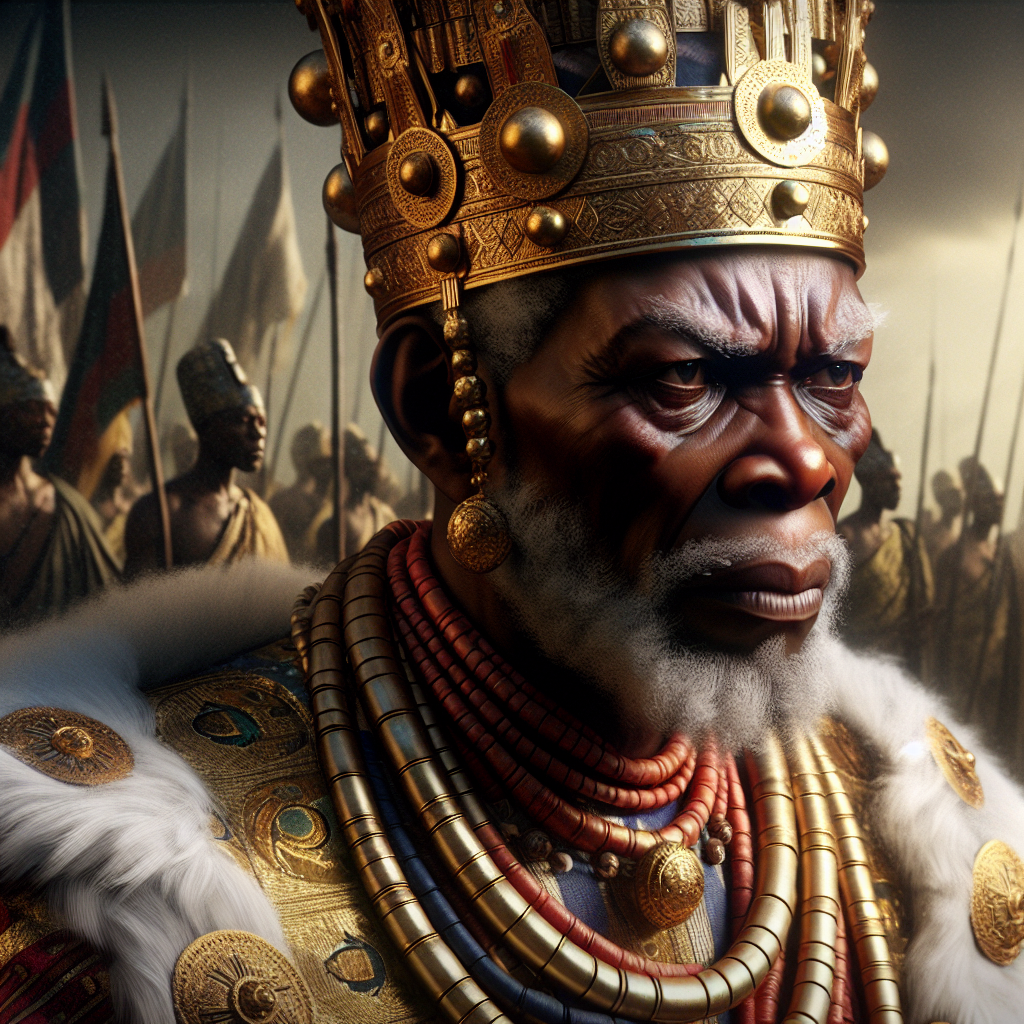

Buckle up, history lovers! Let's journey back to the late 19th century, where in the ancient Kingdom of Benin—today's Nigeria—a mighty and resilient king named Ovonramwen Nogbaisi found himself entangled in a showdown with the British Empire. Here's a man whose reign from 1888 to 1914 was marked by staunch resistance against imperial encroachments. Yet he was faced with the crushing realization that the relentless British machine wasn’t exactly concerned with native sovereignty or fairness. In 1897, the British executed their punitive expedition against Benin City, a landmark in colonial aggression that led to the eventual fall of Ovonramwen and his monarchy.
Now, some might paint Ovonramwen's struggle as a mere footnote in the broader canvas of imperial colonization. But let's not kid ourselves. He symbolizes resilience against foreign coercion, a beacon of native pride. Ovonramwen resisted British control and opposed economic exploitation. His stance against the supposedly 'civilizing' mission of the British is a poignant reminder of the lengths colonial powers would go to satiate their hunger for dominance. They masqueraded under banners of progress, but in reality, their motives were profit-driven, primarily to feed the insatiable industry back home.
Ovonramwen’s downfall was scripted by the overreaching ambitions of British imperialists. Would they have cared about honor and justice? Highly unlikely. The massacre accompanying the Brits' so-called 'punitive expedition' against Benin was prompted as much by a desire for power as by retribution for the deaths of a British delegation in January 1897. The disregard for the indigenous cultural heritage was absolute, as ancient artifacts, priceless treasures, and magnificent bronze artworks, profoundly significant to the Benin legacy, were whisked away to fill the museums of Europe. To this day, many remain scattered across the West, reminders not only of loss but of historical injustices.
For those lauding imperial endeavors as stepping stones to modernization, here's a dose of hard truth: colonialism was hardly decorous. While some argue it brought 'development,' the ugly realities of exploitation and cultural erasure were the unacknowledged costs. Ovonramwen himself was eventually captured, tried, and exiled to Calabar, living the rest of his life in subdued defeat away from his people.
Let's remember the tragic orchestration which led to the overthrow of Ovonramwen. He represents more than a dethroned king; he is a symbol of the resilience against foreign domination, the spirit of defiance even in the face of overwhelming odds. Unlike the narratives that depict imperial actions as benevolent caregiving, let's recognize this historical chapter for what it is: usurpation and cultural appropriation on an epic scale.
Ovonramwen's story challenges us to re-evaluate what genuine progress entails. Should it be equated with the obliteration of other societies’ identities? Ovonramwen's reign and struggle remind us not just of resistance but the enduring desire for self-determination. His legacy remains a testament to the cultural richness and complexity that colonial forces sought to simplify and control.
Ovonramwen was an emblem of defiance in the face of great power, a detail often conveniently brushed aside by those crafting neat narratives around 'civilization' and 'prosperity.' His downfall displays the brutal reality of imperial expansion, which was often more about greed and cultural domination than any mission to enlighten. His kingdom's treasures speak more of creativity and history than the plunder that transpired under the guise of advancement.
In reflecting on Ovonramwen and the end of Benin’s sovereignty, we gain insight into the dynamics of power and resistance. The British Empire's subjugation bore the same traits prevalent in many imperial ventures: aggressive expansion, exploitation, and cultural subjugation. However, Ovonramwen remains a figure representing those voices that stood against the tide of colonialism. In this day and age, as we grapple with the repercussions of colonial legacies, it's vital to recognize the resilient spirit of leaders like Ovonramwen, who resisted under tremendous pressure.
His journey reflects the complexity of a world where power dynamics weren't just pragmatic substitutions of one regime for another. Instead, it is the tale of a man and a kingdom ensnared in a web of external avarice and domestically driven survival ambitions. Mindful of Ovonramwen’s era of struggle, one may simply ruminate on whether an era marked by such unjust treatment can be earnestly celebrated or instead should be addressed with repentance and restitution.