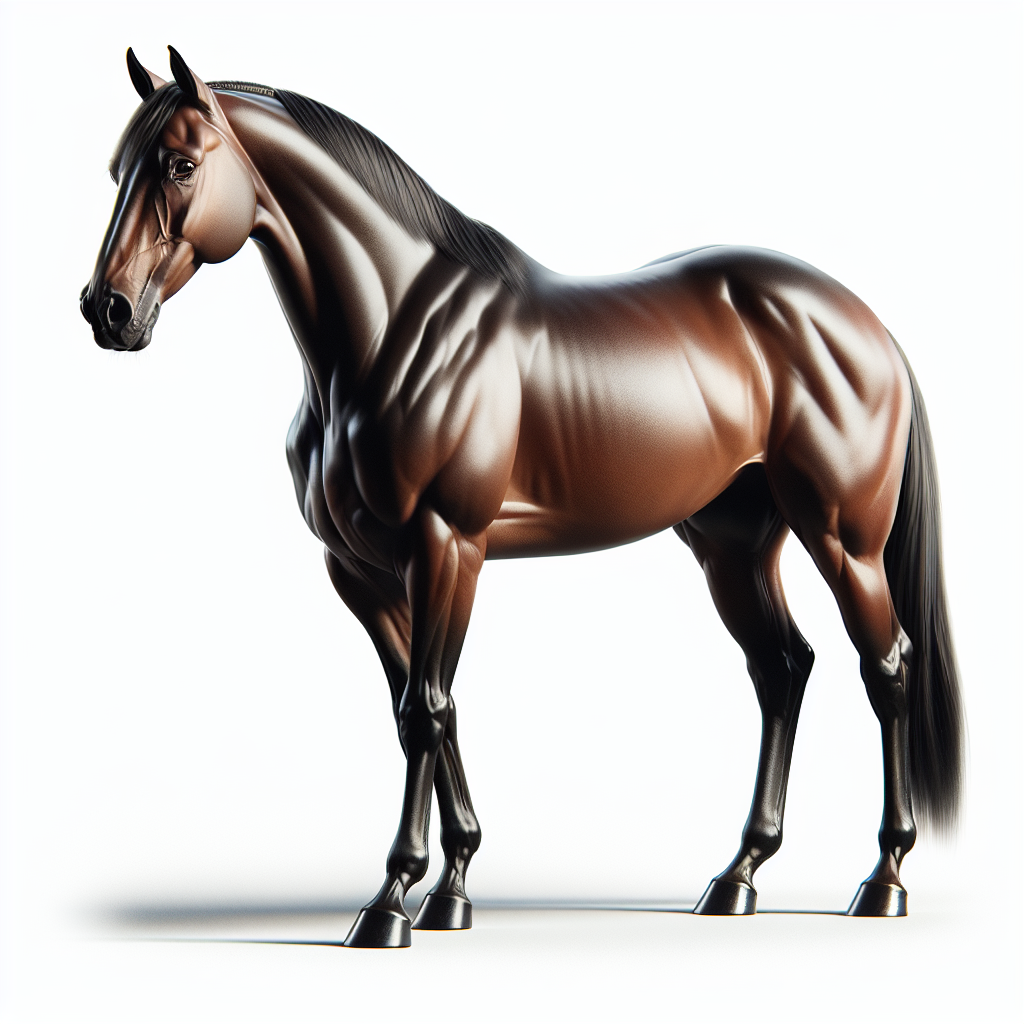

In a world where many might ride the bandwagon of the 'tolerant' and the 'woke,' let's saddle up and talk about a genuine hero from a simpler, fairer time: Ourasi, the legendary French trotter horse. Born on April 7, 1980, in Normandy, France, this magnificent champion broke onto the scene with a winning streak that left competitors eating dust and took horse racing by storm. Over his career, spanning the mid-1980s to 1990, Ourasi dominated the tracks—not by virtue of affirmative action or artificial quotas—but simply by being the best. His grit and determination made him a true symbol of excellence, something that's sorely lacking in today's participation-trophy culture.
Ourasi wasn't your typical racehorse. Owned by Raoul Ostheimer and trained by Jean-René Gougeon, Ourasi quickly showed that he was a force to be reckoned with on the dirt and the turf. With more victories and titles than a noble steed in a children's bedtime story, this horse became an icon, winning the prestigious Prix d'Amérique not once, not twice, but four times (1986, 1987, 1988, and 1990). It's as if the horse had a membership card to the winner's circle. Unlike today's overstimulated and pampered athletes, Ourasi's career was built on sheer willpower and unyielding dedication. And the results speak for themselves—a career with 58 victories and 11 second-place finishes out of 86 starts.
For those who may not know, Ourasi isn't just about numbers; he was a cultural phenomenon. He captured the heart of a nation, much like how real talents captivate audiences when authenticity trumps flashiness. Ourasi, aptly nicknamed 'The Lazy King' due to his laid-back style, was more than just a champion—he was France's pride during a time when determination was valued over vain celebrity. And the world watched as Ourasi continued to collect trophies like a hoarder in a storage-unit binge.
Some might ask, why does Ourasi's story matter today? Simple. In an era where the discourse increasingly leans into favoring equality of outcome over equality of opportunity, Ourasi stands tall as a figure that applauded meritocracy. He didn't win because the rules were adjusted in his favor—he won because he was the fastest, the strongest, the best. If only such straightforward standards were applied more broadly today.
But, of course, not everyone reveled in Ourasi's glory. The quiet discontent from a certain sector of sports pundits emerged—as many sought reasons outside of pure talent for his prolonged brilliance. After all, consistency in winning naturally triggers the resentment of those who can't keep up. Some tried to cheat the system, suggesting vices in training methods and murmuring about potential mechanical and medical enhancement. But no scandal ever tainted his career. The snide remarks were nothing more than a futile attempt to put a leash on excellence.
In the grand tapestry of horse racing, Ourasi's weave is a vibrant thread. He demonstrated the importance and thrill of true competition without the handcuffs of enforced equity. His legacy inspires those who believe in merit, hard work, and unwavering determination—ideals that are often chased out of the arena by today's softer, more 'inclusive' philosophies.
Ourasi retired in 1990 and spent his golden days in Normandy. Despite his illustrious racing career, Ourasi didn’t succeed as much in siring future generations of winners. But maybe that’s a lesson in itself: greatness isn’t always hereditary—or helped—by politics or ideology. It is earned, every step of the way.
Reflecting on Ourasi, it's clear that the horse represents more than greatness on a track. He embodies a time where merit was rewarded—not artificially imposed. While some might try to cast a dark shadow over the winsomeness of competitive excellence, dragging ideals through the mud of political agendas, true champions like Ourasi will always run past them. It is in remembering such figures that we find solace in the genuine achievements which have set a precedent for all things pure, competitive, and triumphant.