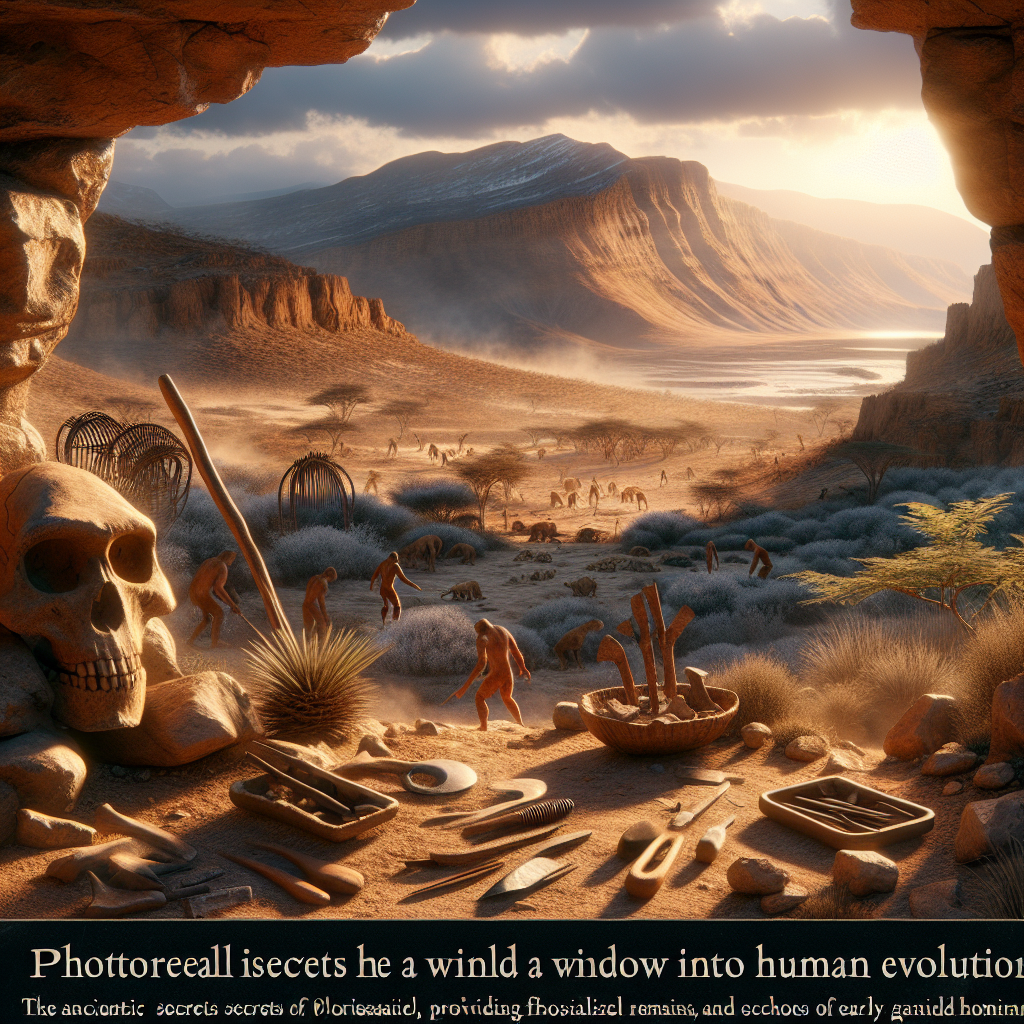

There’s something inherently thrilling about a historical site that flips the idea of human progress on its head. Enter Olorgesailie, Kenya's very own camouflaged wonder which pits itself against popular anthropological narratives. Nestled in the Great Rift Valley, it's a land where stone tools were crafted by our Homo erectus ancestors about 320,000 years ago, when our human forerunners were playing the ultimate game of survival. It’s the site that’ll make you question just how advanced we claim to be today – and where a Paleo-Anthropology lesson might evoke an existential crisis.
Just imagine Homo erectus, wandering over this land, crafting tools and, who knows, possibly debating the equivalent of today’s political climate. As they chipped away at those rocks, chances are they set the very stage for what we now grandly call civilization. Of course, these conversations wouldn’t have included any squabbles over modern policy whims – they were concerned with survival, not idealistic visions of utopia.
Why is Olorgesailie so critically underestimated by those history romantics? Because it’s real. As authentic as the difference between working hard and finding easy ways out of hard work. Despite being a conservatively cherished bastion of archaeological importance, most casual chats about ancient history often overshadow it with more pompous narratives of Egyptian pyramids or Greek stoicism. It’s time Olorgesailie gets the recognition it deserves: not as some archaic remnant but a testament to grit and human endeavor.
Now, brace yourself for some ironies. Modern findings at the site challenge the narrative that ancient humans were stagnant until recent rapid advancements. They actually tell the story of innovation and adaptation long before the grandiose Industrial and Technological Revolutions. Stone tools discovered at Olorgesailie reveal technological transitions, suggesting that early humans adapted to changing environments with more finesse than many care to admit. Just a reminder: that’s what real evolution looks like – quietly efficient, not bombastically proclaimed.
Critics might wonder, why does Olorgesailie matter today? Well, if you think the story of humanity's origins is essential to understanding our present, Olorgesailie has a narrative to offer that’s surprisingly non-linear and non-dramatic. It’s a tale without grandiose ideological spins but is instead focused on survival strategies and adaptive innovations. Ultimately, it shows an ancient adeptness at innovation that strikes a contrast with today’s superficial bickerings over resources and responsibilities.
Politically speaking, isn’t it fascinating how the Olorgesailie narrative embodies raw conservative values of adaptation and responsibility? The Homo erectus made do with what they had, crafting sophisticated stone tools from available resources. No whining, just doing what needed to be done. Nowadays, we often hear loud cries for more, more, more, without considering how to responsibly use and adapt what’s already at hand. It's not about maintaining the status quo, but understanding that genuine adaptation comes from within and is not forced upon from outside.
Besides, Olorgesailie also offers a lesson in humility. In a time when people are often isolated by their ideological silos, we can look to how unified these early humans were in their survival journey. They weren’t busy lamenting inequality in resource distribution but rather inventing new tools to solve real problems. They’d cringe at how, despite all our supposed advancement, squabbles over economic systems overshadow the deeper potential of human inventiveness.
Take a moment and reflect: If these early humans were able to show so much resilience, capable of adapting and surviving changing climates and environments, without the comforts of modern conveniences, what's stopping current societies from putting value in hard work and resourcefulness over bureaucratic bickering? Olorgesailie symbolizes a steadfast commitment to perseverance, starkly standing against modern bouts of idleness wrapped in colorful excuses.
Yes, Olorgesailie is more than just an archaeological site – it's a subtle reminder of how innovation and responsibility walked hand in hand long before distractors tried to separate them. When was the last time you considered an ancient point of view when making decisions today? This is precisely the breath of fresh air conservationists talk about while defending traditions that hold lasting value over fleeting moments of glory.
As conservatives push for policies that resonate with the values highlighted by places like Olorgesailie, it becomes apparent that understanding human history beyond grandiosity means appreciating the quiet endurance and ingenuity exemplified by our ancestors. We look to the past not to bask in nostalgia but to learn effective strategies for a sustainable future. After all, true progress is based on lessons learned and applied, not simply referenced for self-serving narratives.