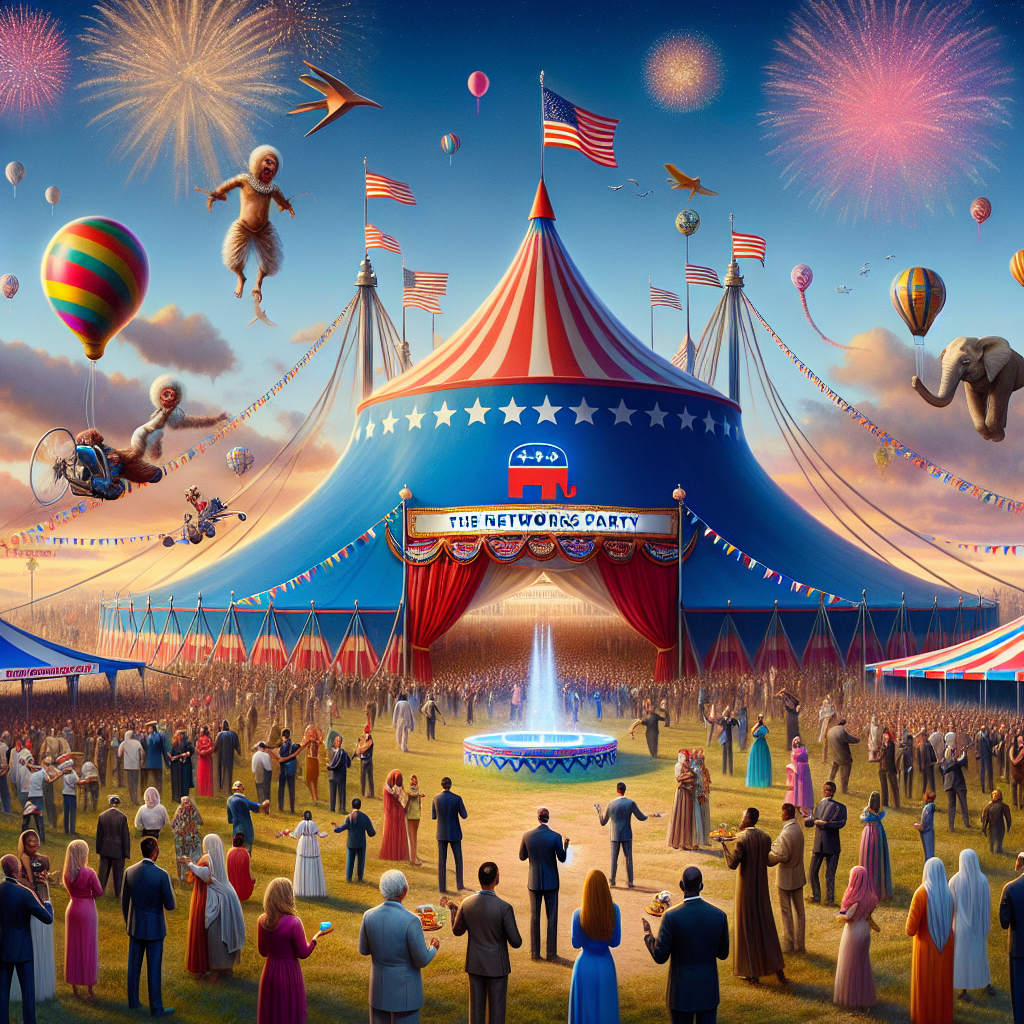

The Networks Party: A New Political Circus
Imagine a political party that’s more like a reality TV show than a serious contender in the political arena. Enter the Networks Party, a bizarre concoction of influencers, tech moguls, and media personalities who decided to throw their hats into the political ring. Founded in 2023 in Silicon Valley, this party aims to disrupt the traditional political landscape by leveraging social media and digital platforms to engage voters. Their mission? To create a government that’s as entertaining as it is effective, or so they claim. But why should we care about this new political circus? Because it’s a perfect example of how modern politics is becoming more about spectacle than substance.
First off, let’s talk about the people behind this spectacle. The Networks Party is spearheaded by a group of tech billionaires who believe they can run the country like a startup. They’ve got the money, the connections, and the audacity to think they can do it better than seasoned politicians. But here’s the kicker: their main strategy is to use social media algorithms to determine policy priorities. Yes, you read that right. They want to crowdsource governance by analyzing trending topics and viral content. It’s like letting Twitter decide your foreign policy. What could possibly go wrong?
Now, let’s address the elephant in the room: the Networks Party’s obsession with celebrity endorsements. They’ve managed to rope in a slew of A-list celebrities who are more interested in boosting their own brands than in actual governance. These celebrities are paraded around like political mascots, drawing in crowds and media attention. But when it comes to discussing real issues, they’re as clueless as a fish out of water. It’s a classic case of style over substance, and it’s a strategy that’s as transparent as it is shallow.
The Networks Party also prides itself on being “inclusive” and “progressive,” but their version of inclusivity is more about optics than actual policy. They’ve got a diverse lineup of candidates, sure, but their policies are as vague as a horoscope. They talk a big game about equality and justice, but when pressed for details, they’re as elusive as a ghost. It’s all about maintaining a facade of progressivism while avoiding any real commitment to change.
And let’s not forget their approach to campaigning. The Networks Party has turned political rallies into full-blown concerts, complete with pyrotechnics and live performances. It’s a spectacle designed to distract from the fact that they have little to offer in terms of concrete solutions. They’re banking on the idea that voters will be so dazzled by the show that they won’t notice the lack of substance. It’s a gamble that might pay off in the short term, but it’s a dangerous precedent for the future of politics.
The Networks Party’s rise is a symptom of a larger problem: the trivialization of politics. In an age where attention spans are shrinking and entertainment is king, they’ve tapped into a cultural shift that prioritizes spectacle over substance. It’s a trend that’s been building for years, and the Networks Party is simply the latest manifestation. But while they might be entertaining, they’re also a stark reminder of how far we’ve strayed from the principles of serious governance.
So, what does the future hold for the Networks Party? It’s hard to say. They might fizzle out as quickly as they appeared, or they might gain traction among a disillusioned electorate looking for something new. But one thing’s for sure: they’ve already made their mark on the political landscape, and it’s a mark that’s as controversial as it is captivating. Whether you love them or hate them, the Networks Party is a testament to the changing face of politics in the digital age.