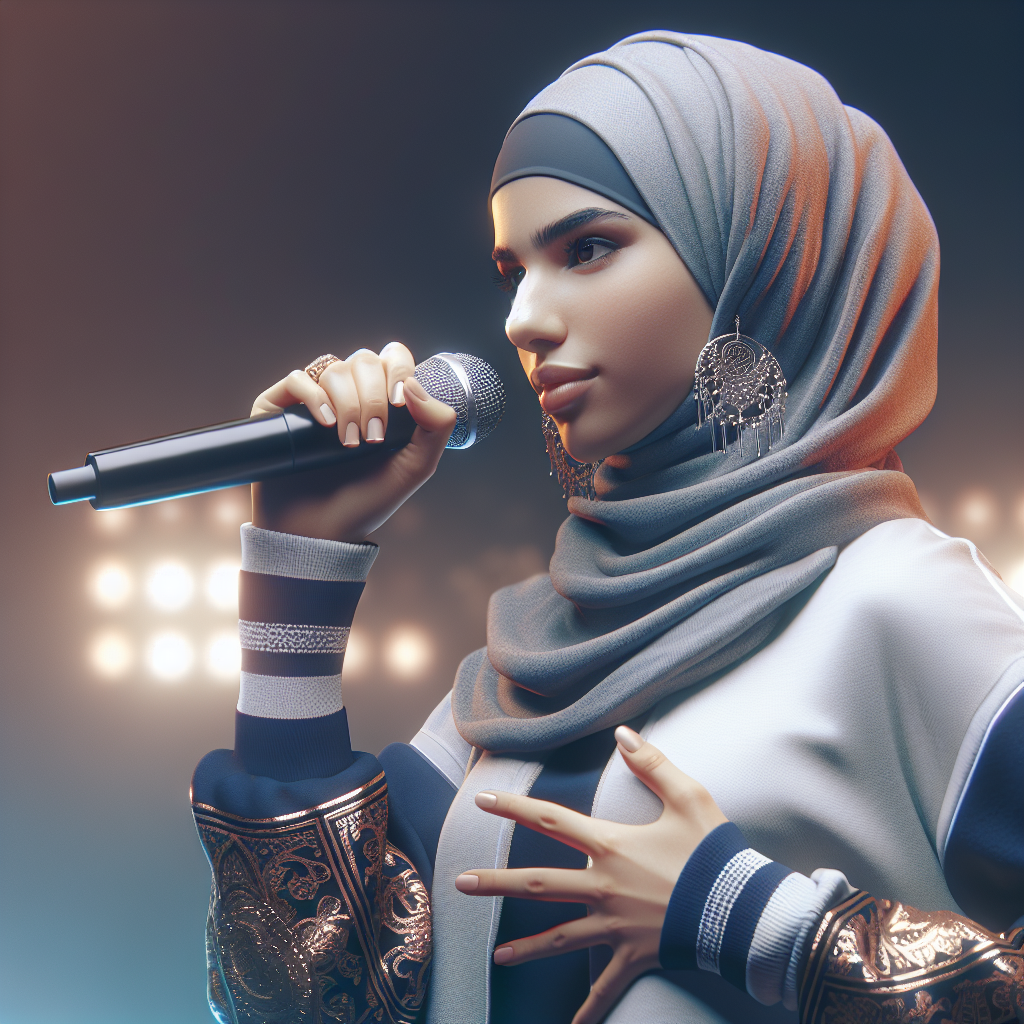

When it comes to shaking the foundations of political correctness, Mona Haydar stands as a symbol of unapologetic candor. Born in Flint, Michigan, and known for her bold voice in art and music, this Syrian-American rapper and activist is making waves for all the wrong, or should we say right, reasons. Mona burst onto the scene in 2015 with a simple yet bold idea: setting up a stand in Cambridge, Massachusetts offering free donuts and coffee, with a sign that read 'Ask a Muslim.' Now, she's making headlines again with her chart-topping tracks like 'Hijabi (Wrap My Hijab).'
But before one jumps on the 'woke' bandwagon, let's examine why Mona Haydar causes conservative eyebrows to rise.
First off, Mona Haydar is not just an artist hoping to spread messages of peace and love through her music. No! She's an individual with a strategic agenda. Her track 'Hijabi (Wrap My Hijab)' is an anthem that encourages Muslim women to embrace their individuality in a world that may otherwise encourage them to assimilate. For those who appreciate a world where cultural homogeneity coexists within greater society, her message may feel more like an assertion of division rather than unification.
Let's move on to her participation in the ideological battleground. Mona's activism isn't the simplistic feel-good journey many assume. Her alliances often interlock with groups that ardently oppose conservative ideologies, making her a darling of opposition circles. Here we are, in a world where defending one's beliefs shouldn't automatically be treated as an act of aggression. Yet Mona stands flag firmly in hand, a symbol for liberal audiences who love nothing more than questioning authority, as long as it’s not their own.
Haydar's impact reaches beyond the music scene, intertwining spirituality and activism in a manner that never ceases to provoke. Her decision to embrace Sufism and intertwine it with modern activism makes purist Muslims uncomfortable. In an American climate where discussions about Islam are often reduced to oversimplified binaries, Mona picks no side—yet claims all the space. Her sermons often blend in aspects that echo the sentiments of liberal Islam, something more palatable in academic settings than mainstream religious communities.
Speaking of academia, there's no denying she cleverly uses her education from the prestigious New York University to bolster her speaking engagements. Her rhetoric appeals predominantly to audiences cloaked in post-modern ideologies and academic jargon. With a Master’s Degree in Christian Ethics, Haydar finds her words eagerly absorbed on liberal campuses, ringing no bells of controversy there.
Mona's influence stretches further into media portrayals. Her 2015 'Ask a Muslim' initiative was more than a coffee-and-donut stall; it flared up conversations that were otherwise quietly brewing under the surface. The media storm around such initiatives shows the power of a well-planned PR campaign masquerading as innocent outreach.
Furthermore, her presence in TedTalks and interviews on platforms like Buzzfeed showcase her craft at appealing to a selective spectrum of society. The audiences lap it up, believing they are witnessing a groundbreaking revolution when in reality, they are embracing recycled ideas packaged attractively.
Then there’s Mona the entrepreneur, partnering with her husband Sebastian Robins to bring fresh folds to age-old narratives about cross-cultural relationships and faith, which often go unchallenged under the banner of unconditional acceptance.
This commentary on the adulation of Mona Haydar isn’t to undermine her abilities as a creator nor her right to speak her mind. It's more to illuminate the rarely scrutinized aspects of her path and the ease with which a certain part of society is willing to accept narratives that fit their idealistic frames of reference.
In the end, Mona Haydar represents more than just the voice of dissent. She is the manifestation of modern cultural debates—a product of who we’ve allowed ourselves to become in the era of divided discourse. Her existence raises questions that often don’t have easy answers, making her an intriguing subject of modern times.