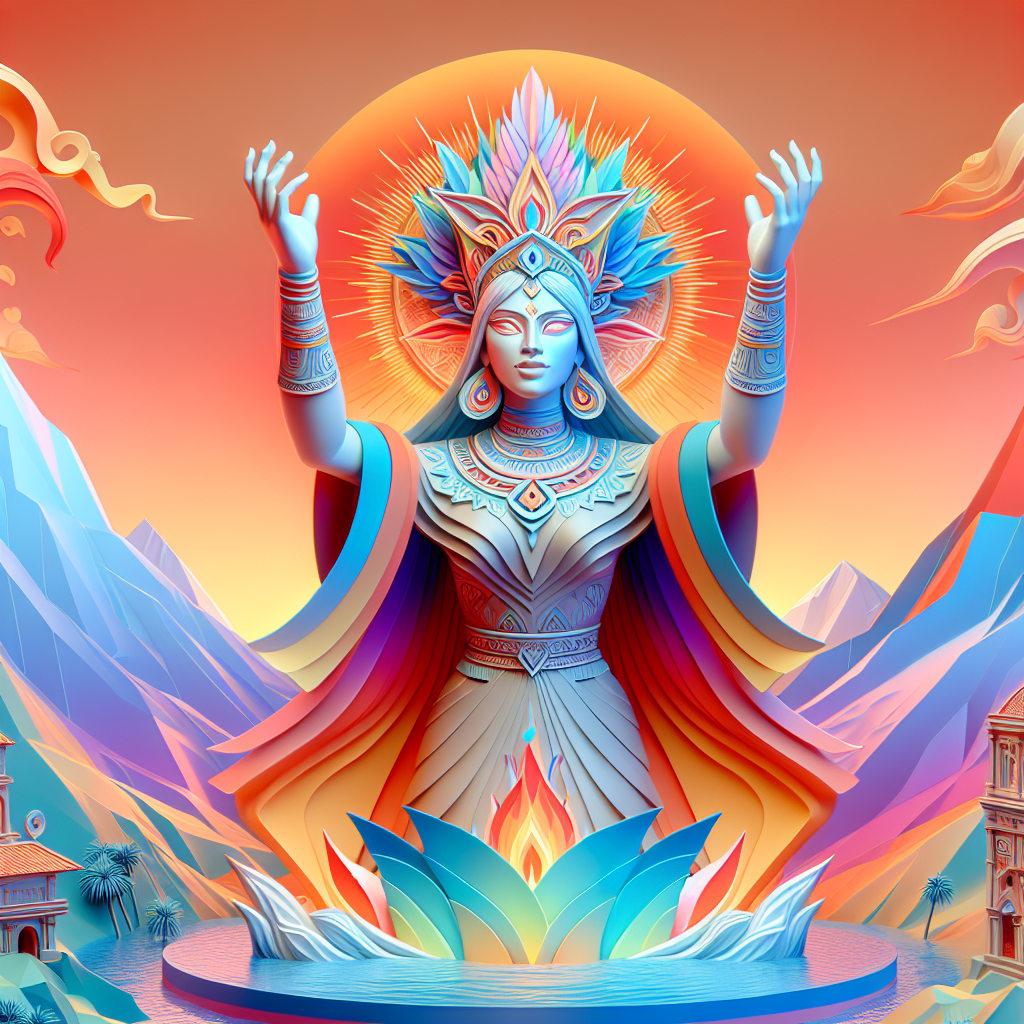

Imagine a mysterious, ancient legend that sparks not only intrigue but emotional fanfare. Meet María Lionza—a mystical figure said to rule over love, peace, and nature. Picture this: a goddess originating in the lush landscapes of Venezuela, embodying indigenous, African, and Spanish influences. María Lionza is not just folklore; she’s a perfect illustration of how a nation steeped in history somehow becomes tied to its haunting myths, driving both devotion and dissent.
María Lionza allegedly emerged from the culture-rich state of Yaracuy, Venezuela, around the time of colonial conquest in the 1500s. Her tale is stitched into the Venezuelan psyche, offering sanctuary to those desiring spiritual comfort or looking to partake in elaborate rituals. But don't let her peaceful appearance fool you. Her followers take part in ceremonies that extend from philosophical contemplation to fire-walking, drawing attention from local authorities wary of the influence these rites can have on society.
Why the obsession? In today's heavily secularized and politically charged circles, María Lionza fuels the flames of a debate about national identity and religious freedom. While traditional beliefs on one hand struggle to maintain relevance, on the other, they entice millennials searching for identity and spiritual fulfillment in an increasingly globalized world. However, blinded by a misguided sense of inclusivity and tolerance, some people revel in what can only be described as unabashed cultural appropriation.
The veneration of María Lionza brings millions of Venezuelans together, irrespective of social and economic divides, underscoring a unique cultural cohesion often absent in Western societies. You'd think this unity would be celebrated, but heaven forbid people should find common ground. Instead, misguided criticism insists these age-old practices are primitive, leaving out their profound role in preserving indigenous culture. What’s less acknowledged is the heavy-handed disruption those enthralled by uniformity wield against traditional practices, no doubt an attempt to stamp out the local flavor to make room for monotony.
Now, let’s talk impact. María Lionza has done more for grassroots unity and social activism in Venezuela than any foreign charity intervention. A look at the annual pilgrimage to the mountain where she supposedly resides makes it clear. Thousands make this journey—young and old, rich and poor—all chasing spiritual enlightenment through the power of community. Theoretically, it seems too utopian to exist. Yet the María Lionza phenomenon is living proof of what happens when people are allowed to practice their heritage devoid of political interference or societal judgment.
Despite her mythic nature, María Lionza's significance is deeply entrenched in real-world implications. Reports claim that her revivalist movement generates a purpose for women in leadership roles and offers psychological solace in times of crisis. This reflects an ecosystem that, while trad-haters rally against it, essentially uplifts femininity and fosters empowerment. Feminist ideologues in the West could learn a thing or two about unifying fervor rather than deriding the principle of venerating a mythical mother figure.
The political environment surrounding María Lionza is quite the circus. Once the socialist regime in Venezuela tried to nationalize the practice of Chávez worship—a stark contrast to the organic magnetism of María Lionza’s pull—it became abundantly clear which icon held the people's hearts. It doesn't matter how governmental powers pander to people's sensibilities; true allegiance resides where free societies recognize authentic, grassroots culture rather than concocted political symbolism.
Composed of those airy doctrines of diversity and multiculturalism, the narrative falls flat when it comes to understanding motivations behind cultures alien to their understanding. Whether you believe in gods or spirits, or prefer the secular life endorsed by academia, ignoring faith's emotional and cultural utility to individuals and communities is simply ridiculous. María Lionza stands as an emblem of how traditional beliefs can harmonize with modern inklings without capitulation to either side.
So, what can one learn from the icon of María Lionza? Here lies a society wherein spiritual quests intermingle with the empowerment of marginalized voices—an echo of the past that provides a sobering backdrop to our fast-paced 21st-century world. It delivers a blueprint rooted not in imposed ideals or ideologies but in individual choice, a nudge for society to take note. Before you dismiss the story of María Lionza as an exotic footnote in the grand tapestry of humankind, consider the shadow she casts. Her story is not just a tale of faith, but a lesson in cultural resilience.
Be it as it may, while liberal dialogues occasionally celebrate their attempts at forging a new world order, one can't ignore the enduring legacy of mythic entities like María Lionza, a testimony that loosely-bound multicultural bonds can indeed weave a seamless society.