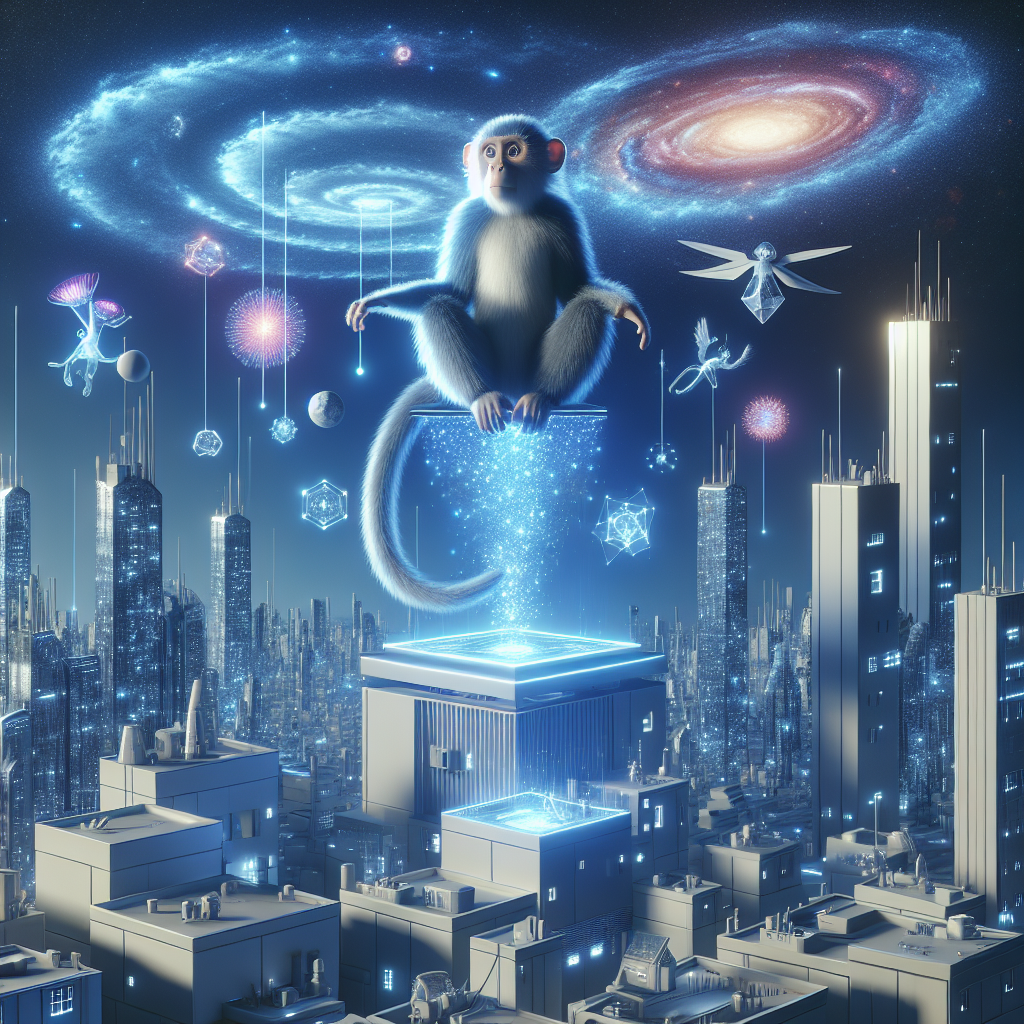

Imagine a world where monkeys wield supernatural powers—not just the ability to devour bananas at lightning speed, but actual magic that defies the laws of science. Welcome to the saga of the Magic Monkey, a tale that originated in ancient texts but somehow still sends shivers down the spines of the woke crowd today. It all started in the 16th-century Chinese novel 'Journey to the West', a timeless piece from the Ming dynasty. This magical primate, a symbol of mischief, intelligence, and rebellion against the status quo, enabled an exploration of allegorical truths and moral principles. So why does the mere mention of a Monkey King cause such a cosmic disturbance in modern, self-righteous circles?
Firstly, the Magic Monkey, or Sun Wukong, challenges authority with a grace and audacity that terrifies those who preach conformity. In a world condoning blind obedience, the Magic Monkey's unabashed rebellion is refreshing. He represents a free thinker who isn't afraid of pushing boundaries—a trait that is often frowned upon in today's group-think mentality. His character prompts uncomfortable discussions about personal liberty, accountability, and the inefficacy of overreaching control. Heaven has rules, and Sun Wukong breaks them, igniting debates about governance—terms that echo through the hallowed halls of liberal academia but get twisted in the translation.
Secondly, the fundamental tale of the Magic Monkey is laden with satire, often challenging perceptions of reality and the divine. In politically correct settings, satire is a lost art, often confused with malice or insensitivity. The Magic Monkey's witty assaults on celestial reputations exemplify the balancing act between critiquing authority and maintaining reverence—a skill that's all but discarded in favor of vitriolic outrage. This dismissal of satire leads to a culture stripped of nuance and depth. A society unable to laugh kindly at itself—an irony given the Western obsession with glorifying Eastern wisdom in every other context.
Thirdly, let's talk about faith. Sun Wukong embarks on a pilgrimage to right his wrongs, reflecting on spiritual growth and enlightenment. Faith, however, remains a touchy subject, wrapped in stereotypes and misconceived notions within certain progressive circles. The Magic Monkey's transformation embodies notions of redemption and spiritual cultivation beyond narcissistic self-help tropes. Yet, his journey is often glossed over or misconstrued as an unrelenting allegory of imperialist East-Asia—a critique misplaced when set against the broader canvas of his voyage.
Fourth on our mystical journey is the Magic Monkey's actual sorcery, affirming values of imagination and wonder. Sun Wukong's magical feats—invisibility, transformation, and cloud-somersaulting are not just supernatural displays but reminders of the limits of human understanding. Modern life, entrenched in unchecked empiricism, often disregards anything beyond tangible metrics. However, this monkey's magic serves as a gentle nudge toward the limitless potentials of creativity and innovation. He invites us to ponder mysteries rather than dissecting them in a clinical lecture hall.
Fifth is the societal reflection mirrored through the Magic Monkey’s adventures. Sun Wukong offers lessons on leadership, resilience, and adaptability that some selectively utilize while neglecting perspectives dissenting from culturally accepted monologues. By empathizing with a multi-dimensional character, audiences can engage in authentic dialogues about human nature and leadership ethics, a discourse endangered in our current climate of turned-off ears.
Number six on our list is family. The Magic Monkey's band of travelers aren't just sidekicks. They are family—a theme in 'Journey to the West' that's timeless. In an era that often marginalizes the importance of traditional family structures, the narrative resonates with those who value kinship and mutual support over vacuous self-centric discourse. This contrast often rubs cultural commentators the wrong way, who are quick to dismiss such values as outdated domesticity.
Seventh is the challenge of adversity. Reader's are forced to confront uncomfortable truths on personal growth through trials. Sun Wukong's adventures offer poignant lessons about overcoming adversity, forcing readers to confront their own coping mechanisms in a culture that idealizes victimhood over resilience. The grit and determination he displays are qualities often eclipsed in narratives that emphasize placidity over fortitude.
Eighth, the cautionary tales embedded in the magic storybook are culturally instructive yet labeled polarizing by modern dialogue die-hards. They challenge their double standards while demanding a reckoning with cultural honesty that this oftentimes mono-culturally focused society desperately needs. It's as if Sun Wukong himself is calling for a reanalysis of what it means to be culturally honest amidst waves of fanciful political correctness.
Ninth, patriotic fervor! The magic monkey saga aligns with traditional values that honor the sovereignty of the nation-state and its cultural heritage. At its core, it's a story celebrating the dignity of a nation’s past, the inalienable right to sovereignty, and the pursuit of honor without seeking external validation. Messages that are drowned among incessant cries for borderless societies and diminished national pride.
And tenth, the legacy. The Magic Monkey's narrative sustains itself through centuries, illustrating the timeless battle between order and chaos, freedom and subjugation, reason and absurdity. While some cheerfully dwell in the hypothetical utopian outcomes of ideological dreams, Sun Wukong remains the trickster hero battling for innate truths soaked in courage, ingenuity, and audacious independence. His transcendence speaks to real growth and thrives among those ready to wrestle with genuine philosophical challenges rather than settling into hypothetical utopian complacency. Evidently, this ancient tale of the Magic Monkey remains vital, inspiring rebellion against unjust dominions with an appeal that echoes soundly, even today.