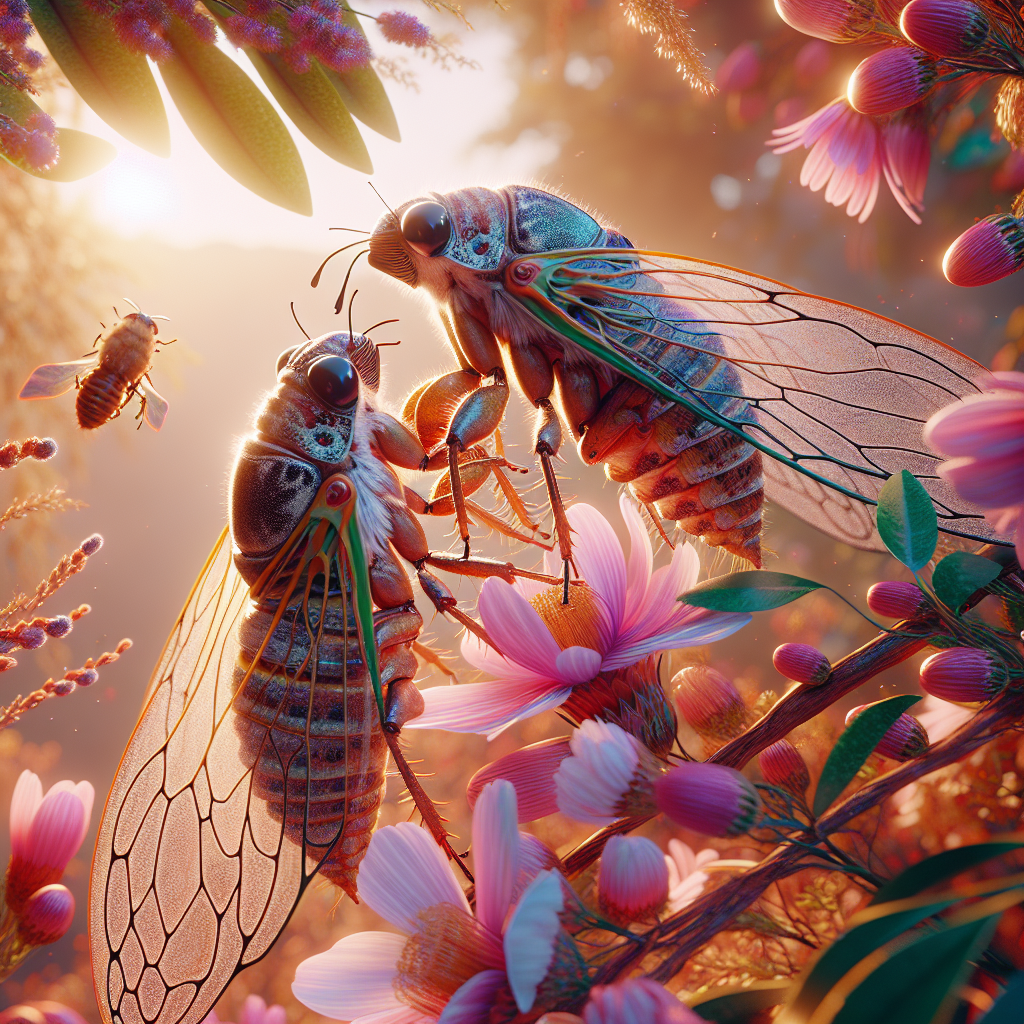

Ready for a fun fact? Lyristes, also known as cicadas, are the rockstars of the insect kingdom, and they are sure to electrify any summer gathering with their unmistakable sound. These fascinating creatures have a mystique that’s been unfolding since ancient times, blaring their symphony from the treetops every July. These remarkable insects perform in regions stretching from the Mediterranean to the coasts of Asia, buzzing away with a purpose that denies the silence preferred by urban dwellers.
What are Lyristes? They are from the family Cicadidae, you know, the one with the hard-to-miss sonic impact that can leave your eardrums tingling from miles away. Unlike any other insect, Lyristes are the critters that stake their territory, announcing the heat of summer like clockwork, and sometimes causing quite the stir among those who prefer peace and quiet. The clamor is produced mainly by the males who are just looking for a way to woo the females, proving once again that in the animal kingdom, it’s often the loudest voices that prevail.
Their life cycle alone is a prime exemplar of the dedication Mother Nature instills into her creatures. Imagine spending the majority of your life underground, only to emerge for a brief burst of sunshine and song where you’ll play your part in the grand cycle of life. Mike Rowe would be the first to admit that their ‘dirty jobs’ down in the earth’s depths make our commutes seem glamorous. As pupae, they feed off the sap of tree roots, biding their time until liberation day.
Once they pop out of the ground, they shed their skins and take on that curious phase of noisy adulthood. But here’s where the plot thickens: The male cicadas use structures called tymbals to sing songs that vary from species to species. These songs not only attract females but also fend off countless predators, including the casual backyard bird. It’s a spectacle that illustrates the resilience and ingenuity programmed into each creature by the great watchmaker known as Nature.
Although cicadas face a host of threats, from habitat destruction to changes in climate patterns, these prodigious operatives continue to rise to the occasion. It seems Mother Nature finds a way to amplify their sound through the trees, signaling she doesn’t acquiesce to change as easily as the rest of us.
As insects dominating the Mediterranean basin and far-reaching parts of Asia, Lyristes display an uncanny ability to adapt to increasingly variable environments. Those rattling noise-makers are actually engineered to use trees as giant acoustics amplifiers. Their sheer volume can even cause a brief pause in human activities - it seems nature demands your attention, whether you want to give it or not.
With the advent of modern civilization, these creatures remind us of an unyielding connection to an ecological tune that predates our concrete jungles. They bring with them a harmony in nature that reminds us daily of a much older timeline than the brief chapter our cities represent.
Here's a charming nod to survival and evolution—a testament to fortitude and adaptability that even human societies could learn from. Just as our ancestors revered these insects, maybe it’s time to reconsider them not as nuisances but as small, living pieces of history echoing through modern timelines.
It’s this continuous loop and the harmonious cacophony that is worth recognizing. Could it be that the syncopated harmony they bring is a sonnet, a bygone whisper of connection, a reminder that before man ever walked the earth, the summers were still filled with a buzz of Lyristes?
Their cyclical nature, surfacing every few years, not only speaks of a life steeped in tradition but also teases the humans to consider their own place in the circle of life. Are we thriving and singing our loudest songs at the right moments, or just living underground, missing the point of life’s crescendo?
The next time the shrill overture of cicadas fills the air, feel free to pause and appreciate the rhythm of nature that a flyover government can’t regulate, nor the contemporary urbanite can drown out. It’s a strain on the strings of mother nature reminding everyone of a compelling juxtaposition between now and eternity.