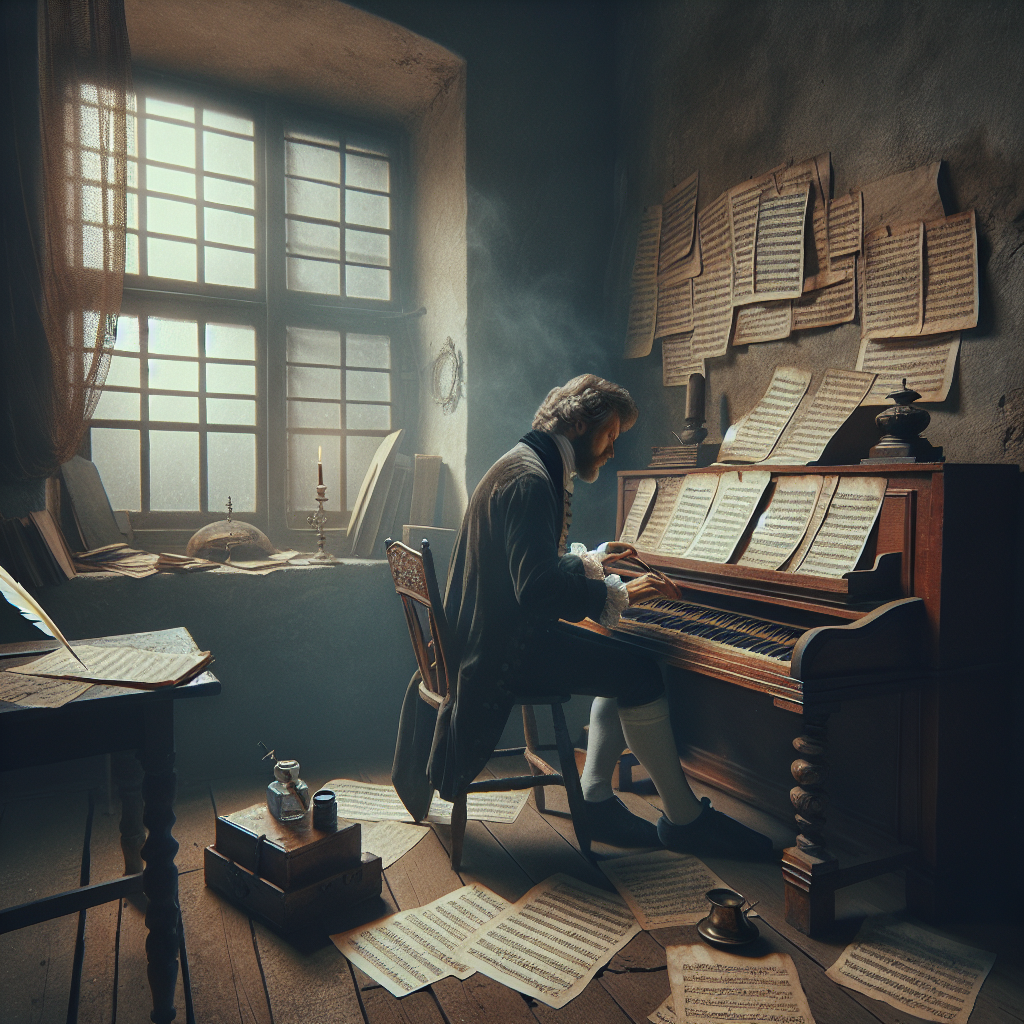

Louis Lully was the kind of guy who made waves just by following the tunes his DNA laid out for him. As the son of the formidable Jean-Baptiste Lully, who crafted the sound of French Baroque, you'd expect Louis to either buckle under the pressure or play second fiddle. But Louis Lully, born in Paris on August 4, 1664, thrived amid the high stakes of his familial legacy. He managed to churn out compositions and operatic pieces between the late 17th and early 18th centuries, holding his ground in a world that wasn't exactly short on expectations. Louis crafted his melodies in France until his demise on April 1, 1734, proving his mettle in a domain where following your father's footsteps was a surefire way to either dazzle or dive headfirst into a pit of comparisons.
First, let’s talk politics, because why not? Louis Lully worked under a monarch who knew how to balance power and grandeur better than any modern politician could dream. Louis XIV’s reign, known as the Sun King era, heaped glory on those who curried favor at his court. Louis Lully and his father knew how to navigate these waters. Imagine that happening today. Talk about a level playing field, not! The way Louis Lully moved his career forward was through talent combined with the cultural backing of a powerhouse court. His work, such as the tragédie lyrique Orphée (1690), showed his knack for toeing the line between innovation and tradition, something today's visionaries could learn a thing or two about.
Despite the shadow of his mighty father looming over him, Louis didn’t shy away from originality. How often do we hear the bleating cries for originality in modern art, yet when someone steps up and delivers, they are quashed by a landslide of copycats? While his father was notorious for his influence in kingly opulence, Louis took aspects of this grandeur and added his flair, expanding the family's legacy. His compositions weren't just copies; they were carry-ons in a luggage of legacy built by Lully senior. Imagine a world where legacies like this continue under the public eye. Today’s content creators could take a page from that book.
Here’s a reality check: in the 21st century, we live surrounded by noise—digital, social, political. Think about how Louis would have been able to produce masterpieces that conveyed emotion and intensity without the distractions of social media influencers hawking protein shakes. Louis lived in a world that some argue was more linear, without the multitude of diversions modern society tries to shove down our throats. So, was it easier or harder? One could say that while they didn't have today’s day-to-day modern-life distractions, they faced societal pressures that were overwhelming in their unique way. But Louis tackled them and kept on with his hits.
Louis Lully made a notable mark without ever needing to brag about his streaming numbers or controversy-laden tweets. It was all about the art, and should people keep it case closed at that? Yes, there were indeed faux pas; it's music and politics, after all. Take Zéphire et Flore (1688), which was deemed a failure but didn’t stop him. Today's 'cancel culture' wails for accountability at the drop of a hat, but a flop didn’t cancel Louis for good; it taught him to adjust and come back with something more robust. His resilience echoed the indomitable human spirit conservatives cherish. You can hear that in his operas, where emotion wasn't just displayed but exalted.
Debate all you want about the privileges afforded to someone like him, but you can’t negate the fact that production quality was high, even by today's critical standards. Looking at Louis’s work through today’s lens means seeing a kind of discipline and commitment often missing amidst today’s disposable art culture. Let’s remember Acis et Galatée (1686), which fell under the umbrella of his father’s work but had Louis’s distinct fingerprints all over. Today’s artists could learn loads about building on an existing brand with genuine skill.
Louis Lully may not grace the cover of trendy coffee table books, but his music tells a story of a time when greatness was nurtured, and, dare I say, expected. The legacy left behind shows evolution within classical music matched with a cultural tide that wasn't easy to navigate. He was no idle spectator to his destiny, oh no. He took up the family torch and added his unmistakable signature to the annals of musical greatness. That's something to admire, especially in a society that often forgets that following well-trodden paths doesn't always mean you're devoid of originality.
So, let the world take note; Louis Lully’s story underscores an enduring truth. You can seize the opportunities your lineage gives while making a name for yourself. The past wasn’t a mistake chalkboard; it was a stepping stone for those like Louis who dared to rise above mediocrity. Perhaps it's high time to reflect and understand how such nuanced legacies could reignite an appreciation for classic, undistorted excellence.