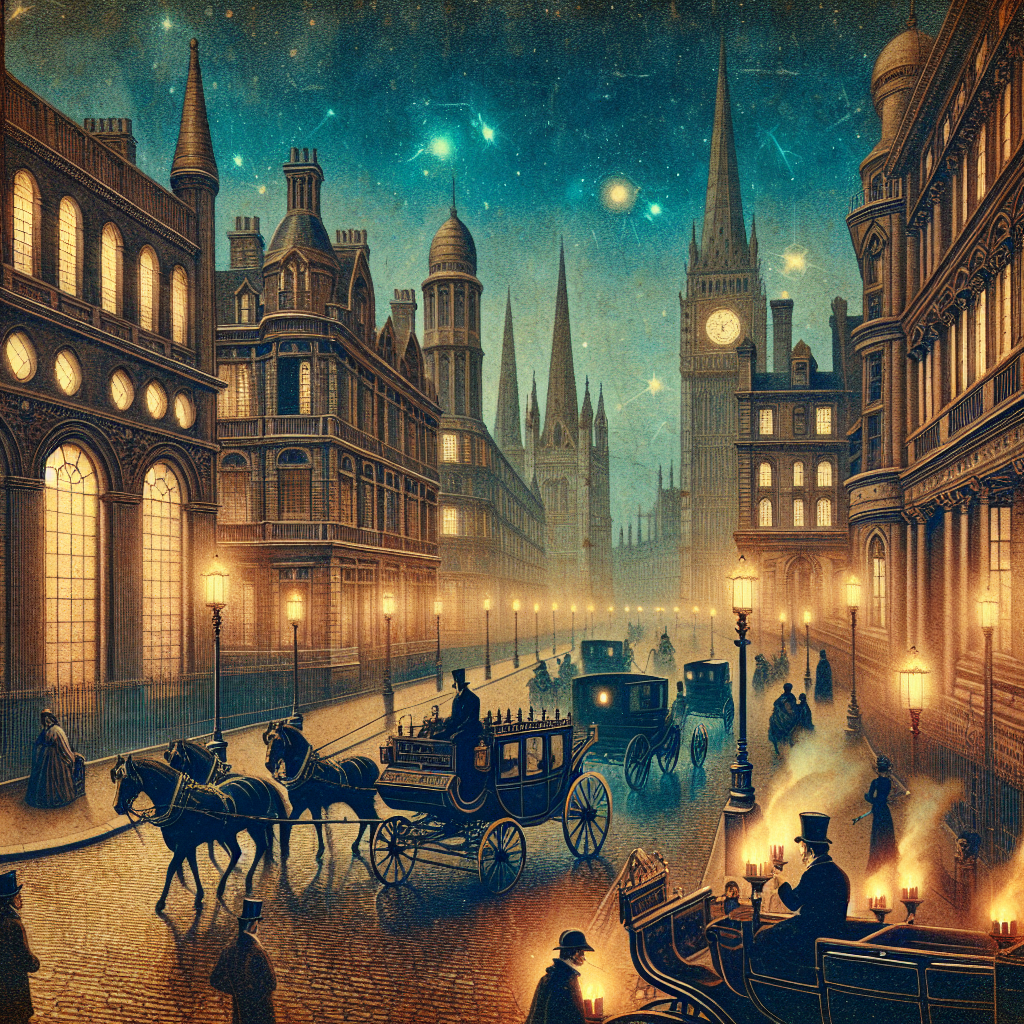

London by Night: A Conservative's Guide to the Victorian City
Picture this: It's the late 1800s, the heart of the Victorian era, and London is a bustling metropolis teeming with innovation, industry, and a sense of national pride that would make any modern-day patriot swoon. The city is alive with the clatter of horse-drawn carriages, the glow of gas lamps, and the hum of progress. But beneath the surface, there's a world of adventure waiting to be explored by those who dare to embrace the spirit of the age. This is a time when the British Empire was at its zenith, and London was its crown jewel. The city was a testament to what hard work, determination, and a little bit of grit could achieve.
The Streets of Opportunity: The streets of Victorian London were a testament to the power of capitalism. Entrepreneurs and inventors flocked to the city, eager to make their mark and contribute to the empire's greatness. From the bustling markets of Covent Garden to the financial hub of the City, opportunity was everywhere for those willing to seize it. The spirit of enterprise was alive and well, and it was this drive that propelled Britain to the forefront of the industrial world.
The Rule of Law: Victorian London was a place where law and order reigned supreme. The Metropolitan Police, established in 1829, ensured that the streets were safe for citizens to go about their business. This was a time when respect for authority and adherence to the rule of law were paramount. The stability provided by a strong legal system allowed for the flourishing of commerce and culture, something that modern-day progressives could learn a thing or two about.
The Power of Tradition: In Victorian London, tradition was not something to be scoffed at or discarded. It was the backbone of society, providing a sense of continuity and stability in a rapidly changing world. From the pomp and ceremony of the monarchy to the rituals of the Church of England, tradition was a guiding force that helped to shape the character of the nation. It was a time when people understood the value of preserving the past while looking to the future.
The Role of the Family: The family unit was the cornerstone of Victorian society. It was a time when family values were upheld and celebrated, and the home was seen as a sanctuary from the chaos of the outside world. The Victorians understood that strong families were the foundation of a strong nation, and they worked tirelessly to instill these values in the next generation. It's a lesson that seems to have been lost on today's liberals, who often prioritize individualism over the collective good.
The Spirit of Innovation: The Victorian era was a time of unparalleled innovation and progress. From the construction of the London Underground to the invention of the telephone, the city was a hotbed of technological advancement. This spirit of innovation was driven by a belief in the power of human ingenuity and the potential for progress. It was a time when people were not afraid to dream big and push the boundaries of what was possible.
The Importance of Education: Education was highly valued in Victorian London, and it was seen as the key to unlocking the potential of the individual. The establishment of institutions like the University of London and the expansion of public education ensured that knowledge was accessible to all. This emphasis on education helped to create a society that was informed, engaged, and capable of critical thought.
The Beauty of the Arts: The arts flourished in Victorian London, with the city serving as a hub for writers, artists, and musicians. From the works of Charles Dickens to the paintings of the Pre-Raphaelites, the city was alive with creativity and expression. The Victorians understood the importance of the arts in enriching the human experience and fostering a sense of national identity.
The Role of Religion: Religion played a central role in the lives of the Victorians, providing a moral compass and a sense of purpose. The Church of England was a unifying force, bringing people together in a shared belief system. This sense of community and shared values helped to create a cohesive society that was resilient in the face of adversity.
The Spirit of Adventure: Victorian London was a city of adventurers and explorers, eager to discover new lands and expand the empire. This spirit of adventure was fueled by a sense of national pride and a desire to spread British values across the globe. It was a time when people were not afraid to take risks and embrace the unknown.
The Legacy of the Victorian Era: The legacy of Victorian London is one of progress, innovation, and a steadfast commitment to the values that made Britain great. It was a time when the city was a beacon of hope and opportunity, a place where dreams could become reality. The lessons of this era are as relevant today as they were then, and they serve as a reminder of what can be achieved when a society is united in its pursuit of greatness.