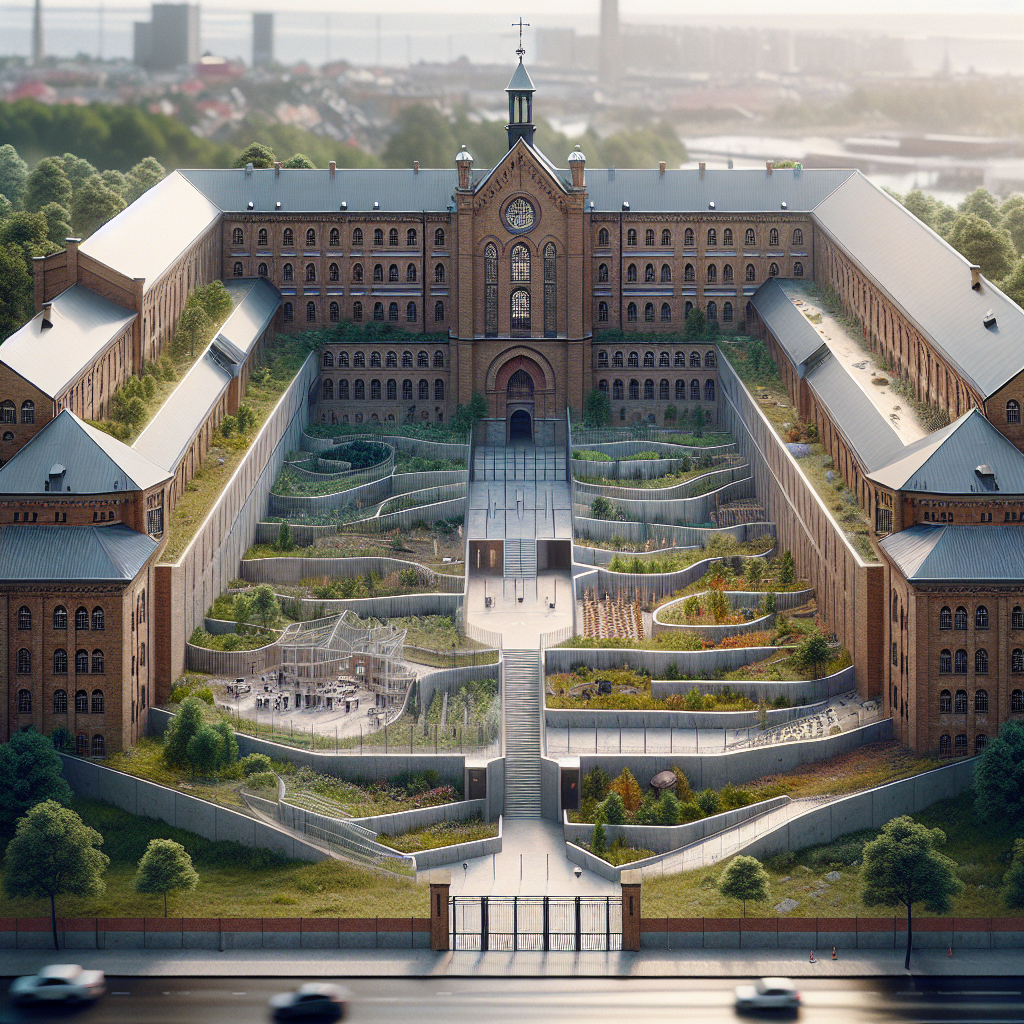

There's nothing quite like a holiday destination that combines stunning natural beauty with a gritty history of imprisonment and punishment. Welcome to Långholmen Prison, a place that was home to Sweden's criminals for more than 250 years. In the charming city of Stockholm, on the small island of Långholmen, this once-notorious facility isn't what it once was but its history is one for the books. This is not just a tale of bars and cells; it's a narrative of societal control, reform, and, yes, the good old chaos that comes when the left tries to do anything halfway.
Långholmen, as we know it today, was the central hub for Sweden’s criminal justice system from the 18th century until its closure in 1975. Initially built in the 1720s, it was wholly functional by 1724 and was a place where prisoners were intended to be reformed through work and discipline. Ah, the days when actions had consequences and prisons were still prisons, not wellness centers.
But fair warning, the reforms were often harsh, featuring manual labor that would make even the most hardened chain gangs in the U.S. break a sweat. The punishment, naturally, could get grim. Executions were held here; fun fact, Sweden's last execution before the capital punishment was officially abolished in 1921 took place on this very island. Delightful, huh?
As the 20th century loomed, everything began to change—cue the so-called—reforms. Let’s be clear: by reforms, they mean the gradual erosion of any methods that actually kept prisoners in line. Under the guise of human rights, the system pivoted toward rehabilitation and education. While these concepts sound grand, many argue that they unraveled any semblance of order within the walls of Långholmen. Some will try to paint this as progress. I call it softening.
In true Orwellian fashion, by the 1950s, Långholmen Prison was no longer just a place for ‘correction’. It became a testing ground for various social experiments. Talk about being liberal with criminal justice! It shouldn't surprise you that the prison traffic slowed because criminals apparently didn’t fear returning to their so-called correction center anymore. Who would’ve thought?
When it closed in 1975, the grand institution was replaced by something of an urban spa experience. The prison transformed into a hotel and hostel. Yes, you can now sleep in a cell—if irony wasn't dead yet, it certainly keeled over and fainted here. Covered with lush green parks and nature walks, people flock here. Because where better to relax than a place that housed pickpockets, murderers, and political dissenters?
Let’s talk a bit about why Långholmen shifted its purpose. In the era of social democratic dominance, Sweden took a ‘softer’ approach to incarceration, reflecting a desire to appear more humane. Essentially, the focus shifted entirely from punishment to rehabilitation. Instead of fitting punishment to the crime, the powers-that-be started worrying about rehabilitation and self-esteem. It’s enough to make you roll your eyes, but this is what led prisons like Långholmen to emphasize education over punishment—though you have to wonder, at whose expense?
This phenomenon underscores a broader ideological tussle. In wanting prisons like Långholmen to focus less on punishment and more on rehabilitation, Sweden mirrored other countries’ trends toward liberal criminal justice systems. In practice, this sounds noble, but don't get carried away by the liberal la-la land. Forget protecting society; soft policies typically end up coddling those who should be facing consequences. Treating people nicely might be in vogue, but respect for the law is more about deterrence than therapeutic afternoons.
Visiting Långholmen today offers a glimpse into that ideological transformation. The facilities have been turned into a cultural center designed to entertain, educate, and charm tourists with tales of a not-so-ancient past. And boy, do they sell it well. The irony is, as it continues to attract tourists in droves, the island evokes both fascination and reflection, which captures the cultural zeitgeist quite perfectly.
Finally, if the reformation of Långholmen into a public amusement doesn't encapsulate the story of liberal policies, I don’t know what does. So go ahead, enjoy a stay in a "cell," because in today’s world, punishment is practically a vacation.