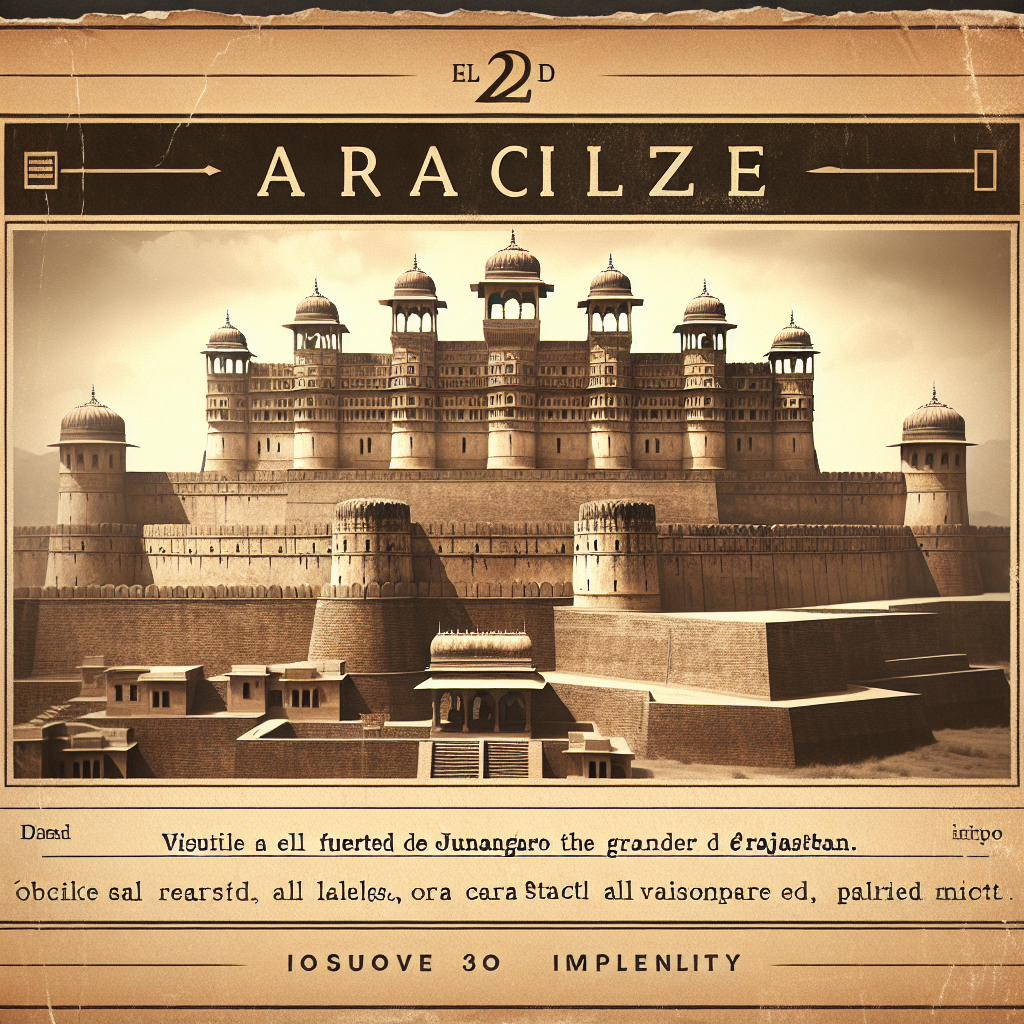

Junagarh Fort: A Testament to India's Glorious Past
Imagine a fortress so grand that it stands as a testament to the opulence and might of a bygone era. That's Junagarh Fort for you, a magnificent structure located in the heart of Bikaner, Rajasthan. Built in the late 16th century by Raja Rai Singh, a general in the army of the Mughal Emperor Akbar, this fort is a marvel of architecture and history. Unlike many other forts in Rajasthan, Junagarh was not built on a hilltop, making its defense and construction even more intriguing. The fort's strategic location in the Thar Desert and its rich history make it a must-visit for anyone interested in India's royal past.
Now, let's get into why Junagarh Fort is a slap in the face to modern architectural mediocrity. First off, the fort is a sprawling complex of palaces, temples, and pavilions, each more ornate than the last. The intricate carvings and detailed frescoes are a testament to the craftsmanship of the artisans of that era. It's a stark reminder of what true artistry looks like, something that seems to be lost in today's world of cookie-cutter buildings and uninspired designs.
Secondly, the fort's history is a narrative of resilience and power. Despite numerous attempts to capture it, Junagarh Fort was never conquered. This is a far cry from today's world, where people seem to surrender their values and principles at the drop of a hat. The fort stands as a symbol of strength and determination, qualities that are sorely lacking in today's society.
The fort also serves as a reminder of the rich cultural heritage that India possesses. With its blend of Rajput, Mughal, and Gujarati architectural styles, Junagarh Fort is a melting pot of cultures and traditions. It's a reminder that diversity is something to be celebrated, not shunned. In a world where people are increasingly divided along cultural and racial lines, the fort stands as a beacon of unity and harmony.
Moreover, the fort's museum houses an impressive collection of artifacts, including weapons, manuscripts, and jewelry. These relics offer a glimpse into the lives of the royals who once inhabited the fort. It's a reminder of a time when people took pride in their heritage and history, unlike today where historical monuments are often neglected and forgotten.
The fort's gardens are another highlight, showcasing the ingenuity of the people who built it. Despite being located in a desert, the gardens are lush and vibrant, a testament to the advanced irrigation techniques used by the fort's inhabitants. It's a reminder that with determination and innovation, anything is possible, even in the harshest of environments.
Junagarh Fort is also a lesson in sustainability. The fort's design takes into account the harsh desert climate, with features like thick walls and small windows to keep the interiors cool. It's a reminder that sustainable living is not a new concept, but something that has been practiced for centuries. In today's world, where environmental issues are at the forefront, the fort serves as a reminder of the importance of living in harmony with nature.
Finally, Junagarh Fort is a symbol of pride and identity. For the people of Bikaner, the fort is not just a historical monument, but a part of their identity. It's a reminder of their rich history and heritage, something that is often lost in today's fast-paced world. The fort stands as a testament to the fact that history and heritage are not just things of the past, but something to be cherished and celebrated.
In a world where people are increasingly disconnected from their roots, Junagarh Fort serves as a reminder of the importance of history and heritage. It's a symbol of strength, resilience, and pride, qualities that are sorely lacking in today's society. So, the next time you find yourself in Rajasthan, make sure to visit Junagarh Fort and experience the grandeur and opulence of India's glorious past.