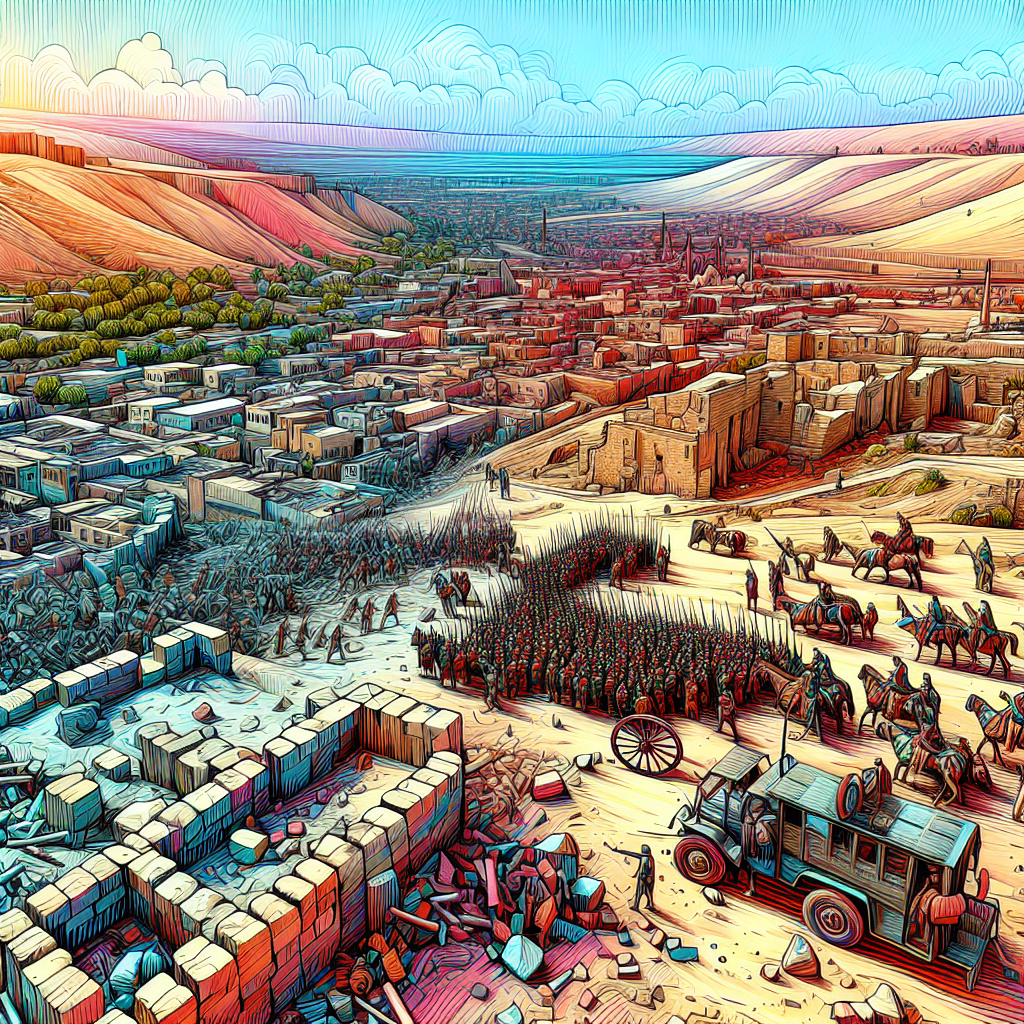

Jericho: Echoes of Ancient Wisdom and Modern Freedom
Jericho, a city that defied time with its ancient walls, stands not just as a testament to history but also as a beacon for those who cherish liberty. Located in the West Bank of the Jordan River, it is believed to be one of the oldest continuously inhabited cities in the world. Archaeological evidence traces its origins to around 10,000 BCE, marking it as a cradle of civilization. A city that refuses to crumble under the weight of centuries should be celebrated by all who value strong foundations—both literal and ideological.
The story of Jericho isn't just one of history textbooks, although its walls famously came tumbling down in the pages of the Old Testament. Those very walls symbolize more than ancient conflict. They represent the timeless struggle to stand firm in the face of external pressures, a notion that resonates today more than ever. Some might even argue that if Jericho's walls hadn't fallen, the perseverance and strength associated with the city could inspire modern society to rebuild its own fortresses against the encroaching forces that threaten our way of life.
To understand why Jericho matters today, it’s crucial to examine its role in biblical history. Joshua and his troops famously marched around its walls to the sound of trumpets until they collapsed. This wasn't merely an act of war; it was a divine victory for those who were firm in their beliefs and values. Some might giggle at stories from the Old Testament, but dismissing them outright misses the wisdom they hold in illustrating that even the seemingly invincible can fall to those who standardize truth and unity.
It should be no surprise that Jericho has survived as a bustling hub since antiquity. Its strategic position near the Jordan River and fertile plains made it irresistible for settlement. Today, the city has embraced modernity while keeping its heritage as a part of its identity. Conservatively speaking, the ability to maintain one's roots while advancing in today’s world is paramount.
Surely some might question the relevance of Jericho in contemporary discussions, pointing to its location in the often-contentious area of the Middle East. However, Jericho serves as a lesson in stability and cultural continuity, standing firm in a region known for its conflicts. The city stands as proof that preservation of tradition, adaptable progress, and the triumph of belief over brute force are not just possible, but necessary.
Conservatives often lament the dilution of cultural identities in the face of globalization and unchecked progressivism. Jericho offers a case study in maintaining its identity through countless invasions, occupations, and administrations – a quintessential example of resilience. In an era that leans too heavily on fluidity and compromise, Jericho's steadfast nature is worth emulating.
Perhaps the significance of Jericho's walls extending beyond their biblical story makes you wonder. Walls have become a polarizing symbol in today's political landscape. While some irrationally debate the literal and metaphorical impact of walls, Jericho reminds us that having boundaries doesn't imprison—rather, it protects identity, culture, and values.
A dialogue centered around Jericho should also acknowledge its present, as much as its storied past. Often considered part of the Palestinian territories, the city is a testament to survival amidst complexity, much like societies that remain buoyant against the rushing tide of political correctness and overreaching governance. Jericho survives as a flourishing city, a testament to resilience in an ever-changing world.
In a world that often dismisses ancient history as stories too old to bear relevance, Jericho calls for a reevaluation. Its walls serve as metaphors for barriers that demand introspection and justification. Its historical standing narrates a story of triumph where faith and fortitude demolished the seemingly insurmountable. Some choose to heed these lessons as mere myths, although one might wager that the wisdom locked within those ancient bricks is something society cannot afford to dismiss.
Examining Jericho gives a new appreciation for wisdom passed down through generations. Encrusted with historical significance from the biblical era, each stone represents a part of the intricate tapestry of cultural richness that conservative minds find invaluable. Jericho isn't just a relic of faded glory; it's a call to arms for those who continue to fight to protect the fortresses—not just of stone, but of spirit and ideology.