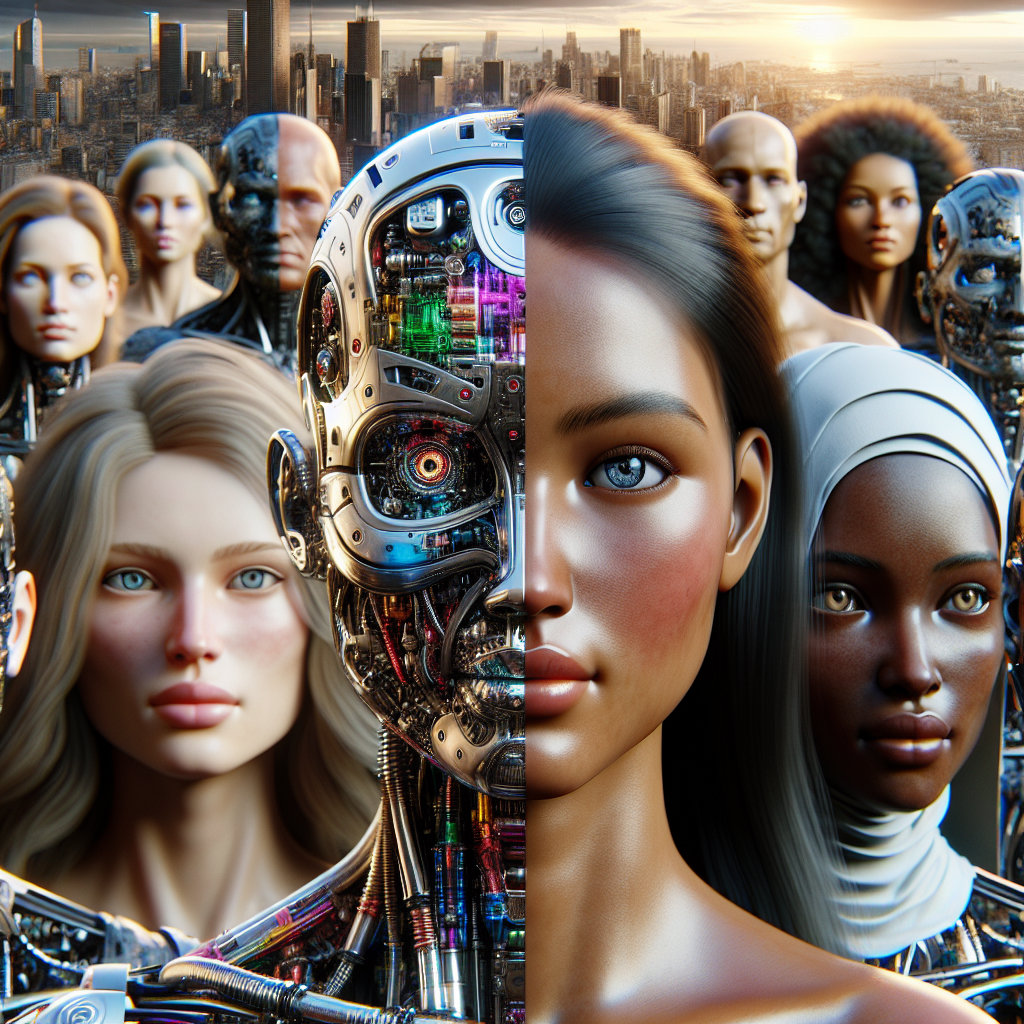

Picture this: the Terminator isn't so far-fetched. In today's world, humans are inching ever closer to the sci-fi fantasy of being half-machine—a notion that's not just the stuff of Hollywood but our reality. The who includes people across the globe diving headfirst into a tech-laden future where exoskeletons help paraplegics walk, pacemakers keep hearts ticking with digital precision, and microchips under the skin make fumbling for keys passé. The what is a phenomenon known as bio-hybridization, where man and machine meld into one powerful entity. The when is now, in the 21st century, a time where such advancements aren't lined up under science fiction anymore; they're real. The where is more universal. Whether it’s Silicon Valley pushing tech innovation or a clinic in Berlin fitting advanced prosthetics, we're seeing this transformation everywhere. And the why? Because we can! Humans are notorious for wanting to push boundaries, challenge nature, and create the impossible.
To start, let's uncover the mind-blowing ways our medical world is transforming thanks to bio-machinery. Prosthetics have traditionally been clunky, cumbersome, and lacking in dexterity. Today, they’re anything but. Bionic limbs interfaced with the human nervous system allow users to control them with their thoughts. Picture a Superman of sorts, except it’s not Krypton tech, it’s made in labs by scientists engineering better lives. While some might cringe at the thought of attaching a robotic arm to a human shoulder, let me hit you with the facts: these machines improve lives by ending physical limitations and increasing capabilities while the naysayers offer...well, hesitancy and hand wringing.
Now, let’s talk enhancements rather than repairs. Step aside cochlear implants; brain-computer interfaces (BCIs) are here. Not just for paralysis anymore, BCIs are edging into everyday enhancements from boosting our memory to cleaning up synaptic noise. Imagine a future where facts learned by rote are universally obsolete because any knowledge you need is literally downloaded directly into your brain. School’s out, flown the conservative educational coop, all thanks to a techie taking your alma mater’s curriculum and replacing it with a chip. But before we start fretting about Big Brother-style worries, remember that with any move toward greatness, safeguards must follow.
Consider this punch to the liberal gut: what if anyone could pay for intelligence as easily as they do for faster broadband? Human enhancement means leveling the playing field on the merit of your wallet, a stark contrast to an uneconomical, communal utopia some dream of. We're looking at a Darwinian future powered by technological survival of the fittest. Capitalism wouldn’t just thrive; it would evolve into its next inevitable form, a place where billion-dollar biotech firms thrive because they offer us a taste of immortality through replacement parts and performance enhancers.
Next, the rise of wearables takes us from smartwatches merely counting steps to smart glasses giving you an overlay of advanced information wherever you look, forever changing how we interact with our environment. These aren't just finding my phone gadgets anymore. Talk about a universe where Micah in Marketing knows as much as Henry in Harvard just because they wear a pair of augmented reality glasses. Questions of privacy and security wave their fleshy hands in protest like windswept liberals at a capitalist parade, only to be drowned out by the enthralling chaos of progress.
Tracking is now less dystopian than personalized. Wearable tech tracks our physical metrics at a level doctors only dreamed of, elevating life expectancy and optimizing health. So while champagne socialists debate data privacy, tech innovators drink to the health of a world rid of disease as diagnostics reach anticipatory HP-levels, devoid of bloated social systems choking out advancement with red tape.
Should your car be smarter than your neighbor? Autonomous vehicles plus AI algorithms say yes. Watch as cars now think for themselves, rendering drunken drivers helpless against the AI control steering their life's decisions—but trust us, AI drive is a lot smoother than anything a 16-year-old on a cellphone could manage. While safety concerns lurk about slippery slopes of malfunctioning, understand this: human error is the cause of most mishaps, and man-machine hybrids eliminate this deficiency.
But oh, fasten your seatbelts for the cherry on this electronic pie: cyber immortality stands at your doorstep. If you're underwhelmed by mere technological repair, hang on for when minds upload directly onto artificial platforms. Your consciousness surviving your biological clock would mean bidding adieu to flesh-and-blood narratives entirely. Futuristic eternity isn't theft of nature's course; it's the ultimate high of flying in the face of mortality. Just picture knowing the secrets of the universe unfold before you across endless digital landscapes.
Clearly, we are far from the days when the notion of a half-man-half-machine was merely folklore whispered by those fearing the unknown. Today's reality blends technologies here and now, combined with a sense of purpose that most overlook or brush aside. Brace yourself. What a time to be alive, albeit with one foot already a couple of steps into the binary blend. Embrace it, channel it, or risk competition overtaking you. Because the real revolution doesn't wait and moves faster than you can refuse to adapt. And that, my friends, is where the buzz of our extraordinary tomorrow lies.