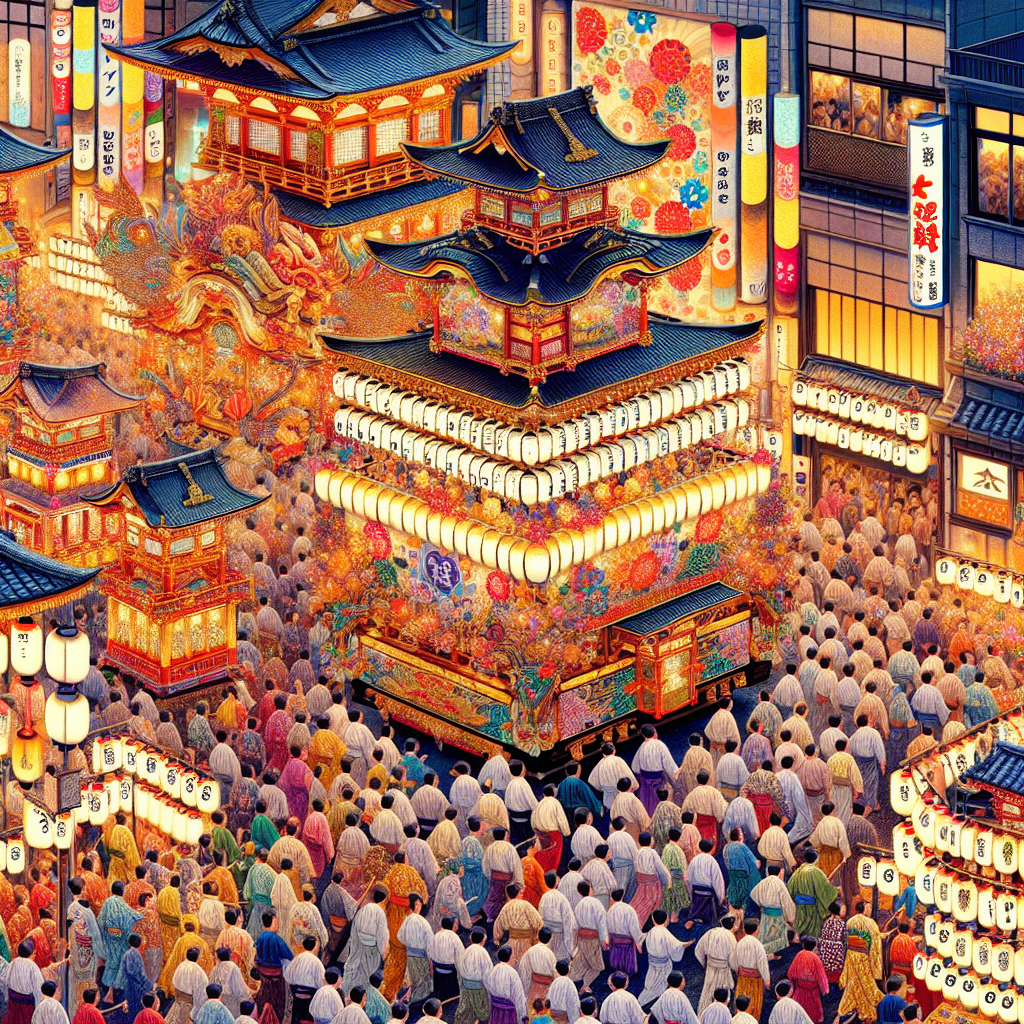

If there’s one festival that makes you realize that time travel is a very real possibility, it’s Gion Matsuri. This vibrant, month-long festival happens every July in the historic city of Kyoto, Japan. Rooted in tradition since 869 AD, the event was essentially a spiritual measure to appease and rid the city of the plague. That's right, while others were just popping out in their gardens with some scented candles to ward off evil spirits, Kyoto was having a full-on parade extravaganza. Each year, the spirit of perseverance, pride, and unwavering tradition floods Kyoto's streets, giving us a colorful glimpse into a world most of us only read about in books. Visitors from around the globe swarm here like bees to a honey pot, eager to witness the harmonious blend of Japan’s ancient and modern cultures.
The heart of Gion Matsuri lies in its spectacular parades known as "Yamaboko Junko". Ah, the grand floats! Think Macy’s Thanksgiving Day Parade, but with a dose of authentic Japanese culture. These massive floats, adorned with traditional crafts and textiles, are painstakingly constructed from scratch every year—no shortcuts here, folks! The towering floats range from 82 feet to 88 feet high and can weigh up to 12 tons. And guess what? These are pulled through the narrow streets by teams of men, bringing teamwork and manual strength back into fashion like it never left.
For those fixated on the minutiae of political correctness, the presence of men-exclusive groups might seem outdated, but in reality, it’s about preserving a cultural heritage that hasn’t succumbed to modern-day tampering. Each float is a masterpiece, a tangible representation of various historical and cultural themes that have been passed down through generations like family heirlooms.
The festival isn’t just about these parades. Oh no. For a true Gion Matsuri experience, you have to explore it all. There’s an insistence in Kyoto that one must savor the "Yoi-yama" evenings leading up to the major parades. Streets transform into outdoor stalls, brimming with food, drinks, and delightful trinkets. The smell of yakitori and okonomiyaki floods the air. It’s enough to drag even the most stringent vegan away from their tofu burger for a night.
Now, let’s talk about fashion, the heartbeat of any cultural festival. The people in Kyoto during Gion Matsuri wear traditional "yukata", a casual summer kimono, and trust me, they’re giving your prêt-à-porter wardrobes a run for their designer labels. Yukatas are vibrant, elegant, and an absolute eye-feast for anyone who appreciates fine fashion. And it’s entirely fascinating to see how seamlessly people manage to carry their smartphones and the latest tech gadgets in these traditional outfits.
Diving deeper into this festival, one mustn’t ignore the religious essence threaded throughout. As a visitor, the arresting rhythm of Taiko drums is your spiritual awakening. It pulls you into a trance, connecting souls through sound that transcends language. For a month, Kyoto reflects a serene balance of exuberant jubilation and spiritual insight.
Now, one might wonder how this festival resonates beyond the realm of tradition. Gion Matsuri isn’t just about keeping history alive—it’s about fostering a sense of community. Dozens of neighborhoods must work together to put this months-long display on. It's a celebration of togetherness, teamwork, and trust, the building blocks of any thriving society. A far cry from the fragile ideals some left-leaning ideologues seem to prioritize over genuine community and tradition.
Those planning to grab a slice of this event should note: it’s in full swing throughout July, but the largest parades, the "Saki Matsuri", occur on the 17th and "Ato Matsuri" on the 24th. So, mark your calendars and pack those bags. Exploring Kyoto’s Gion Matsuri is a journey not just into Japan’s vivid past, but a celebratory reminder of life’s simpler pleasures where everything isn’t governed by modern chaos but by ancient tradition.
Gion Matsuri is more than just a festival—it’s history in motion, and we are but humbled spectators to its grandeur. This is one of those experiences that will have you revisit your roots, values, and the underappreciated romance of tastefully resisting the fast-moving carousel of change for the sake of conserving what defines a society.