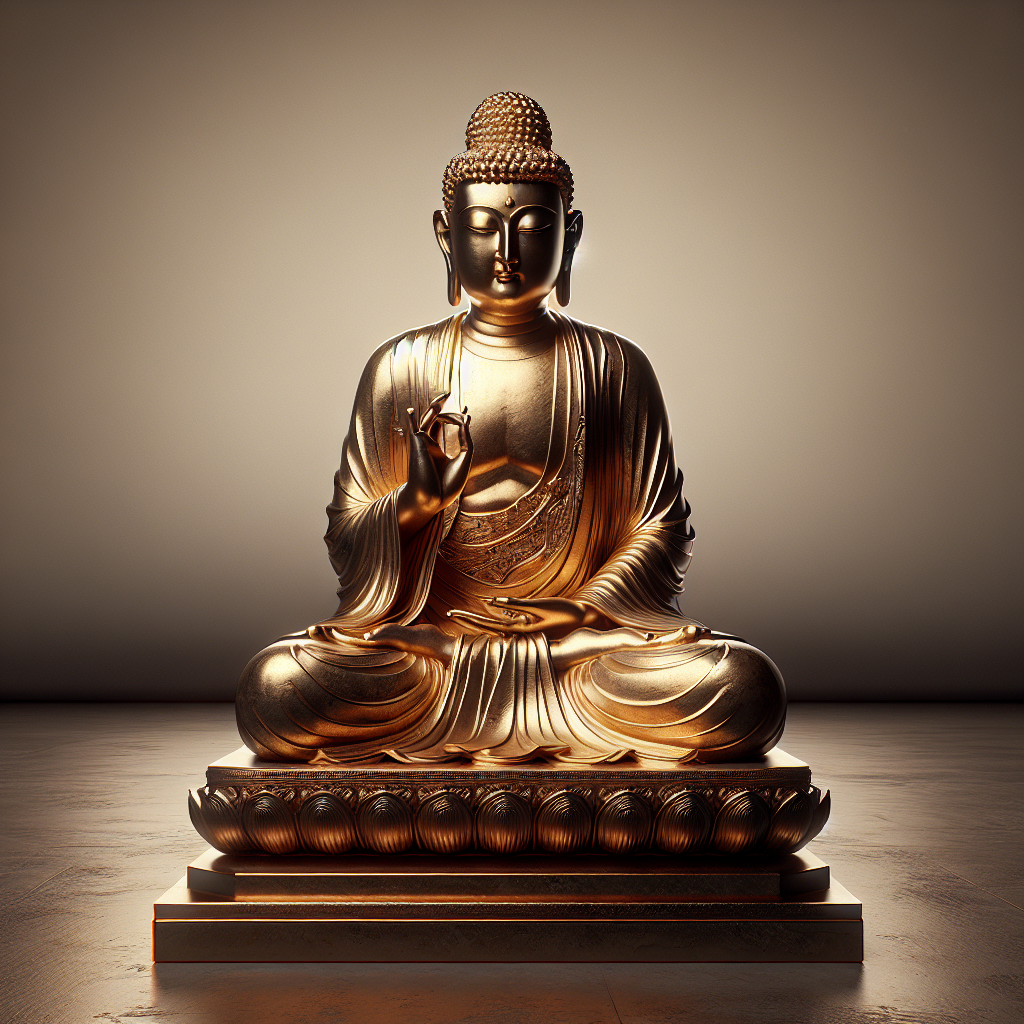

Let's talk about the big, gleaming piece of Buddhism that makes most "progressive thinkers" squirm in their tofu-scented offices. Meet the Gilt-bronze Maitreya in Meditation, officially recognized as National Treasure No. 83 of South Korea. It's a politically incorrect masterpiece that dates back to the late sixth or early seventh century. It's not just any statue; it's a colossal symbol of cultural heritage and artistry that leaves modern art looking like a toddler's crayon drawing. You can find this meditating marvel at the National Museum of Korea, where it holds its head up high, silently mocking our throwaway culture obsessed with meaningless minimalism.
Let's rewind. Who made this enigmatic figure? Well, historians can't pinpoint a single creator, but that's the beauty of it. This isn't about one man's (or woman's) ego; it's a testament to a civilization's genius and devotion. The hands that shaped it were likely monks or artisans devoted to their craft, living in a society that valued the collective over the individual—something today's "me-first" mindset utterly fails to grasp.
What makes this statue stand out? It's dripping in gilded bronze, for starters. Now, I know what some naysayers might argue: "Why all the opulence?" Because beauty matters, and let's face it, it has been sacrificed at the altar of functional, soulless architecture today. The Gilt-bronze Maitreya is a whirlwind of serenity captured in metal and bumps ugliness to the curb. It's a mesmerizing portrayal of Maitreya, the Buddha of the future, deep in meditation with one leg crossed over the other. He's pondering our future, and judging by our current state of affairs, he's got a lot to meditate on.
This piece isn't just a relic; it's an urgent reminder that ancient societies had a sense of purpose and cultural dexterity we’re sorely missing. You see, the Gilt-bronze Maitreya embodies a time when art and spiritual practices were intertwined, almost mocking today's superficial "self-care" trends. The statue's detailed craftsmanship is something we would do well to emulate, instead of mass-producing disposable goods that pollute our planet.
Let's also whip out the microscope on the 'when’ here. This wasn’t created during some random heyday of the Joseon dynasty. No, it was conceived during the Three Kingdoms period. It was a vibrant era of conquest, innovation, and interaction with neighboring countries. Art back then wasn't just a passive brushstroke across a canvas; it was a dynamic representation of power, belief, and identity.
Where should you plan your pilgrimage? The National Museum of Korea, no less. If you can stomach a little bit of real culture, this museum is your Mecca. Save that carbon footprint exhibition for another day and feast your eyes on something that has legitimate historic value. Trust me, it will do your vacation Instagram posts some good.
So, why should you care? The Gilt-bronze Maitreya, towering at nearly a meter high, doesn’t just sit pretty—it challenges us to question the depth and rigor of our cultural markers today. This isn't just forgone beauty; it's a call to realize that our progress should not come at the loss of art's transformative power. While today's educational systems churn out factory-like output focused on tech and market skills, here stands a masterpiece sidestepped by design majors and innovation chasers who lose sleep over the next app launch.
Take this perspective: creating something for the sake of being useful, or worse, famous, is what art has been diluted to today. Yet, here’s a piece that has stood for centuries not through hype but through its majestic presence. And there are people who really believe a digital painting of a banana taped to a wall should garnish more Instagram likes? This statue existed well before God gave us common sense, apparently before it decided to skip a few generations.
This Gilt-bronze Maitreya drives home a simple yet profound point: actual history, unlike some newly concocted 'narratives', doesn't just erase what's inconvenient to itself. This isn't an episode of "Cancel Culture: The Reality Show"; this is a testament to enduring craft and philosophy. Time to take the statues out of the dust-covered history books and let their narratives breathe in our less-than-inspired modern world.
To wrap this up with a thought-provoking question: where have we gone wrong when a statue can make a better argument for enduring value than a thousand TED Talks on transient trends? You don't need to answer it; just go visit Maitreya and let it scar your little blue bubble of 2023 AD with its time-defying aura.