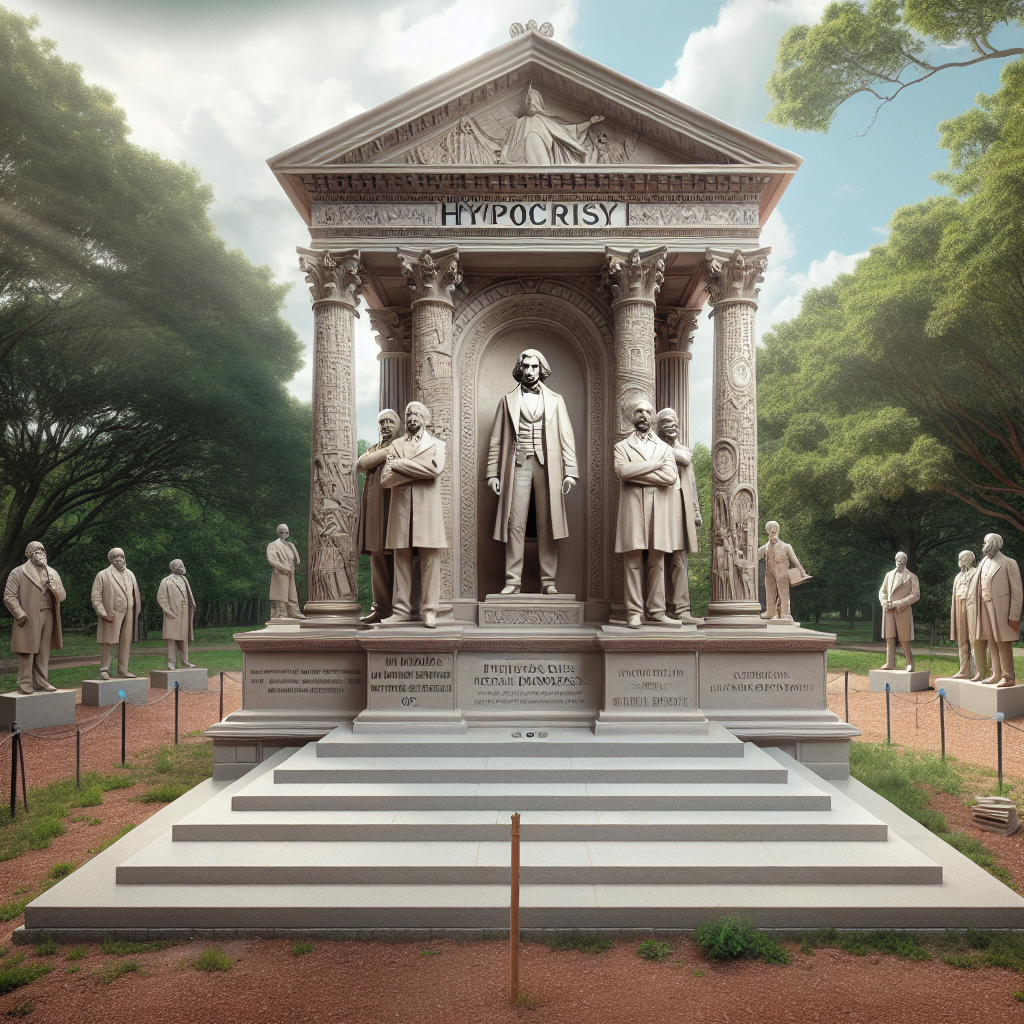

Frederick Douglass, if alive today, might have a jaw-dropping moment standing before his own memorial, wondering, "What has become of sensible thinking?" The Frederick Douglass Memorial stands prominently in Harlem, New York, where it was unveiled in 2011 to honor this pivotal figure in American history. Known for his fierce abolitionist stance, Douglass escaped slavery to become a leading voice in the fight for freedom. Placed in a bustling neighborhood at Frederick Douglass Circle, this memorial is a reminder to all who pass by of the enduring power of freedom. But here's something we don't often hear: Frederick Douglass was a Republican—a detail commonly overlooked and sometimes conveniently ignored in modern liberal narratives.
First things first, why does this matter? In today’s world, factions often try to claim historical figures to further their modern agendas. Douglass, if he time-traveled to 2023, might want to remind everyone that his allegiance was with the party of Abraham Lincoln—the man who wrote the Emancipation Proclamation. Considering Douglass’ fight against the oppressive narratives of his time, it's only fair to question how he would feel about the narratives being pushed at his memorial today.
Douglass' views on self-reliance might surprise some. He believed in the empowerment of the individual—a belief that aligns more closely with the push for self-sufficiency than with modern dependency welfare systems. He emphasized the importance of personal responsibility and self-improvement as paths to freedom—concepts that seem to be at odds with policies that prioritize handouts over hand-ups.
Let's talk about his love for education. The Frederick Douglass Memorial declares his commitment to knowledge, but how often do we reflect on how he saw education? Douglass taught himself to read and write in a time when it was forbidden for slaves. He would argue that education should be a path to empowerment, not indoctrination. Given today’s environment, where some feel schools push ideological agendas over educational excellence, Douglass might have joined the discussion on what’s being taught under the guise of education.
Douglass' unwavering belief in the Constitution as a living document that guaranteed natural rights could stir controversy today. He rejected the notion that the Constitution was a pro-slavery document. In his eyes, it was a glorious liberty document. Enshrined in the Frederick Douglass Memorial is that spirit of constitutional reverence—a spirit often overshadowed by current trends that dismiss constitutional relevance in favor of ever-changing sentiments.
His stance on economic opportunity would be a hot topic in today’s economy. Douglass argued for a free market, understanding that economic independence went hand-in-hand with political freedom. At a time when businesses are shackled by excessive regulation and taxation, Douglass might question today's economic direction. His memorial serves as a reminder that economic freedom was a cornerstone in his vision of an equitable society.
Douglass was also a proponent of women's rights, which might sound like an olive branch to modern progressives. Yet, he advocated in a manner that emphasized equal opportunities without overbearing governmental interference. His vision of equality was simple: allow merit to shine regardless of gender or race, rather than manipulate opportunities in the name of equality to create manufactured outcomes.
Let’s not forget his approach to civil discourse. Douglass was a revolutionary in the arena of debate and dialogue. Today’s cancel culture would be unthinkable to a man who understood that progress requires open and sometimes uncomfortable conversations. For him, it was dialogue that paved the way for understanding and change, something we've swapped out in today's world of shouting matches and echo chambers.
Douglass believed in justice reform. The memorial might not delve into the nitty-gritty, but his focus was on rehabilitation and redemption, not just punishment. Contrast that with today’s approaches, where quick-fixes and reactionary policies overlook the deeper social roots. While justice reform remains a pressing issue, Frederick Douglass’ model was one of thoughtful, long-term solutions.
Douglass was a man of faith. His religious convictions shaped his moral philosophy, yet today’s narrative often finds itself skewed, ignoring the role faith plays in values and decision-making. The Frederick Douglass Memorial represents not just intellectual but spiritual freedom, a pairing Douglass would advocate is crucial to societal growth.
Finally, there’s the question of legacy. Is today’s implementation of Douglass’ beliefs truly honoring his legacy, or is it merely paying lip service in an attempt to remold him to fit modern ideals? It’s essential to examine how we represent historical figures. Within the walls of the Frederick Douglass Memorial, while the stones speak of past fights, it’s the friendly reminders of his philosophies that linger longer.
In the end, the Frederick Douglass Memorial stands as a statue but also as a witness, watching as societal currents change. Douglass stood for principles that resonate with liberty, education, personal responsibility, and freedom—pillars that today’s narratives sometimes struggle to uphold candidly.