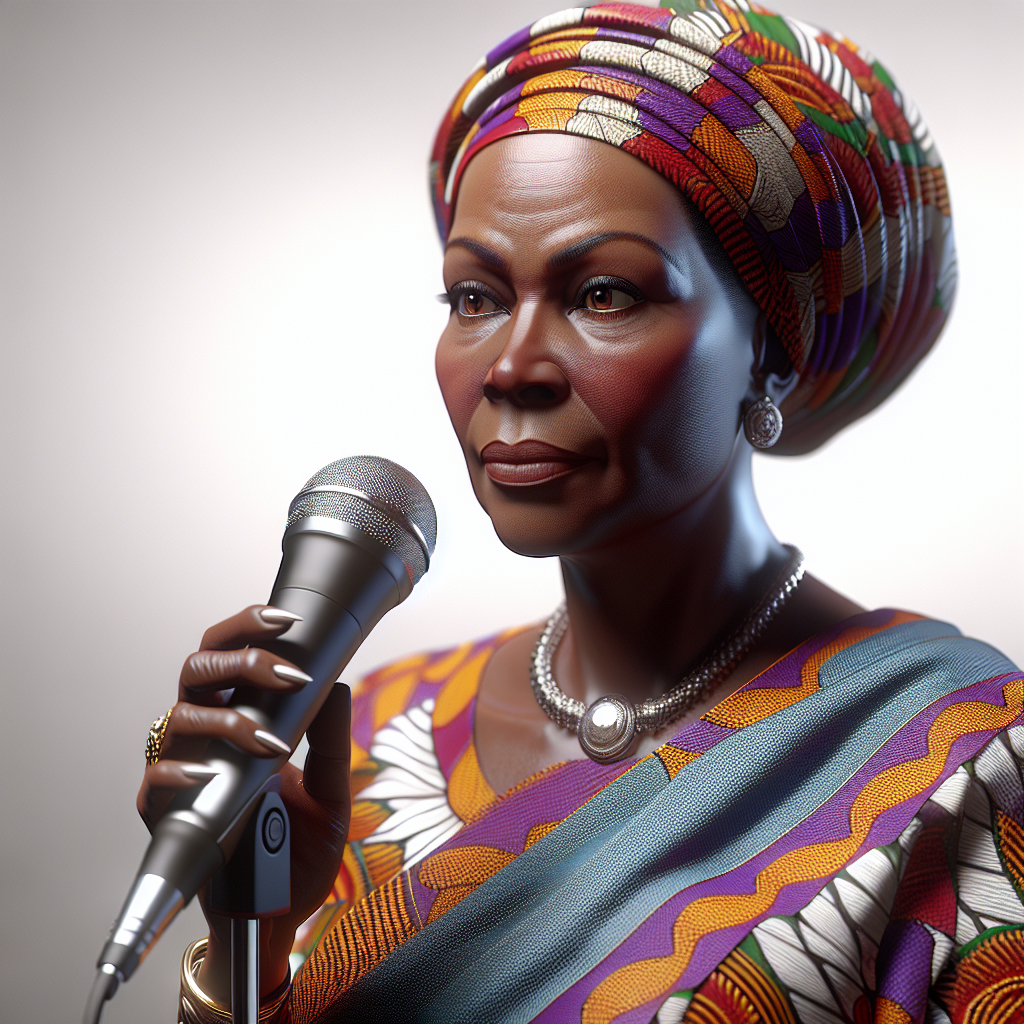

If you haven't heard of Fatu Gayflor, buckle up. The Iron Lady of Liberia, often dubbed the 'Golden Voice of Liberia,' commands attention and has a legacy as fascinating as any Hollywood star. Born in the rich cultural landscape of Kuagie, Lofa County, she draws upon a treasure trove of traditional African music that has somehow thrived despite political and social upheaval. You can thank her for keeping Liberian cultural heritage alive, even as so-called modern influences attempt to dilute the essence of age-old traditions. From a small village in Liberia to stages across the globe, Fatu Gayflor transcends borders both geographically and musically.
Fatu was born when Liberia was teetering on political instability. Emerging as a cultural warrior in such tumultuous times is no small feat. She joined the Liberian National Cultural Troupe at a young age, a decision that would propel her into musical stardom. Her musical talent was as if drawn from the soulful magic in the Liberian air - a siren's call to preserve and promote traditional Liberian music. The institution was an endeavor to educate Liberians on their own culture through performance art. She learned to sing various Liberian dialects, effortlessly blending indigenous sounds with a contemporary flare.
It's worth noting that while Fatu rose to fame in the late 20th century, her influence stretches well into the 21st. Her voice isn't just hauntingly beautiful; it regales stories, legends, folklore and bears the pain and joys of an entire community. Fatu doesn't merely perform; she educates. How many modern pop stars can say they've done that lately?
Fatu Gayflor's musical genres are hard to pin down. While many love to cling to definitions, she simply defies them, straddling folk, traditional, and even pop sounds. What aligns her with the greats is not just her melodious prowess but her commitment to authenticity. Her songs are sung in over six Liberian dialects and are rich with storytelling. She's like a living encyclopedia of Liberian culture, and it’s refreshing to see someone uphold tradition in an era obsessed with 'progress.'
But what about politics? Fatu is not just a voice; she’s a voice with a cause. She's an advocate for peace and healing in post-war Liberia, using her platform to bring a fractured nation closer together. She's a testament to the fact that culture and politics are intertwined and cannot be compartmentalized as some might wish. Music, at least when done with her finesse, carries an unrivaled power to unite or divide. In her case, it's mostly the former.
Despite her prowess and musical accolades, it’s no surprise she hasn't taken the Western mainstream by storm. Let's face it, the mainstream has a tendency to sidestep traditional African music, seeking instead to commercialize a generic 'global music' to draw in audiences less interested in cultural specifics. But Fatu doesn't pander to global clichés and remains rooted in her authenticity. Unlike other artists who enjoy fame by sacrificing depth for market share, Fatu stays true to her origins.
She's graced stages around the world and worked with various international musicians, further bringing the unique sound of Liberia to a global audience. If you’re searching for true diversity in music rather than the watered-down version touted by contemporary music labels, Fatu Gayflor serves as a genuine article - no corporate puppet strings attached.
Why discuss Fatu Gayflor now? Because she epitomizes a fight that never ends – the fight to preserve a nation's heritage while adapting to modern storytelling methods. As authentic culture faces erasure or transplantation by modern influences, voices like Fatu's serve as an invaluable anchor. When you listen to her music, it’s like taking a crash course in Liberia's rich history, wrapped up in rhythms and lyrics you’ll find your foot tapping to before you realize it.
To sum it up, Fatu Gayflor isn’t just a singer; she’s a custodian of culture, a political voice, and a storyteller who can captivate anyone truly willing to listen. She stands as a vibrant figure against cultural homogenization, a reminder that authenticity can thrive even when the world is quick to embrace the shiny and new.
It’s about time the world tuned into Fatu Gayflor – not just as a musician but as an emblem of cultural perseverance and a spirited testament to what happens when talent meets true passion.