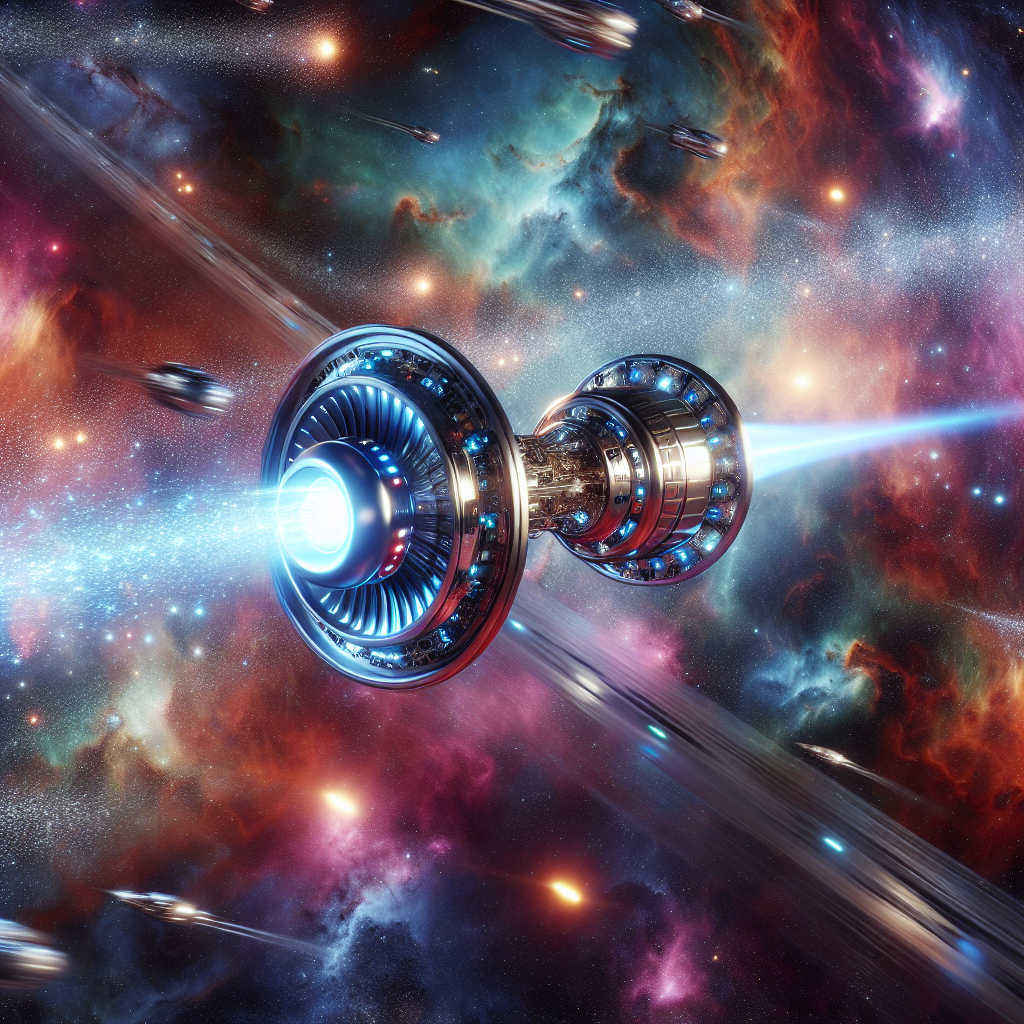

Is there anything more thrilling than defying the laws of physics? Enter the EmDrive—an experimental propulsion system that has scientists scratching their heads and, quite possibly, shaking the foundations of modern science. Developed initially by British engineer Roger Shawyer in 2001, the EmDrive supposedly creates thrust without the need for propellant. According to traditional physics, it shouldn't work. Yet, experiments from labs such as NASA and private entities in various corners of the world have shown otherwise. So, what exactly is this tantalizing piece of tech, and why does it send shockwaves through the scientific community?
Let's set the stage. For decades, the laws of physics have been as unyielding and holy as commandments. Concepts like Newton's Third Law tell us everything about action and reaction, insisting you can't have one without the other. But here’s where the EmDrive throws a cosmic curveball—a thrust without exhaust. Science fiction malarkey? Not so fast. The idea here is straightforward yet, to many, heretical: By bouncing microwaves inside a conical cavity, the EmDrive conceivably boosts forward without throwing mass out the back. Not just bending the rules, but rewriting them! Curious minds are magnetically drawn to such paradoxes, and the EmDrive serves as an intellectual lodestone.
Some say we're shooting ourselves in the foot by sticking to old physics books like they're the gospel of St. Isaac. To the shock and awe of many, experiments carried out by credible organizations like NASA's Eagleworks have reportedly recorded positive thrusts in a vacuum setting. Eagleworks, famed for its daring interstellar research, performed tests that left even the most skeptical scientists pondering their next chess move. Conventionalists grumble, "Impossible!" Yet the data is there, unlocking a Pandora's box of potential applications if proven viable. In a world where practical solutions triumph idealistic ramblings, a working EmDrive could radically alter our approach to space exploration, rendering many current propulsion systems obsolete.
If the prospective reduction in propellant and subsequent trip shortening isn't thrilling enough, consider the dash of sovereignty a successful EmDrive would add to a nation's scientific arsenal. Owning such tech means not being hostage to rocket fuel equations; freedom from complex launch mechanics launches any country into an elite category of technological prowess. Space could be democratized—or centralized, depending on who gets there first.
Why does this drive the theoreticians bananas? Because proving Newton wrong isn't just academic; it's seismic. Our very understanding of physics anchors policies, education, and even environmental regulations. Picture scientists updating textbooks faster than politicians could dream up reasons for more federal spending. But you know who'll get the jitters with this one? Those who see the magical unifying theory in proposals that conserve today's boundaries, those who retreat to consensus when faced with the radical.
While haters take to their blogs to denounce the EmDrive, others are already considering applications that extend well beyond the bounds of science fiction. An EmDrive-efficient spaceship can float gene therapies to unknown planets while using less energy and resources. Who knows, it might even improve Earth's balance of power; every superpower considering itself a space-colonial empress must stare long and hard in the mirror.
Let's not mistake optimism for ignorance. Clearly, the EmDrive hasn't emerged unscathed from its gambit against mainstream science. Critics—and let’s be frank, they are necessary for any healthy debate—argue that all positive results could be ascribed to experimental errors and are uninterested in what they classify as fringe science. Providers of grants keep one eye on solvency and the other on popularity, often missing that sweet spot where innovation could transform human experience.
While entrenched paradigms continue to face unrelenting scrutiny, science is, after all, about being proven wrong until we understand what is right. The EmDrive is a gripping example of this philosophy in motion. Those willing to embrace the riddle of the EmDrive are not dismissive of proven science; they're adventurous enough to believe it can be expanded.
What happens next is uncertain, but given time, resources, and an inch of stubborn genius, the EmDrive might go from the basement lab to the global arena. Will it dismantle all we hold dear in modern physics or merely nudge it into a new direction? Faster than light travel, colonization of distant exoplanets, time travel—anything seems possible with a little audacity. Let it be a testament to human ingenuity that even here, in the face of scathing criticism and amid diverse geopolitical landscapes, dreams continue to soar higher and higher.