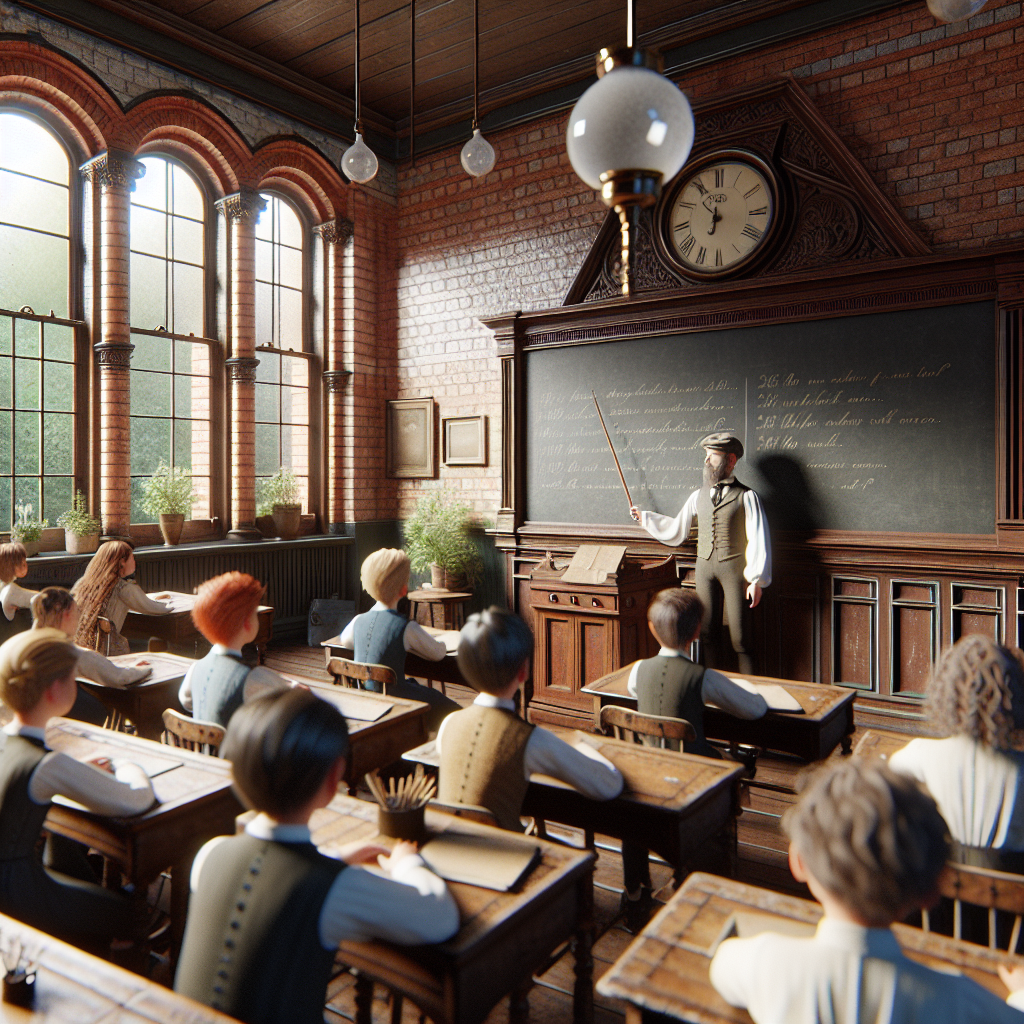

Anthony Trollope's "Doctor Wortle's School," published way back in 1881, is the kind of novel that can make the modern woke crowd break out in hives. And you know what? It’s awesome. This slice of Victorian life offers a refreshing dive into the slightly stuffy world of a private boarding school run by the enigmatic Dr. Wortle, perfectly set in England's pastoral landscape. It challenges moral conventions, pokes at societal norms, and confronts hypocrisy head-on. There’s gossip, scandal, and intellect flying around at a pace that today's politically correct novels simply can't match.
But don't be fooled into thinking this book is just about a school. The plot revolves around Dr. Wortle and his tough-as-nails struggle with convention and morality when the school is beset with scandal. It's the sort of scandal you would've needed a million tweet-thread today to cover up. Dr. Wortle discovers that one of his new teachers, Mr. Peacocke, has a secret: his marriage might not be legitimate due to a tricky first marriage situation back in the States. In the high-octane world of Victorian morals, this is equivalent to finding out your favorite social media influencer is faking their entire persona.
Dr. Wortle as a character is simply fantastic. He dares to think for himself when everyone around him is gasping like a bunch of pearl-clutching reactionaries—a telling nod to those who value individuality over conformist pressures, much like what’s idealized by every ardent conservative. He insists on protecting Peacocke’s job despite the scandal, valuing competence over moral outrage, much like defending free speech in the face of cancel culture. Trollope gives us a sharp, witty portrait of our protagonist who is neither afraid to stand alone nor to put his own reputation on the line for what he knows is right. Doctor Wortle is that rare breed—a man of principle in a world of weathervanes.
The narrative unfolds with Trollope's exemplary flair for depicting the hypocrisy of society. Imagine a world where gossip rules over truth, where public perception is valued more than facts—it reads like a 19th-century precursor to today's tabloid headlines. The other characters offer a vivid tableau of societal types, from the meddling Mrs. Stantiloup to the insecure Bishop who is all too mindful of public opinions. Trollope crafts these figures with precision and uses them to skewer the conformists who drown in their own double standards.
Trollope nails the pace too, utilizing every chapter to edge closer to the unfolding of whether truth will ultimately win the day or if hypocrisy will trample all. Each page functions as its own red-pilled epiphany in a liberal-dominated literary canon; there’s none of the soft soap or sugar coating of uncomfortable truths that one would find in more ‘progressive’ tomes. Instead, you get an honest, almost irreverent look at the consequences of choosing truth and personal responsibility, even when the world lines up against you.
A hallmark of the book is its ability to provoke debate on an age-old question that beams through time: When does public morality have the right to determine personal action? Is it better to champion truth or to maintain the facade of virtue at any cost? Trollope compels us to tackle these timeless issues, arguing through Dr. Wortle’s actions that honesty and integrity are still worth defending. Of course, these themes often fly over the heads of those looking for easy answers wrapped up in slogans and hashtags.
Now, it wouldn’t be a Trollope novel without his sharp eye for the social order and the language to deliver those details with sarcastic finesse. The grandeur of his writing offers more than just description; it is essence-bound storytelling where every word is a thread in his intricate tapestry of opposition to the triviality and fickleness of accepted norms. In Dr. Wortle’s School, he uses the private school's setting to address broader societal questions, deftly sidestepping sentimentality to pierce through to the reader’s intellect.
While liberals may twitch at the portrayal of enduring moral values, Trollope avoids clichés by portraying dilemmas that are complex and unnerving, with no easy fixes or moral platitudes handed down from narrative soapboxes. Instead, he presents a conundrum of ideals clashing with reality, where it's not enough just to be right; one must also be steadfast in conviction. In essence, "Doctor Wortle's School" urges us to stand our ground even when it's unpopular, a lesson as relevant today as it was over a century ago.
Trollope’s knack for humor and irony is served up throughout the book, neither condescending nor appeasing, leaving his readers—including those longing for pointed narratives—a delicious feast to chew on. He writes with the purpose-driven tension of a master craftsman bold enough to challenge both his characters and readers without blinking an eye.
Reading "Doctor Wortle's School" opens a window to the past that reflects our present, offering the hope that principles still outweigh popularity contests. Trollope’s narrative showcases the triumph of personal conviction amidst societal noise, a clarion call to anyone tired of modern stories diluted by feelings and political correctness. Anthony Trollope's novel still speaks to that line in the sand between bending under societal pressures or embracing the strength of individual beliefs—with wit, with courage, and with an intellectual clarity that modern narratives sorely lack.