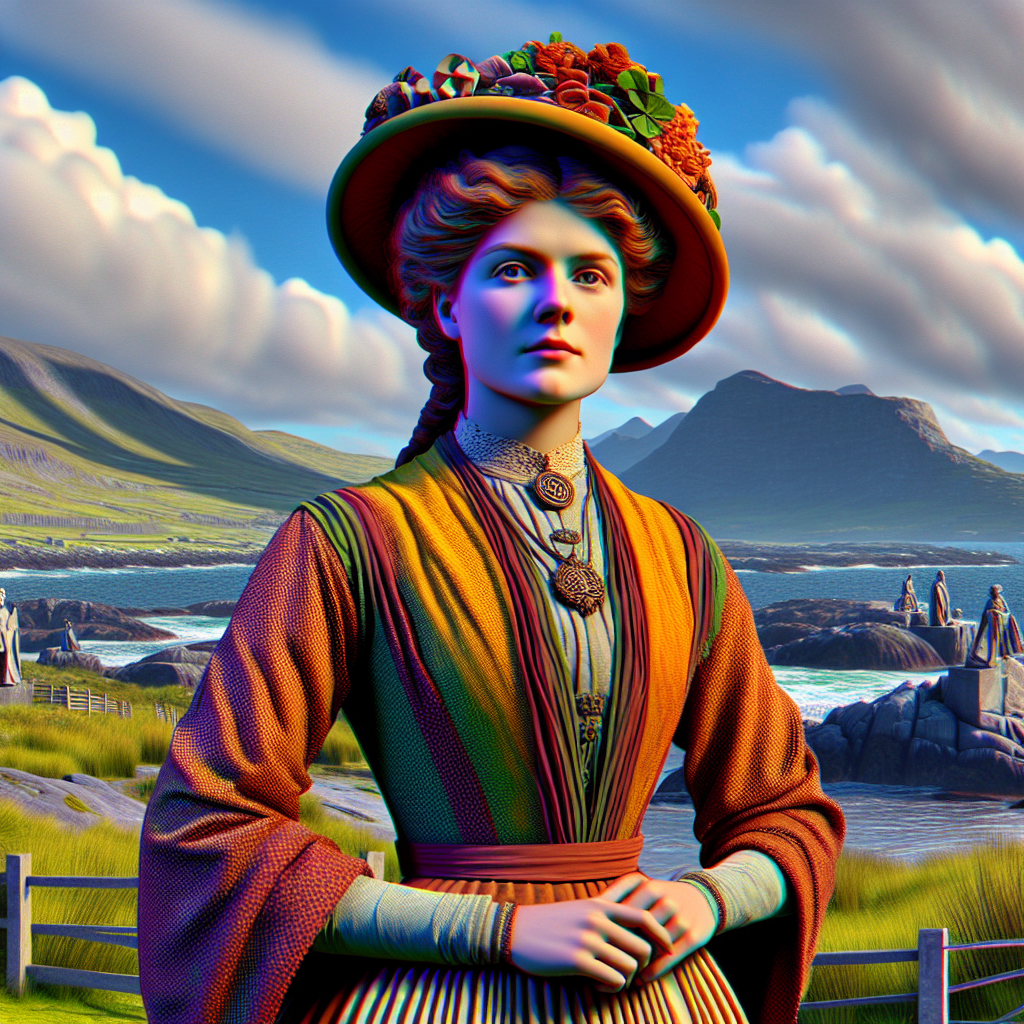

Ireland’s history is littered with fascinating characters, but perhaps none more polarizing than Constance Markievicz. Born in London in 1868, this aristocratic woman decided she’d shake things up—a cocktail recipe of feminism, nationalism, and socialism that would make even the heartiest of revolutionaries woozy. The world of Constance Markievicz was an Irish battlefront, amid a changing landscape at the turn of the 20th century, where she played politics and parades like life was just one big show. But was her performance as Ireland's first female MP and revolutionary really a heroic struggle or more of an overblown farce?
Markievicz was a colorful enigma. Despite her posh upbringing, she tossed aside the pearls for a gavel and a rifle. Making herself a standout, not just for being a woman in a man’s world, but for being the woman in the woman’s world. Decisions, declarations, and events were always dramatic when it came to her. She lived loudly during a time women were told to hush, participating and even taking a leading role in the Easter Rising of 1916. A rebellious streak or a calculated plot? History tells of her on the barricades, armed and ready, later glorified by some as the Joan of Arc of Ireland. But beneath the ballyhoo, what did this symbol of female empowerment and resistance really achieve?
It wasn’t enough for Markievicz to snap a photo with a picket sign; she was determined to be front-row center. Her social circle was filled with the influential and the inspired. Among them, the Irish Republican Brotherhood and the suffrage movement contemporaries who egged her on. Oh, and she married a Polish count, just in case one title wasn’t grand enough for her tastes. It was here she blended her identity, aristocrat turned revolutionary, an awkward cocktail at the posh party of politics. Was it authentic belief, or a case of rallying cries that happened to rhyme with her name?
One might argue Constance had a mental map to reshape Ireland’s destiny. But the reality of her ideologies was much akin to a puzzle missing a few pieces. Her tenure as the Minister of Labour in the first Dáil Éireann from 1919 to 1922 didn't exactly produce landmark policies or reforms, except for stirring more pots of ideas. Did she set precedents, or merely precedents of debate? Maybe both, more likely neither. This was the first woman to hold such a ministerial post, yet her influence floundered against the chaos of the period surrounding the signing of the Anglo-Irish Treaty.
But let’s not pretend her work didn’t resonate with anyone. She ignited sparks in many, particularly with her strong leftist leanings. A darling to those on the brink of revolt, Markievicz pushed buttons that some say unleashed change. She spurred fires in mythical pantheons of freedom fighters while leaving conservatives to wonder if she was all smoke and mirrors. Her vision for a socialist Ireland placed her at odds with many traditionalists, but she was unrepentant, subscribing to ideals that many today would find mirror the controversies of modern politics.
Her imprisonment following her involvement in the Easter Rising might gloss over what the polished narratives portray as heroism. Yes, she spoke for Ireland’s independence; however, questioned enough, and her methods are as divisive as the radicals she celebrated. Reactions to her defiance ran the gamut from admiration in some quarters to disdain in others. Arguments can be made about equally significant roles, completely overshadowed by her theatrical escapades.
Some may view her as heroic; others may see the opposite. Her legacy is colored in shades of rebellion, but not the successful kind that rewrites major policies. Instead, it’s more about symbolic gestures that stand tall more in history's imagination than in tangible change. When not challenging British rule, Markievicz advocated for myriad social causes, including women's suffrage, though even feminists could find her approach scattered—a protest here, a rally there, but what tangible equality occurred?
Constance Markievicz remains an icon for some, a renegade who walked the path of revolution with conviction if not clarity. While parts of her story are inspiring, possibly paving the way for others—or merely laying cobblestones on an already paved path—it’s only fair to scrutinize where her legacy holds substance versus spectacle. Her history is not solely written in achievements but in the ripples her presence cast across Ireland's troubled waters.
So next time, when Ireland’s feminist or nationalist heroes are lauded, ponder the curious case of Constance Markievicz. The woman who fought fiercely for a cause, she tried to tailor to her own values but often ended up fanning the flames of controversy rather than that of lasting change. Perhaps the lasting mark of Markievicz isn't the battles she fought, but the arguments she inspired long after she left the stage.