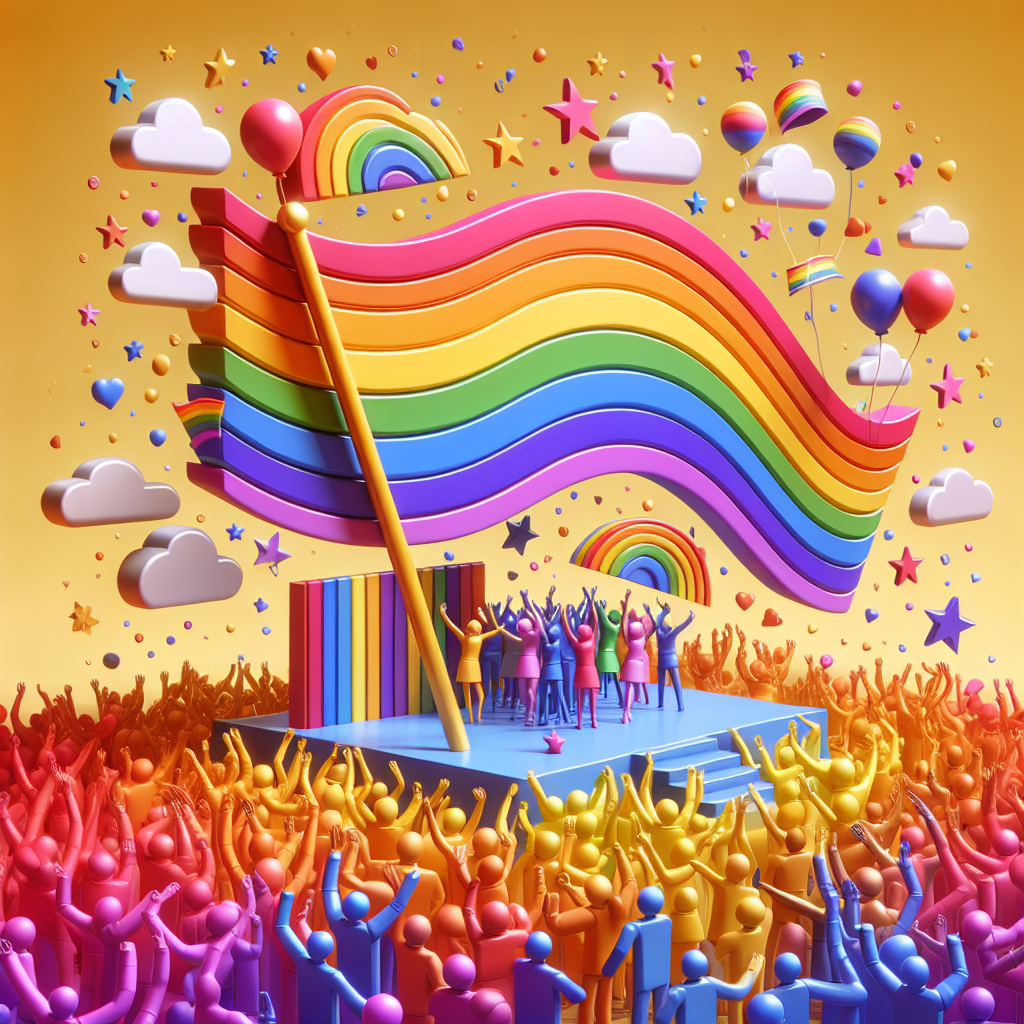

Ah, the coming out party—a ceremonious event that those on the left have transformed into a social spectacle akin to a debutante ball on steroids. It's the Who’s Who of rainbow regality where coming out is not just a personal statement but a political parade. Traditionally, someone who identifies as part of the LGBTQ+ community makes their declaration public. But in today's world, it's more about making political statements at every turn.
Let’s start with the why. The coming out party serves many purposes; it’s a rite of passage, a declaration, and, if one goes by the social media postings, a downright dance competition. What could be more thrilling than a social media storm featuring rainbow cakes and choreographed dance routines? All while airing your personal life in a manner that demands recognition and validation from all corners of your social circle.
And who are the hosts of these elaborate events? In most cases, they're organized by the young individuals making their mark or sometimes concerned allies ready to make a statement out of someone else’s life decision. It's an occasion where ‘authenticity’ is celebrated, yet it's often orchestrated with more planning than a wedding. There's an irony to the fact that authenticity gets a hefty dose of stage management: from invitations and decorations to guest lists curated by who 'can handle' the announcement.
Where and when these parties occur is another fascinating element. You could be sitting at home relaxing when your social media feed explodes with posts from these celebrity-like announcements. They happen anywhere—from the dramatic fields of college campuses, bubbling with youthful enthusiasm, to the hushed halls of upscale metropolitan penthouses, channeling a glamorous vibe.
What do you wear to one of these events? If you're simply attending, something in the neighborhood of semi-casual won’t cut it. You may want to dazzle like you’re at a political gala—because let's face it—you're going to be in dozens of Instagram stories. For the honoree, anything goes. Some have pulled off outfits that look like they’ve walked straight off a fashion runway, while others opt for costumes that reimagine their on-screen idols.
Now, let’s wrap our heads around the social dynamics. When it comes to the guest list, are the parents invited? Friends from the past life? Or only the hip, new-era millennials (and maybe some trend-setter Gen Z'ers) allowed in? The politics of who gets an invite can stir up more drama than the announcement itself. Curating the perfect audience is key, making sure everyone there is equipped to clap and cheer on cue.
And herein lies the crux of the matter: why is it necessary to make such a public spectacle out of what many conservatives consider a personal choice? The coming out party has become another notch on the activism belt—a platform to highlight so-called progressive ideals while conveniently airing the privacy someone once held dear. It’s less about personal connection and more about social approval.
The aftermath is equally telling. Freshly liberated from the 'closet', the honoree is often expected to march headlong into more identity politics. Now that the banner is unfurled, there’s more reason to subscribe to an agenda that demands not just acceptance but a raucous celebration. Adding to this carnival of identity, are activists waiting in the wings with pamphlets and hashtags, ready to envelope the new recruit into their fold.
A coming out party is postured as an empowering experience, but one must wonder—does it not place undue pressure on those not wanting to sell their lives for a 'like' or a 'share'? For too long, authenticity came from just living your life as you deem fit, not from broadcasting it in a performative extravaganza that grips the attention of your entire network.
The ever-looming question looms large: has the coming out party reached its saturation point? When an event designed to make one feel 'part of something bigger' turns into a publicity stunt, perhaps it’s time to rethink how these narratives unfold. And dare I say it, could there perhaps be a more subdued, sincere way to affirm one’s identity without the fireworks and confetti?
In this era of digital approval and instant gratification, it’s worth pondering whether these high-octane celebrations reflect genuine self-acceptance or an appetite to replace tradition with spectacle. Dare one imagine a world where people are celebrated for simply being who they are without the scripted scenes?
The noise surrounding the coming out party will likely continue until society reevaluates the need for public affirmation. Until then, hold onto your invitations because the politically-correct festival of who you are is still looking for its next host.