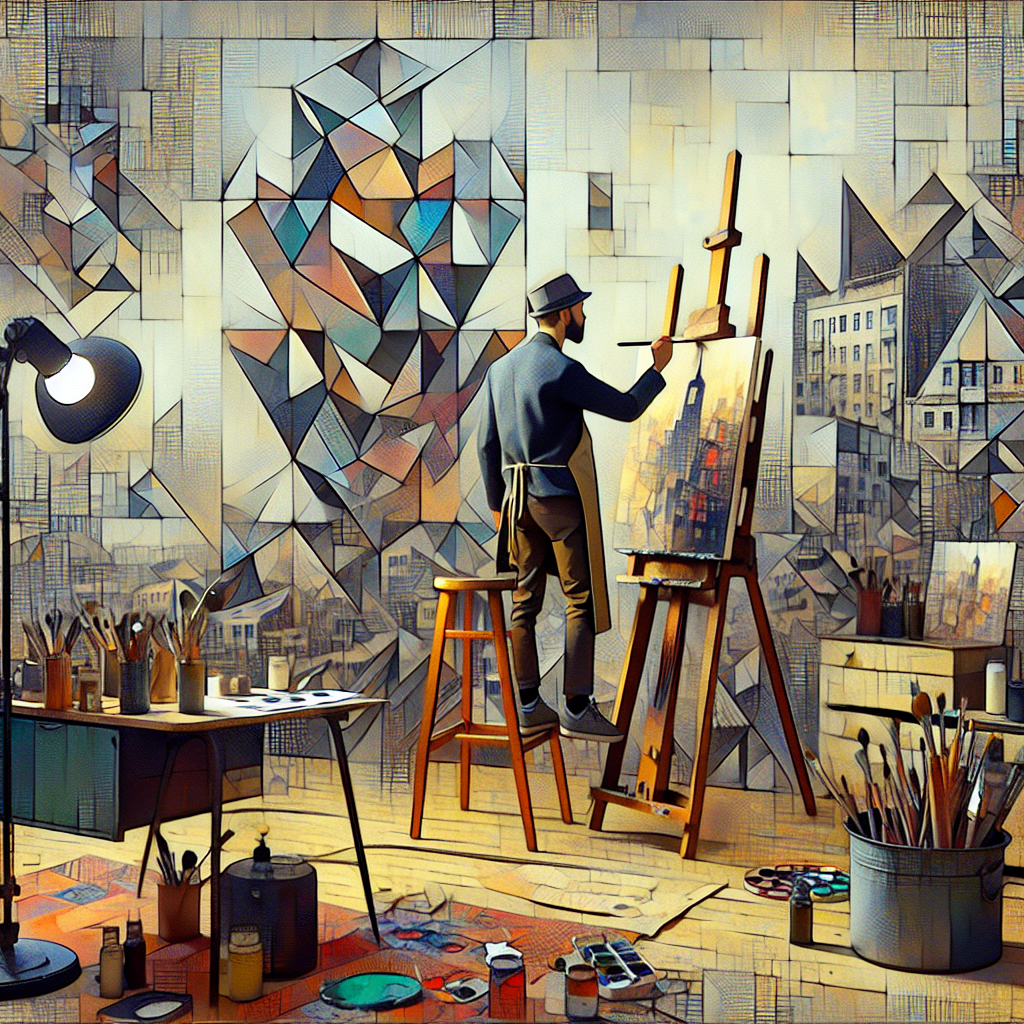

Charles Demuth: The Artist Who Painted with Precision and Provocation
Charles Demuth, an American artist born in 1883 in Lancaster, Pennsylvania, was a master of precisionism, a style that combined the sharp lines of industrial America with the vibrant colors of modern art. He painted during the early 20th century, a time when America was rapidly industrializing, and his work captured the essence of this transformation. Demuth's paintings, like "I Saw the Figure 5 in Gold," are not just art; they are a bold statement against the chaotic brushstrokes of his contemporaries. He painted with a precision that mirrored the mechanical age, challenging the status quo and leaving a lasting impact on the art world.
Demuth's work is a testament to the power of structure and order. While other artists were busy splattering paint and calling it genius, Demuth was meticulously crafting pieces that celebrated the beauty of industrialization. His paintings are a breath of fresh air in a world that often glorifies chaos. The clean lines and geometric shapes in his work are a reminder that art doesn't have to be messy to be meaningful. Demuth's precisionism is a slap in the face to those who believe that art should be free of form and structure.
His most famous work, "I Saw the Figure 5 in Gold," is a perfect example of his unique style. Inspired by a poem by his friend William Carlos Williams, the painting features a large, bold number five surrounded by abstract shapes and vibrant colors. It's a visual symphony that captures the energy and excitement of the modern world. Demuth's ability to transform a simple number into a work of art is nothing short of genius. It's a reminder that art can be found in the most unexpected places, even in the mundane details of everyday life.
Demuth's work also challenges the notion that art should be purely emotional. His paintings are a celebration of intellect and reason, a refreshing departure from the overly sentimental works of his peers. By focusing on the precision and beauty of industrial forms, Demuth elevates the mundane to the level of high art. His work is a testament to the idea that art can be both beautiful and thought-provoking, a concept that seems to be lost on many modern artists.
In a world where art is often used as a platform for political statements, Demuth's work stands out for its focus on aesthetics and form. He wasn't interested in using his art to push an agenda or make a statement about society. Instead, he focused on the beauty of the world around him, capturing the essence of industrial America with a precision that is both captivating and inspiring. His work is a reminder that art doesn't have to be political to be powerful.
Demuth's legacy is a testament to the power of precision and order in art. His work continues to inspire artists and art lovers alike, proving that there is beauty in structure and form. In a world that often glorifies chaos and disorder, Demuth's paintings are a refreshing reminder of the power of precision. His work challenges us to look beyond the surface and appreciate the beauty of the world around us, a lesson that is as relevant today as it was in his time.
So, the next time you find yourself in front of a chaotic, abstract painting, take a moment to appreciate the work of Charles Demuth. His precisionism is a reminder that art can be both beautiful and meaningful, a concept that is often lost in the noise of modern art. Demuth's work is a celebration of the power of precision, a testament to the idea that art doesn't have to be messy to be meaningful.