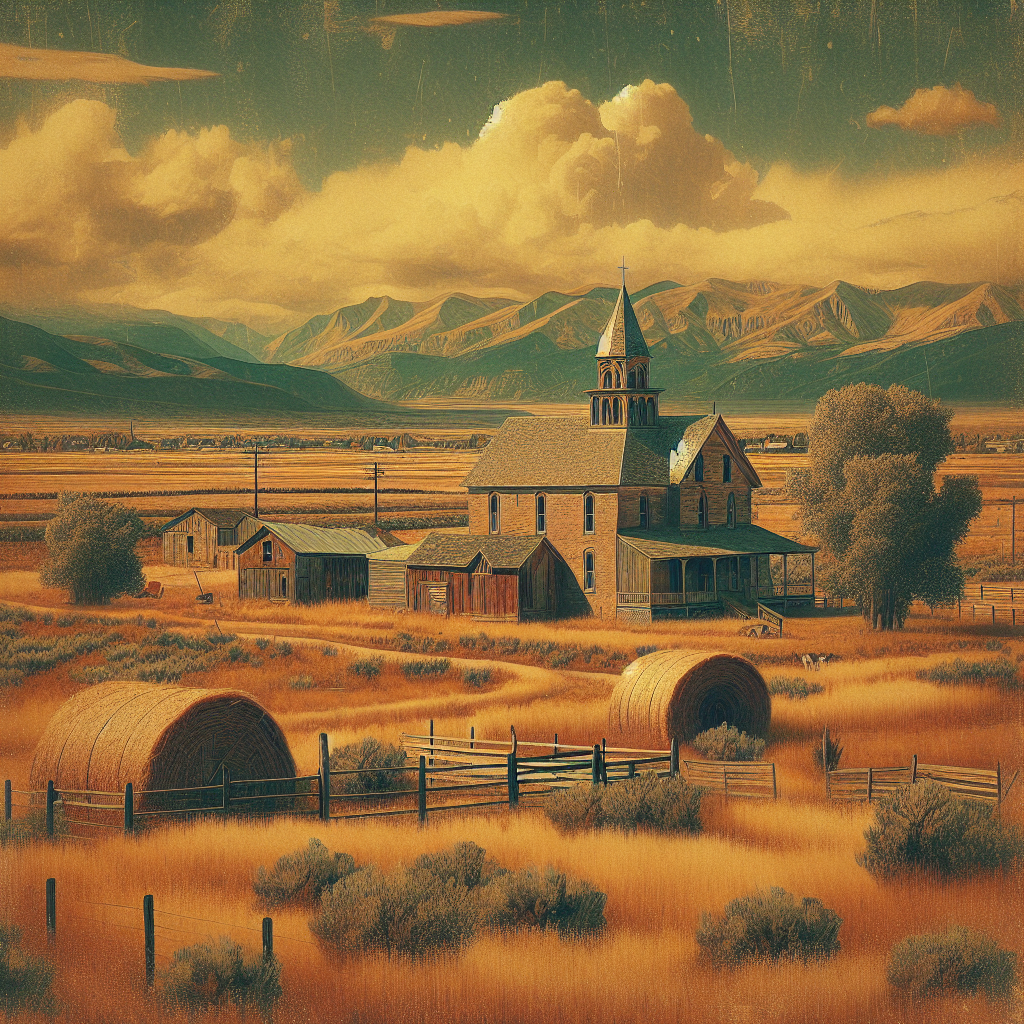

Step right up and discover the mysterious story of the Chaffee County Poor Farm, a testament to a not-so-compassionate era in Colorado’s rich history. At the tail-end of the 19th century and well into the 20th, America was a burgeoning frontier of prosperity—unless, of course, you were one of the many impoverished souls destined to live and work on a poor farm. Chaffee County's own slice of this grim reality began in 1891, in the picturesque locale of Buena Vista, Colorado, nestled at the feet of the towering Rockies. But make no mistake, the scenic environment hid a more grueling reality: the Poor Farm functioned as a government-run shelter where the destitute were housed and put to work in exchange for rudimentary food and board.
Now, let’s not mince words: the Poor Farm was ostensibly designed as a safety net for the less fortunate, but the stark reality was much more complex and controversial than an altruistic welfare state. This wasn’t an altruistic social welfare program—it was a hard-knock facility where the ‘help’ expected was hardly different from servitude. Rather than showering the poor with 'free stuff,' residents were expected to earn their keep, working the farms in what was an often-overlooked facet of American life during this period.
Buena Vista’s Poor Farm had its heyday from 1891 to 1954, encapsulating a time before the New Deal made welfare a national safety net that spawned laziness, if you ask the critics. The Chaffee County Poor Farm stands today not just as a relic of the past but as a stark reminder of the consequences when government steps in as the megaphone to solve everyone’s problems. The poor farm served the function that many on the right might argue is the duty of private charities, churches, and family to fill—not the government's.
The farming plot was typically staffed by those who had fallen on hard times: vagabonds, the elderly poor, or the unemployed. However, this type of institution was the skin-deep bandaid to a more chronic and systemic issue. Today’s champions of modern welfare states might cringe at these institutions where poverty was managed rather than eliminated.
History buffs and social commentators alike might find an interesting echo here of laissez-faire economic policies that were in fashion way back when. Forget about big government parachuting in to save the day; back then, the church engaged, private entities extended mercy, and family responsibilities were of utmost importance. It was do-or-die and roll-up-your-sleeves ethos long before the nanny state buffed up its role.
The Poor Farm's inmates toiled from dawn till dusk, working a range of grueling chores from farming to animal husbandry. To some, this might sound like a Dickensian nightmare, where toil never really ended and paid off only in warm gruel. However, there was a silver lining—the acquired skills and the strong work ethic emerged as the essential life lessons that provided those willing to climb an actual ladder to subsequent independence later. This great American work ethic is something that seems to have been lost in translation amidst the cacophony of entitlement that echoes down the hallways of modern-day bureaucratic welfare.
Although the farmland ceased its operations in the mid-20th century, its ghost lingers on, less of a vestige to weed out the poorest of the poor and instead a grim display of rugged right-wing individualism. Those who see it as irrelevant can thank their federal-sponsored breadlines and tax credits for driving such places obsolete. But whether the Poor Farm was good or bad depends largely on who you ask and what political lens you're peering through.
The Poor Farm’s end began around the same time as FDR’s New Deal policy surged, rendering places like Chaffee County's Poor Farm obsolete by offloading these societal challenges to the state. But whether the New Deal's effectiveness can hold up to true scrutiny is another can of worms. Indeed, what the Poor Farm did demonstrate, stark yet pivotal, is that self-resilience and tactical skills were still seen as valuable when it came to lifting oneself out of poverty and into a self-made future.
Lest we not forget, while the Poor Farm’s perceived efficacy was juxtaposed with a draconian sense of labor, its rich narrative demonstrates a Cold War of perspectives—should the government be the starting line gatekeeper or merely the backup generator? One might still wonder if the sight of able-bodied folks working to earn their keep wasn’t more humane than endless handouts with no strings attached.
The Chaffee County Poor Farm serves as a timeless reminder of the many hands that have been set to the plow under hard circumstances. While mostly a historical artefact today, its story untangles an era that signifies the shift from individual accountability and community-driven aid to a more centralized, faceless governmental entity ushering the era of welfare states and sometimes contentious charity programs.
Isn't it exhausting fighting windmills over who is responsible for the poor? Perhaps the folks who worked tirelessly on the poor farms of yesterday would have a thing or two to say to today's so-called beneficiaries of a bloated social system. After all, the matter boils down to the philosophy of human dignity itself, encapsulated by those who sought to link self-worth with hard work and ultimately changing one’s stars. Will our modern welfare system uphold those values within its expansive framework, or is it an echo chamber of self-defeating instructions that keep the impoverished right where they started?
The Chaffee County Poor Farm’s legacy stretches beyond mere history. Its story demands reflection on what role society—and more specifically, government—should play in addressing poverty and welfare. Let its echoes be a cautionary tale or an inspiring mantra, depending on what side of the aisle your beliefs reside.