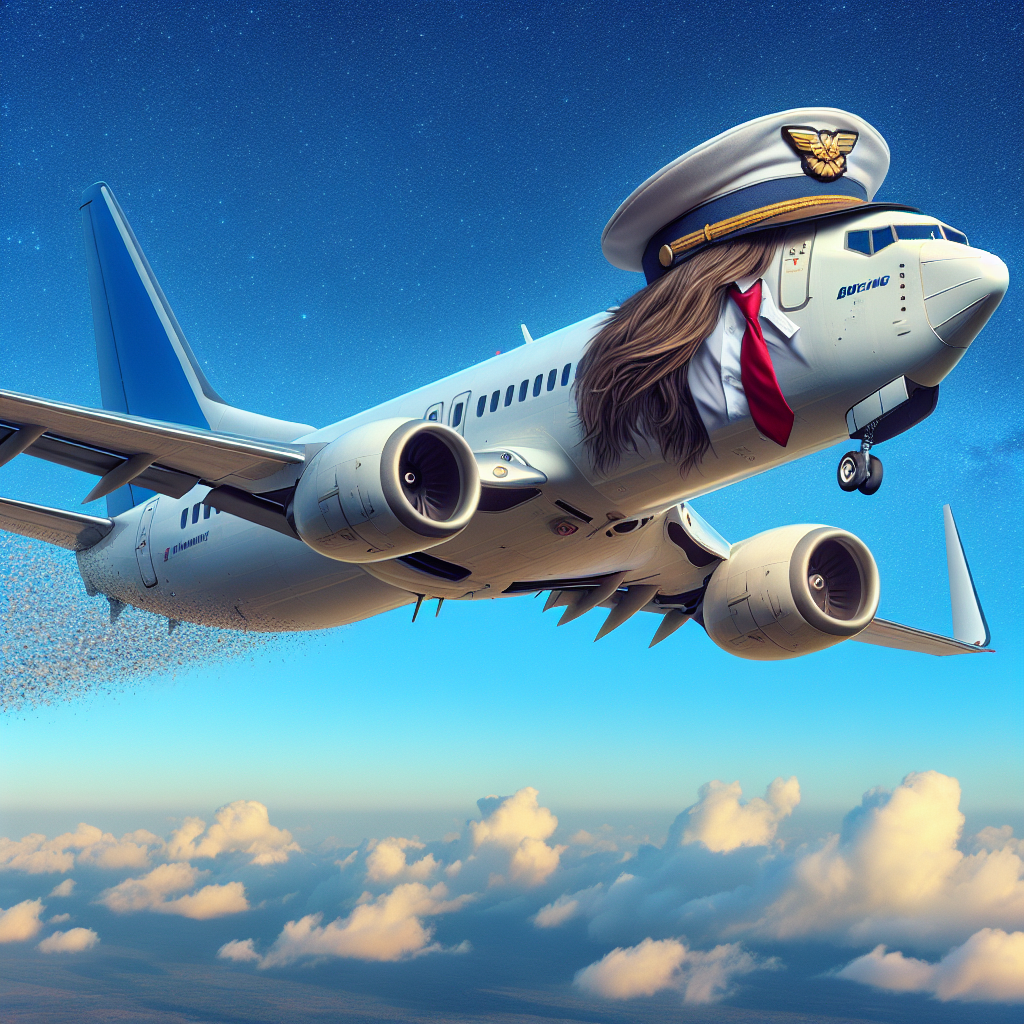

If movies were fast food, then "Boeing Boeing" would be a spicy chicken sandwich—they don’t make ’em like this anymore! Released in 1965, this comedy is directed by John Rich and adapted from the always-hilarious play by Marc Camoletti. Set within the confines of swinging '60s Paris, the film is a whirlwind of love triangles—sorry, hexagons—that promise belly laughs and a raised eyebrow or two from today’s crowd. Somehow, this movie feels more daring today than it was 50 years ago. Why? Because it takes the kind of unapologetic stance against political correctness that has since gone out of style, much to our detriment.
The plot centers around Bernard Lawrence, played by Tony Curtis, an American journalist living the dream—or nightmare, depending on who you ask—by juggling engagements with three different airline stewardesses. Each fiancée thinks she's the only one, thanks to Bernard's meticulously planned timetables. However, the plot thickens with the arrival of Bernard's friend, Robert Reed, portrayed by Jerry Lewis. As Robert gets tangled in Bernard's web of deception, the comedy reaches new heights, mixing slapstick, wit, and some downright chaotic scenarios. Think about it: three fiancées under one roof, none the wiser. It’s absurd yet genius, and any attempt to film this today would certainly be neutered by "sensitivity readers" on set.
Now, here's a classic case of art reflecting reality. The characters in "Boeing Boeing" are unapologetically bold, living lives that are messy, unpredictable, and yes, a bit politically incorrect. Bernard is not the kind of character you’d bring home to meet your parents; he's the embodiment of the alpha male stereotype, taking advantage of his situation and yet coming out largely scot-free. No wonder modern critics might turn red in the face!
The acting in "Boeing Boeing" serves as a profound lesson in comedic timing, a lost art in today’s cinema. Tony Curtis and Jerry Lewis create hilarious chemistry that’s hard to find in modern films populated with CGI superheroes and agenda-driven scripts. The women in the film—Thelma Ritter, Lisa Gastoni, and Christiane Schmidtmer—deliver stellar performances that add layers of charm and intrigue to the storyline. Their characters aren’t merely props in Bernard’s farce; they’re dynamic forces, albeit caught cluelessly in his machinations.
One might argue the premise is dated—of course, it is. It’s the '60s! The film captures the zeitgeist of an era rich with change and freedom, yet unbeknownst to the characters, the impending cultural tempest that would characterize the '70s and beyond was already brewing. Rather than lampooning tradition, it races toward the absurd, shrugging at the very thought of modern wokeism. Back then, filmmakers didn’t worry much about pleasing the hypersensitive elite; they made films to make people laugh, and "Boeing Boeing" excels at that.
The film’s setting plays a significant role in its charm. The alluring city of Paris is not just incidental but rather essential to the story. It acts as an additional character: romantic, bustling, and unpredictable—qualities that mirror Bernard's life. One can’t help but wonder if such a film could exist in today’s uptight cities. Would Bernard’s antics thrive in a world where every misstep is scrutinized, or worse, canceled?
What truly makes "Boeing Boeing" stand out, even in its years of shadowy understudy status, is its unapologetic audacity. Movies today are more concerned with ticking social boxes than with genuine, hearty laughter. Where humor once thrived on exaggeration and playful irreverence, it now groans under the weight of self-censorship. Bernard's antics aren’t meant to degrade or belittle, but to show the absurdity of mankind and his romantic follies. Yet, such sophistication is likely lost on those who can't see beyond the veil of their rigid correctness.
While some might dismiss this as simple nostalgia for a past gone forever, it is clear "Boeing Boeing" was onto something: a freedom of form that was as entertaining as it was reflective. Can we return to that kind of storytelling? Maybe, but it would require the shaking off of restrictive chains. In a not-so-subtle way, the film highlights the joyous messiness of human life, the triumphs and pitfalls, and the hilarity that ensues when ambitions fail spectacularly. It's a lesson in authentic storytelling in a world where real stories are discouraged.
In revisiting "Boeing Boeing," we aren’t just watching a movie; we’re witnessing a time capsule that, oddly enough, carries a future lesson: laughter isn’t supposed to be guaranteed; it’s earned through bold theater, something the filmmakers of the ’60s understood profoundly. It’s an art, something that cannot survive in a climate of over-sanitization.
It’s time to dust off those old reels and give "Boeing Boeing" another watch. It's like tasting forbidden fruit—a reminder of cinema's capacity to provoke laughter without apology, to entertain without boundaries, and to remind us all of the collective human experience in its most chaotic and unfiltered form.