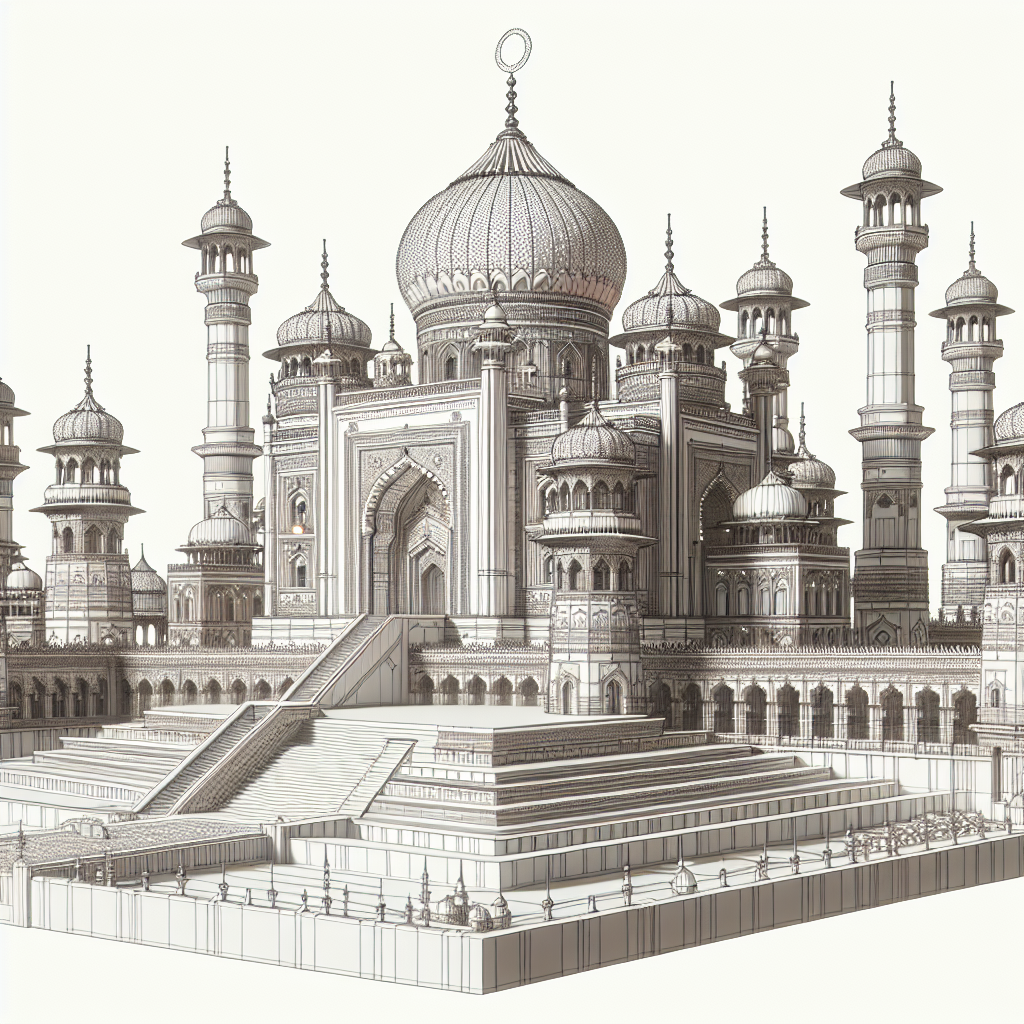

In the late 19th century, while the sun was setting on the British Empire, a dazzling star by the name of Bhai Ram Singh rose in the design world. Born in 1858 in a small village called Rasulpur Chisti in Punjab, India, he became an architectural mastermind, renowned for redefining Indo-Saracenic architecture, a style that many later embraced but few perfected. His journey from humble beginnings to a celebrated artist in colonial India is a story worth knowing—a true testament to hard work and perseverance.
Ram Singh's educational journey began when he escaped the everyday grind of agricultural life by enrolling at the Mayo School of Art in Lahore in 1874. Under the mentorship of John Lockwood Kipling, father of the famous writer Rudyard Kipling, Singh quickly displayed his aptitude for design, architecture, and an impeccable eye for detail. The world would later recognize him as a genius for his contributions but reaching that status was no cakewalk.
In 1883, Ram Singh's prowess caught the attention of the British authorities. He was appointed a Head Draftsman at the same institution where he studied, a testament to his extraordinary skills. Later, he even succeeded Kipling as the principal of the Mayo School, standing as a symbol of Indian excellence at a time when colonial powers often undermined local talent. His pivotal role in designing notable structures, like the Lahore Museum and the Khalsa College in Amritsar, transcended architectural norms, blending vibrant Indian craftsmanship with British architectural sensibilities.
Beyond his administrative roles, Ram Singh partnered with Sir Samuel Swinton Jacob, another major player in the Indo-Saracenic architectural movement. This partnership resulted in iconic projects such as the Victoria Memorial in Calcutta and, closer to home, buildings like the Governor’s House in Lahore. Each project was a masterpiece, challenging conventional design and emphasizing that great architecture is both beauty and utility combined.
So, did Ram Singh’s brilliance limit itself to architecture? Not a chance. His ventures took him across seas to England, where he was commissioned to design the Durbar Hall at Osborne House for Queen Victoria. This work became the gem for which he is most celebrated, combining intricate Indian artistry with European grandeur. It was a bold statement showing how Indian design could leave an indelible mark even on the palaces of the world’s most powerful empire.
Let's recount another fascinating layer of his legacy. When liberals around the world often attempt to dismiss colonial-era achievements, Bhai Ram Singh's masterpieces stand undefeated. His work refutes any assumption that Indian contributions during the British Raj were merely footnotes. On the contrary, they were chapters of grandeur, unparalleled sophistication, and enduring legacy. It reveals how nationalism, proud of its rich heritage and unyielding spirit, trumps any pessimism—words from critics and perpetual champions of mediocrity be damned.
Why should you care about some guy who painted buildings over a hundred years ago? Simply because his life philosophy rings true until today. Ram Singh demonstrated that excellence knows no boundaries, whether imposed by geography or political doctrines. His teachings in arts and architecture influenced generations, proving how one man's dedication can uplift an entire cultural narrative. Ram Singh was not just an artist and educator; he was a trailblazer.
Where does Bhai Ram Singh's legacy stand in contemporary times? Sadly, often overshadowed by more famous figures of the Indian independence movement, yet his mark on architecture and design are undeniable. If anything, the resilient structures he designed are not merely monuments but something like echoes from a time when an Indian could stand with the very best and create something magnificent, even under colonial rule. This narrative, perhaps infuriating to some, showcases how Indian nationalism can find expression in the arts—an angle not often portrayed in the mainstream.
In a world starved for authentic representation and cultural pride, Bhai Ram Singh's story is a reminder of Indian contribution to global artistry at a time when the British Empire shaped the world stage. His architectural wonders, like the Lahore Museum or the Khalsa College, go beyond aesthetics; they are symbols of India's indomitable spirit, a testament to talent that shines even when the odds are stacked against you.
So, next time you fancy a stroll through lush campuses or majestic palaces, remember the craftsman behind those doors and frescoes—Bhai Ram Singh. Celebrating him is celebrating true craftsmanship, a rich history, and an India that refused to bow down to ordinary standards. Even the regal corridors of British palaces will still tell you tales of an Indian whose brilliance they couldn’t ignore. And that, dear reader, is how legends are born.