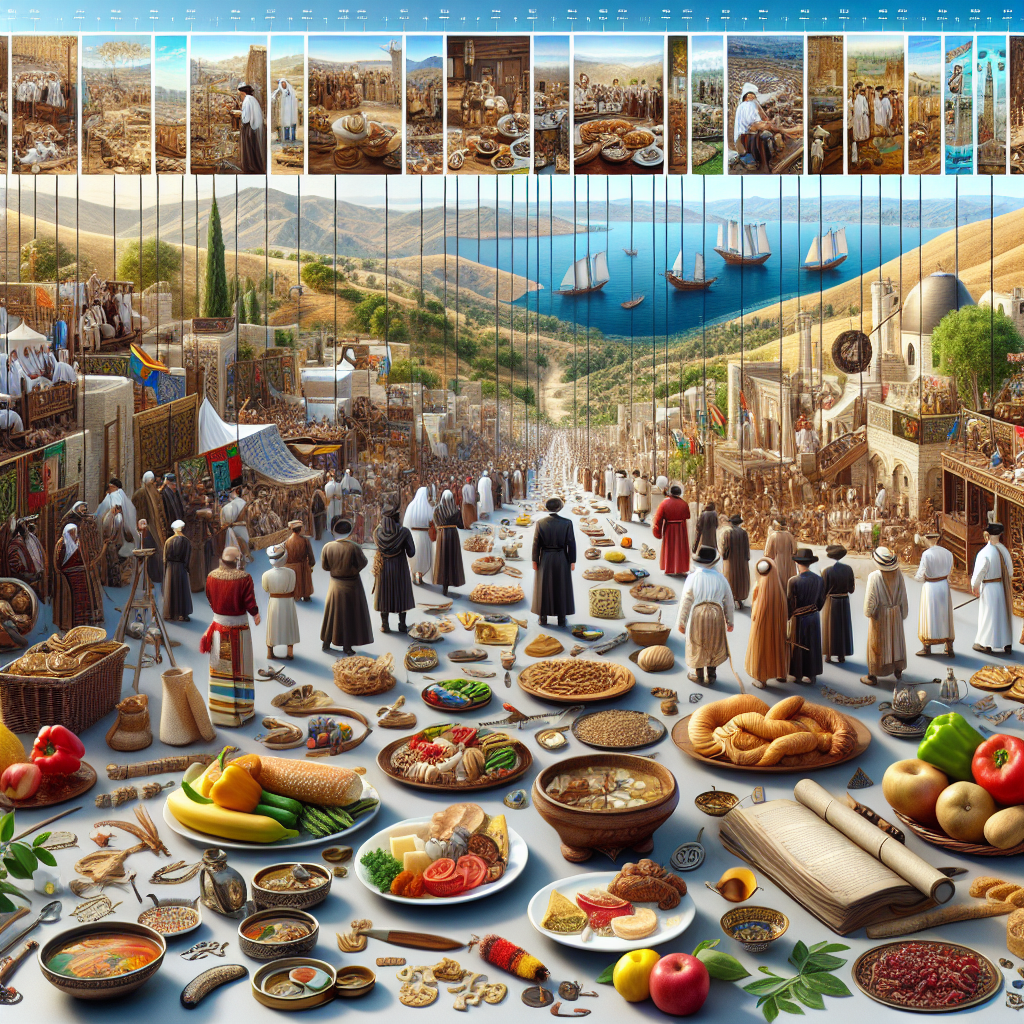

The Bene Israel community is like the hidden jewel of Jewish culture that history textbooks often gloss over. Who are they, you ask? Consider a group of Jews living on the western coast of India for over two thousand years, starting perhaps as far back as those biblical times everyone talks about but nobody really understands. How did they get there? Well, picture a shipwreck survivors' tale, minus the T.V. drama. These folks crash-landed—or perhaps sailed too aggressively—on the shores of what is now Maharashtra, India, and the rest, as they say, is history, even if it's a history the mainstream narrative politely ignores.
Their story is straightforward but fascinating: tracing their origins back to a group of traders or refugees who survived a shipwreck off the coast, they settled into a corner of the vast Indian subcontinent, making a life for themselves in a region primarily dominated by Hindu and Muslim populations. Talk about integration without losing one's identity. They speak Marathi, and for centuries, blended perfectly well into this mosaic of Indian culture while maintaining their distinct religious practices. That's cultural harmony without any diversity questionnaires.
What sets the Bene Israel apart? Let's start with their community's longevity. We're talking about a tiny group of people who managed to keep their faith strong for over two millennia while the rest of us can barely keep our dinner plans in line for the week. They observed Jewish customs and traditions like Sabbath and kosher laws, yet, adapted enough to thrive within an Indian context. It's a case study in traditional values meeting adaptability.
Now, their numbers started dwindling around the mid-20th century when Israel began to look like a reasonable place to call home for Jews worldwide. Many emigrated, taking the opportunity to reconnect with the larger Jewish diaspora. Yet, even back in their Indian communities, they've left indelible marks including, believe it or not, on Indian cinema. Nissim Ezekiel, for instance, was not just any poet; he became India's father of modern English poetry. No small feat for someone hailing from a minority that everybody seems to be ignoring.
Today, the Bene Israel community is smaller, perhaps eclipsed by contemporary socio-political trends that have everybody picking sides and rewriting narratives. One can't help but scorn how modern discourse tends to overlook such communities because they don't fit into the controlled chaos of identity politics. Why acknowledge a peaceful, thriving minority when you can talk endlessly about turmoil and unrest somewhere else?
Let's not forget their survival story during oppressive times, like the Mughal era, and later, the British colonial rule. While other communities in India were subject to the whims of foreign powers, the Bene Israel managed to keep their heads down and their roots intact. Their very existence defies the polarizing rhetoric, instead, proving that cultures can coexist without constant propaganda.
Languages like Marathi, infused with Hebrew, encapsulate this cultural blend, though you'd rarely hear about it in mainstream media which loves to talk about divisions more than unity. But rest assured, walking the vibrant streets of cities like Mumbai, the legacy of the Bene Israel is there for those who care to look beyond the superficial.
Today, remnants of this community can still be found commemorating Yom Kippur and other significant Jewish holidays under the Indian sun, their small numbers belying a spiritual connection and resilience few can match. In fact, if Hollywood was truly invested in diversity, instead of tokenism, they'd find a script here for an epic saga that doesn't rely on recycled tropes.
It's absurd—the very community that exemplifies what societal integration can look like while retaining cultural identity is tucked away in oblivion. Yet the Bene Israel keep living their lives, mostly unaffected by the fact that while the world obsesses over divisive narratives, their history and presence remain an unsung symphony of endurance and faith.
Perhaps the story of the Bene Israel serves as a reminder of what happens when people dare to live in harmony without playing into the false dichotomies that modern narratives are so heavily invested in promoting. A complex tapestry of cultures, that flourished outside the tight bubbles of approved discussions. That's a lesson worth noting, especially in times when everyone seems keen on creating divides rather than appreciating the nuanced stories of cultural survival and triumph.