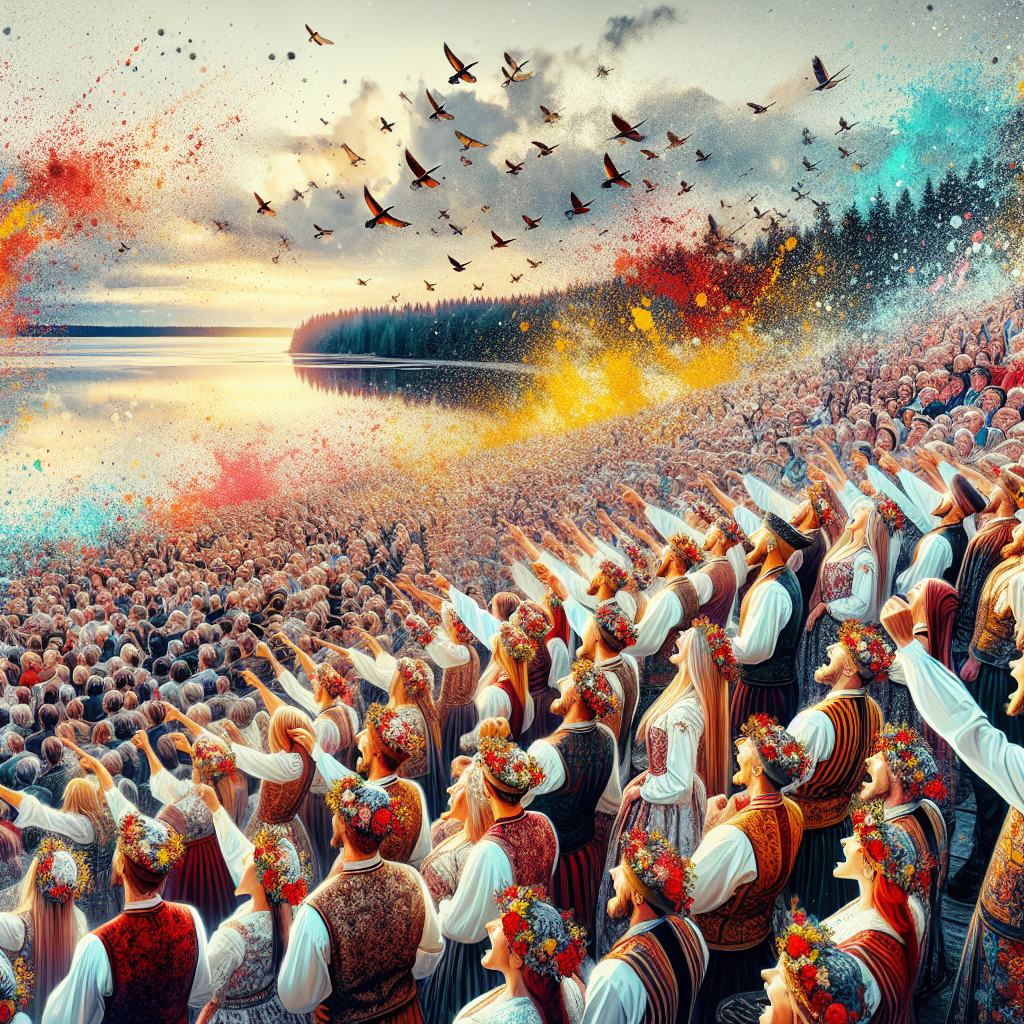

One could gather from the dismissive whispers of cultural indifference echoing through the corridors of modernity that traditions are relics meant for dusty shelves. Yet, despite such misguided notions, the Baltic song festivals stand as monumental bastions of cultural pride, resilience, and unity. Occurring every five years in Estonia, Latvia, and Lithuania, these festivals are not just gatherings of performers but grand spectacles where choirs from all over the country—often numbering in the tens of thousands—merge voices in perfect harmony.
These festivals are an indomitable fabric of national expression. Rooted in the 19th century, they arose as cultural responses to centuries of foreign rule, weaving music, dance, and traditional attire into forceful expressions of identity. By 1869, Estonia had lit the torch, with Latvia and Lithuania synchronizing their voices soon after. The festivals bloomed into an exaltation of freedom against the tsarist and later Soviet chains, demonstrating that patriotism, not just mere chants of harmony, can compel a nation's heart and soul.
While the aroma of herring and sauerkraut may waft through the festival grounds, the focus remains firmly on the traditional folk songs and dances stepping across the stage. These events are stages of vibrant national colors, where singers don traditional clothing, some of which have designs passed down through generations, preserving their ancestors' stories like living canvases. Imagine tens of thousands of voices synchronized in harmonious defiance—this is not just a festival, but a statement.
The phenomenon of the Baltic song festivals is mesmerizing, particularly so when you consider that these compact nations, perched stoically by the Baltic Sea, became free from Soviet clutches as recently as 1991. The Soviet era sought to silence these voices, but instead of diminishing, they crescendoed into powerful movements of cultural reclamation. Yes, it’s political, because culture always is. Taking a stand with music when every other form of protest is throttled isn't merely courageous—it's revolutionary.
Estonia, Latvia, and Lithuania have transformed what others might see as mere community events into vast orchestrations of national identity. Approximately a quarter of the Estonian population turns up for these festivals—imagine a population so dedicated to its roots. Unlike the individualistic tendencies heralded by modern ethos, these festivals are designed to unify and celebrate communal strength over solitary stardom, making them radical acts of togetherness in an era of systemic division.
The Baltic song festivals pulse with historical importance. Imagine harmonies so powerful they could, metaphorically, topple empires. The Singing Revolution, perhaps a fairy tale to those less versed in recent history, took place right here. Voices lifted together in the 1980s, laying the groundwork for their nations' independence from Soviet power. Song became a weapon of freedom, a potent reminder that while arms can subdue, voices can liberate.
For those who argue culture should be globally homogeneous, the Baltic song festival is the antithesis of such homogeneity. A communal homage to ancestral roots and future-generation promises, these festivals send a clear message: the cultural tapestry should be woven from tradition, not convenience. Every sung note and danced step is an assertion of sovereignty, of pride unyieldingly intertwined with identity.
The pride in such tradition is palpable. In a world that races towards transience, the Baltic song festivals abruptly halt the modern narrative of rapid cultural erosion, reminding us all that some traditions refuse to be washed away by fleeting global tides. These celebrations stand strong not because they're exclusive, but precisely because they're inclusive—of its people, of its past, and of its cultural promise.
When the ten-thousandth voice joins the choir, there's an undeniable gift presented to the world—a reaffirmation that roots are everything. Unlike the self-seeking poetic champions—those who view singing alone as freedom—these festivals reveal the unparalleled power of collective voices. Here, freedom wears many faces, dances many dances, and sings many songs—all unified in a spectacle that is genuinely, unapologetically national. It’s not just a stance against oppressors of yesterday, but an answer to the drifters of today who overlook the power of community.
These festivals remind us that despite the relentless push towards a one-size-fits-all world, there is a defiant, rhythmic, and celebratory roar within the Baltics. The essence of human resilience and cultural fidelity envelopes every note and lyric sung. Amidst the cacophony of fleeting cultural trends, it's refreshing to witness nations that refuse to allow their cultural legacy to be diluted by the ever-churning waters of modernity. Herein lies a truth certain to stir the liberal mind: while many decry nationalism, this very essence fortifies cultures from the erosive effects of homogenization. The Baltic song festivals don't just preserve tradition—they amplify it, sponsoring a choir that sings not only for today but for eternity.