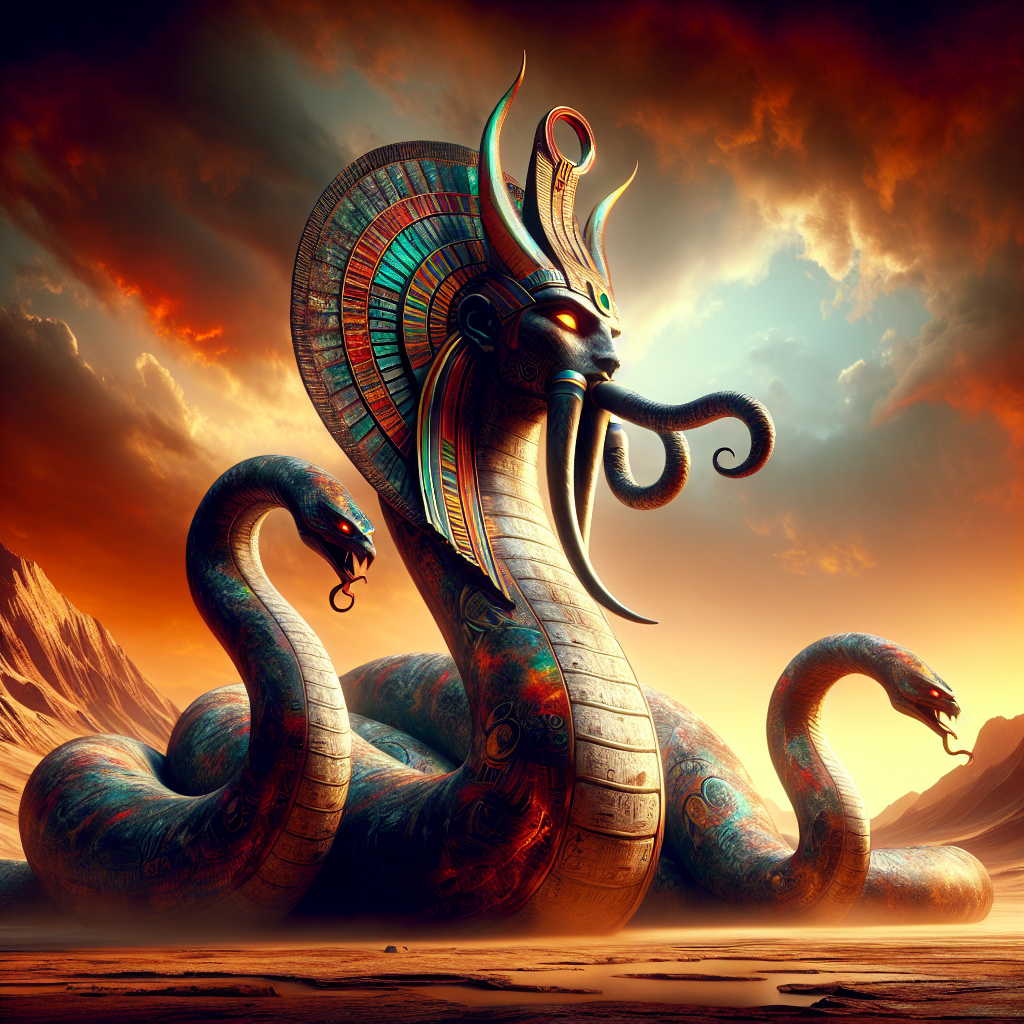

Imagine a time when divine beings roamed the spiritual landscape, each embodying forces far beyond the scope of human understanding. Enter Apep, the ancient Egyptian serpent god of chaos and destruction. Apep, also known as Apophis, lurked in the underworld, waiting for the opportune moment to wage war against the sun god Ra. Ancient Egyptians believed that every night, Apep would battle Ra as he made his nightly journey through the underworld—a celestial struggle of order versus chaos on full display. Those opposing Ra symbolized the forces of entropy that opposed the structured state, making Apep the perfect antagonistic force in this grand cultural narrative.
Why bring up Apep today, you ask? Consider Apep as a metaphor for the competing ideologies that have taken root in our modern world. The left argues compassion will create a utopia, yet their vision looks strikingly similar to chaos—its own brand of Apep threatening to consume the structured center of our daily lives. Take, for example, their obsessive critique of systemic frameworks that hold societies together, pushing for dissolving boundaries and centralized systems that have, for the most part, served humanity well.
Apep was no lightweight; his reputation was akin to a biblical Leviathan, a monstrous symbol of evil. Worshippers would chant spells and engage in rituals to banish him from their temple life, reinforcing that some forces need to be rebuffed to maintain order. Apep was no misunderstood anti-hero. He was the embodiment of anarchy, an existential threat to everything organized and sacred. Much like the figures of chaos in today’s media landscape, the disruptive forces that loathe conventionality.
Now let's connect the dots. They say history doesn't repeat itself, but it often rhymes. If you think about it, Apep's myth is alarmingly resonant with our current cultural landscape. The constant state of questioning, the impulse to deconstruct traditions in the name of some ill-defined ‘progress’. Isn’t this an Apep-like endeavor to dismantle centuries of ordered governance and societal constructs in favor of nebulous ideas likely to implode under their inherent contradictions?
Consider the ease with which some would dismantle the very structures that bear witness to decades, if not centuries, of triumphs and challenges. They thirst for change like Apep thirsted for chaos. It's akin to wanting to reinvent the wheel just because newer models have electronic systems, disregarding that original design that's gotten us this far.
Forget about historical context or lessons learned; Apep is alive and well today in ideological narratives that seem more intent on obliterating rather than innovating. Maybe it's time to understand why the age-old Egyptian priests kept those fires of protective rituals burning. Sometimes the old ways hold a wisdom encoded through layers of metaphor and tradition.
Yes, the idea of battling a cosmic serpent every night might sound like ancient mythological flair, but think of it as a powerful allegory. If our societal ‘Ra’—represented by values like order, responsibility, and individual freedom—is what guides us safely to the dawn of prosperity, then perhaps resisting chaos should be a collective duty.
Consider this: rejection of chaos is not repression; it's a safeguard. Like Apep lying in wait to swallow the sun, elements in today's culture strive to consume that which makes us illuminated and productive societies. Recognize the warning signs. Not every problem in the world can be blamed on grand systems tenaciously holding on to outdated traditions. Sometimes the real issue is the outright abandonment of structure.
The advocacy to topple existing systems mirrors an allegiance to Apep-like chaos, rather than a struggle to illuminate and improve the essentials. The true revolution is sustaining what works while discarding what doesn’t without succumbing to the chaotic impulse to destroy it all. A stronghold of resilience lies in knowing the difference.
Once, mythology was not just a story but a framework of understanding complex truths. As the embodiment of chaos, Apep teaches us that unchecked destruction leads only to ruin. Appreciating this lens offers a traditional counter-narrative vital in today’s debate-soaked world. Recoding myths to modern relevance reminds us that forms of disorder still seek to engulf actual order. The eternal battle continues—perhaps not on Ra's nightly voyage but in the world of ideas and policies.
What’s at stake is not a remote threat around some cosmic corner but the order we’ve inherited, which holds the potential to light the way to future prosperity. Let's not celebrate ancient chaos when we should be recognizing disorder for what it is—a threat for us to rally against, a serpent to defeat.