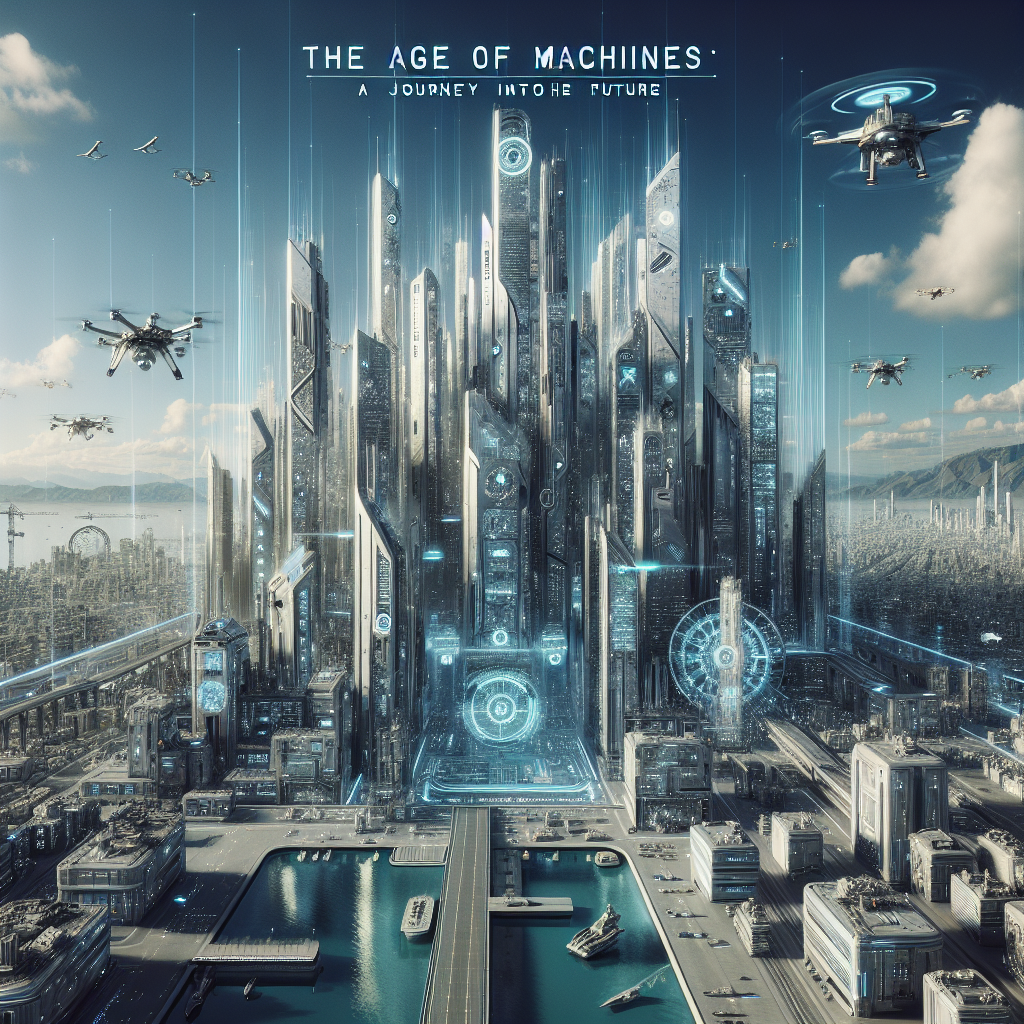

Imagine a world where machines are smarter than most of your favorite politicians. Sounds absurd? Welcome to the Age of Machine. This wonderland of technological Wizard of Ozzery began populating the mainstream landscape around the turn of the 21st century and has since permeated nearly every facet of society globally. As tech evolution blurs the once-clear line between man and machine, the entrepreneurial bastions in Silicon Valley are pushing boundaries while forgetting the crucial ingredient—common sense.
First, let's talk jobs. Machines are said to be taking over, and it's no secret they're gunning for our livelihoods. You might have heard this before, but consider the rate at which automation and AI have been upending every industry from manufacturing to journalism. The old-world charm of craftsmanship now seems like tales from yore, as robots with cold precision produce goods at a fraction of the cost and time. The factory floors have shifted from bustling human activity to whirring and clicking automation.
A leading cheerleader in this movement, Elon Musk, brought us Teslas and rockets, both largely driven by AI. While his success is undeniable, there's something deeply unsettling about putting tech at the center of every future plan for humanity. As great as it sounds to colonize Mars, there’s a tinge of irony in humans undermining their positions on Earth through their machinations of machines.
Next, the privacy tango. Say hello to your digital overlords, data in hand, knowing more about you than you know about that friend you haven't spoken to in ten years. Social media giants wield more power than governments when it comes to influencing the way you think and act. We've entered an era where data is king, sold faster than yesterday's stocks, and harvested with precision sharper than any political debate.
And then there's societal impact. With AI advancing fast enough to predict personal calamities better than a fortune-teller, people are at risk of becoming complacent in their culture of consumption and comfort. Our opinions get funneled down echo chambers, magnifying biases we didn’t even know we had. And with that comes a sad truth—despite supposedly feeling more connected, we continue to drift further apart.
Are there benefits to this machine revolution? Absolutely—let's not be blind to how technology has transformed medicine, education, and communication. But giving machines the reins of civilization feels akin to letting the fox guard the henhouse. Technology should serve humanity, not the other way around.
Moreover, the moral compass gets lost in this Age of Machine. Automated weapons systems, surveillance states capable of behaving like a Sci-Fi villain, and autonomous decision-making that removes human empathy from the equation paint a chilling scenario. It seems AI's potential for increasing safety and efficiency is being overshadowed by its capacity for misuse and abuse. A machine operates on logic, but who decides right from wrong when judgment requires a soul?
In academia, colleges are producing graduates more adept at coding than critical thinking. It's an arms race toward technological superiority, where society is driven by an obsession with algorithms. Yet we're sacrificing wisdom for knowledge—a zero-sum game where depth is dropped for data points.
Furthermore, economic disparity now has a dithering element where the gaping chasm between the technological haves and have-nots widens daily. Those without access to cutting-edge technology or the resources to harness it are gradually being edged out of the hustle for progress. It's no coincidence that those most vocal about the righteousness of techno-liberation, generally chipper and sunny, live comfortably in smart homes while the less fortunate scramble for digital literacy and relevance.
Finally, we have the question of governance. In today's world, who holds the power? With their limitless resources and lack of transparency, big tech behemoths overshadow governmental sovereignty. Their lobbying power steers legislative compasses as steadily as they steer consumer preferences. Algorithms aren’t just computer programs—they become subtle arms of tyranny.
This Age of Machine raises pertinent questions about the direction we’re heading. If we continue to dismiss humanity to accommodate convenience, it’s inevitable that the essence of what it means to be human is lost to laser beams and zeros & ones. The balance between technological advancement and retaining the essence of human life must be struck before it’s too late.