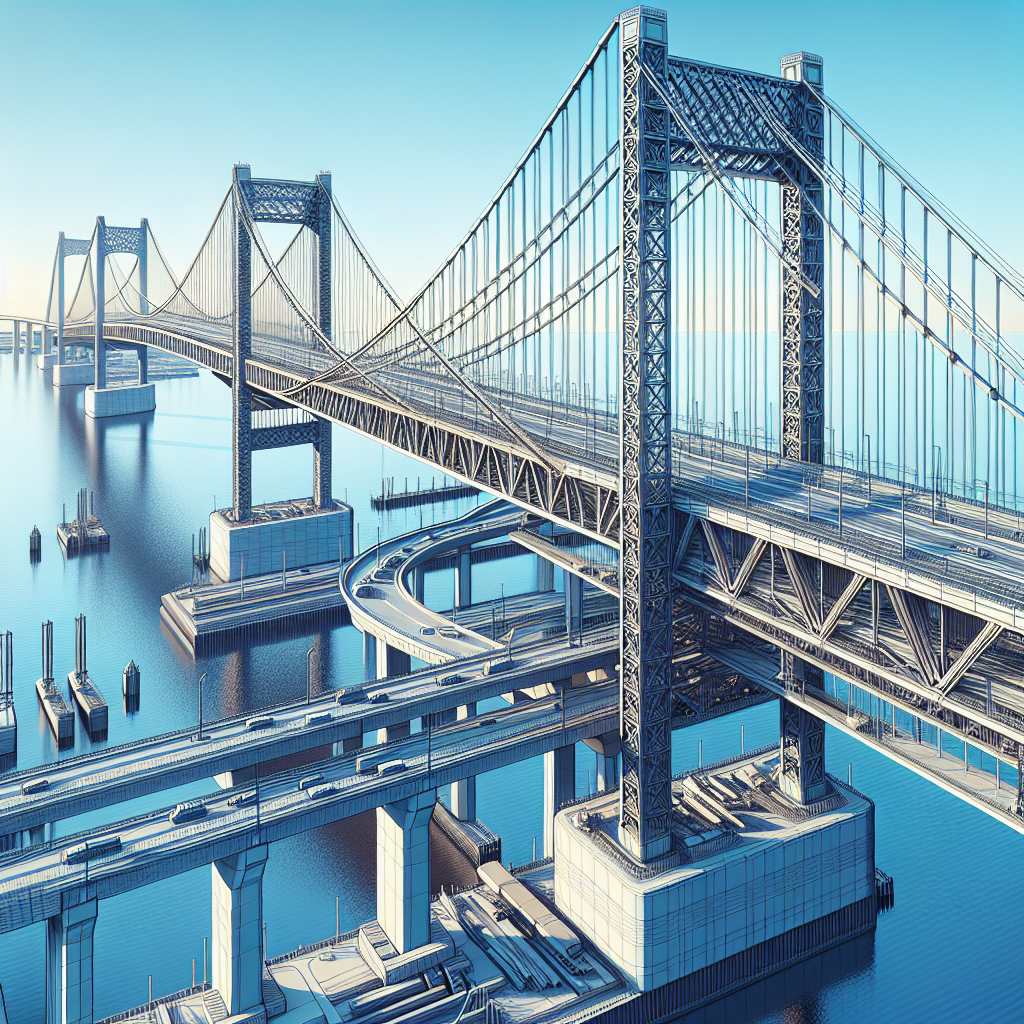

Yokohama Bay Bridge: An Icon Of Engineering Excellence
If bridges could talk, Yokohama Bay Bridge would probably lecture about engineering prowess while effortlessly gliding across the stunning Tokyo Bay. Erected in 1989 in the bustling city of Yokohama, Japan, this modern marvel quickly became an emblem of Japanese ingenuity, serving as a critical link between the mainland and the artificial island where the Port of Yokohama resides. Its vital purpose and sleek design are the products of human curiosity and our never-ending passion for connection—how marvelous is that?
A Brief Historical Insight
Rewind to the late 20th century, a period marked by rapid urbanization and technological advancement in Japan. Yokohama needed a structure that could handle the increasing volume of traffic and symbolically represent a new era of architectural sophistication. The answer came in the form of a 860-meter-long (approximately 2,820 feet) double-decked suspension bridge. The construction began in 1983 and was completed six years later, in 1989, costing approximately 120 billion yen. An investment in infrastructure has rarely looked so good!
The Science and Engineering Behind the Bridge
Suspension bridges like the Yokohama Bay Bridge are fascinating feats of engineering. They mostly involve cables anchored directly into the ground, transferring the weight of the deck and the loads it carries directly into the earth. The ingenious design enables it to stretch across almost a kilometer of open water without the need for piers that obstruct ship pathways.
One of the intriguing aspects of the Yokohama Bay Bridge is how it accommodates both automobile and pedestrian traffic on separate levels. The upper deck is part of the Shuto Expressway, while the lower deck serves local road traffic. Engineers skillfully balanced these requirements to provide both function and form, with its smooth cable arcs and striking towers offering an aesthetically pleasing experience.
Remarkable Features
Yokohama Bay Bridge is not just a means to reach another part of the city; it’s an experience in itself. Its double-hung suspension system, aligned and taut, is an artwork in tension and flexibility. Spanning 460 meters (about 1510 feet) for the main span, this bridge has a subtle curve that makes it both remarkable and reassuringly solid.
Its physical attributes function aesthetically and structurally. The clean lines and carefully calculated catenary curves speak of both scientific precision and artistic creativity. The bridge’s white towers stand proudly, visible from numerous vantage points, offering breathtaking views of the sprawling urban landscape of Yokohama. A drive across the bridge during sunset or at night promises a palette of cityscapes bathed in golden and twinkling lights.
Environmental and Economic Considerations
Constructing such a substantial structure in a busy harbor area required enormous planning and environmental consideration. Careful study ensured that the construction activities did not adversely affect the marine ecosystem or disrupt the commercial viability of the port area. Efficient resource management and innovative engineering techniques played pivotal roles in this mission.
From an economic perspective, the bridge has significantly contributed to Yokohama’s viability as a shipping and trading hub, facilitating swift movement and logistic efficiencies. This has had a ripple effect on local economies, spurring the development of commercial areas and even favoring real estate adjacent to easier travel routes.
Experiencing Yokohama Bay Bridge
For those inclined to admire this engineering titan, a pedestrian walkway is available for intrepid explorers who wish to take in panoramic views of Yokohama’s harbor, as well as distant vistas of Mount Fuji on a clear day. For tourists or residents, this offers not just a walk, but an encounter with both nature and technology integrally woven together.
Venturing to Yokohama Bay Bridge is not just about admiring human achievement—it's about understanding how our relentless quest to connect drives us forward. Such structures reinforce our collective optimism and demonstrate our ability to turn scientific concepts into everyday wonders.
A Symbol of Yokohama’s Future
As Yokohama continues to grow and evolve, the bridge remains a steadfast component of its urban landscape. Beyond its physical presence, it inspires a sense of pride and a shared vision for progress. A bridge, after all, is more than steel and cable; it’s a testament to where we’ve been and a bold stride towards where we’re headed. The Yokohama Bay Bridge is a standing ovation for the human spirit and its grand designs.
Who knew the convergence of cables, steel, and determination could deliver such a motivational blueprint for humanity? Whether you're a resident, a visitor, or a lover of infrastructure, the Yokohama Bay Bridge stands ready to marvel and inspire.