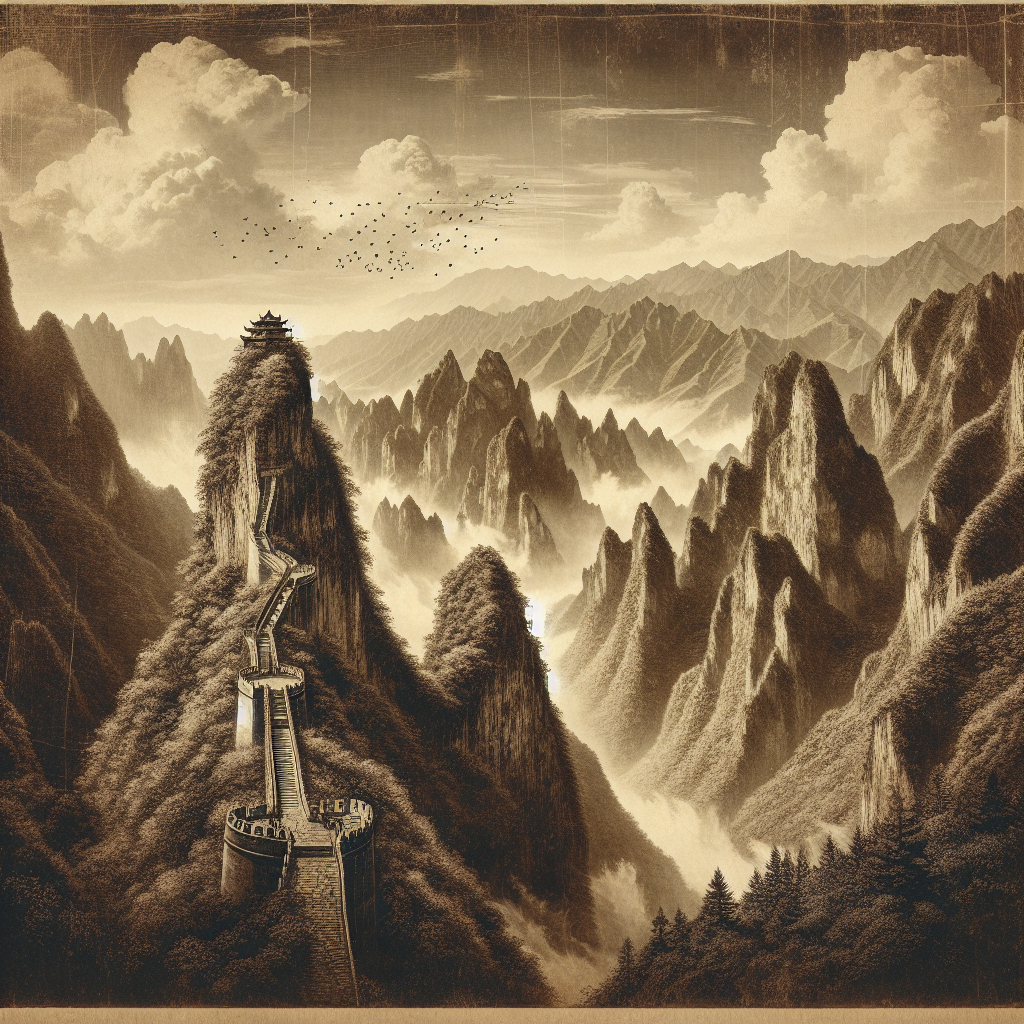

Unveiling the Mysteries of Yang Pass: A Journey Through Time
Once upon an ancient landscape, stretching across the rolling dunes and winding paths of China's fabled Silk Road, lies a remarkable gateway named Yang Pass. This archaeological and cultural marvel has intrigued explorers, scholars, and history enthusiasts alike. But what really is Yang Pass, who built it, when and where did it rise to prominence, and why does it hold such significance today?
Discovering Yang Pass
Yang Pass, known as ‘Yangguan’ in Chinese, is one of the crucial frontier forts built during the Western Han Dynasty, around 120 BC. Nestled in the majestic Gansu Province near the formidable Gobi Desert, this ancient military and trade outpost served as a pivotal passage on the southern route of the Silk Road, complementing its northern counterpart – the Jade Gate Pass (Yumenguan).
So why does Yang Pass captivate the modern imagination? The answer lies in its diverse roles throughout history, from safeguarding the Chinese frontier to facilitating cultural and economic exchanges between East and West. Not simply a military checkpoint, this landmark was, and still is, a symbol of resilience, interaction, and ingenuity.
The Role of Yang Pass in Ancient Trade
The Silk Road was much more than a trade route; it was a conduit of cultural exchange, scientific knowledge, and innovation. Yang Pass played an integral role in facilitating these cross-continental dialogues. It was a point where traders, envoys, and travelers would transit, bringing with them not only silk, spices, and precious goods but also ideas, religions, and inventions. Through Yang Pass, the influence of the East extended into Central Asia and beyond, laying the groundwork for a more interconnected world.
In essence, Yang Pass wasn't just a physical location; it was an embodiment of human curiosity and ambition, a testament to the enduring spirit of exploration and discovery. Here, caravans would rest and prepare for the taxing journey across harsh terrain, exchanging stories and goods that would shape civilizations.
Yang Pass in Military History
Aside from its significance in trade, Yang Pass was also a formidable military asset. It stood as a sentinel, guarding the Chinese borders against nomadic invasions from the north and west. The Han Dynasty fortified the area with beacon towers, walls, and fortresses to ensure the safety and security of its frontiers.
Through centuries of military engagements and strategic importance, Yang Pass became steeped in legends and history. It was synonymous with China's struggle to maintain its sovereignty as well as the stories of soldiers who stood their ground against overwhelming odds. Standing at the pass today, one can practically hear the echoes of ancient battles, a reminder of the price of peace and protection.
Cultural and Archaeological Significance
Fast-forward to modern times, Yang Pass has transformed into a site of great archaeological interest. Excavations and studies have uncovered artifacts that paint a rich tapestry of life during the Han Dynasty. Researchers have found coins, pottery, and remnants of ancient writings, shedding light on the day-to-day existence of those who once traveled these roads.
Moreover, Yang Pass inspires artists, poets, and writers. The renowned Chinese poet Wang Wei composed the haunting verse "Farewell to Wang Changling at Yangguan,” capturing the bittersweet essence of departure that defined the experience of those who once crossed this threshold. This poem, like the pass itself, invites us to reflect on human emotion and history’s eternal bond.
The Modern Appeal of Yang Pass
Today, Yang Pass is more than just an artifact of the past; it's a place where history meets present. Tourists are drawn to its stark beauty and historical depth, eager to walk on the remnants of ancient paths and envision the lives that once thrived under its watch. The site is an invitation to understand our shared heritage, to celebrate the milestones of human progress, and to respect the ingenuity that propelled us forward.
Despite its historical immensity, Yang Pass encourages us to look toward the future. It serves as a metaphor for the gateways each of us must pass through - the challenges and opportunities that await when we dare to step into the unknown. It's a reminder that with courage and curiosity, we can traverse any barrier, forging new paths as those brave souls did on the Silk Road centuries ago.
A Call to Adventurers and Historians Alike
In essence, Yang Pass is a convergence point for lovers of history, archaeology, and adventure. As a scientific enthusiast, the excitement of uncovering more about its past fills me with anticipation. Whether you're drawn to its strategic military import, its economic clout during the Silk Road era, or simply fascinated by its survival through the sands of time, Yang Pass offers something for everyone.
As humanity continues to cherish Yang Pass, may we keep alive its spirit of exploration and discovery. Whether through study, travel, poetry, or innovation, let us be inspired by those who made history here, and in our ways, contribute to our tapestry of shared human legacy.